Noah's Ark mystery deepens as 4,300-year-old discovery matches biblical timeline
Carbon dating of buried wood fragments in Türkiye has revived the search for Noah's Ark
Published November 24, 2026
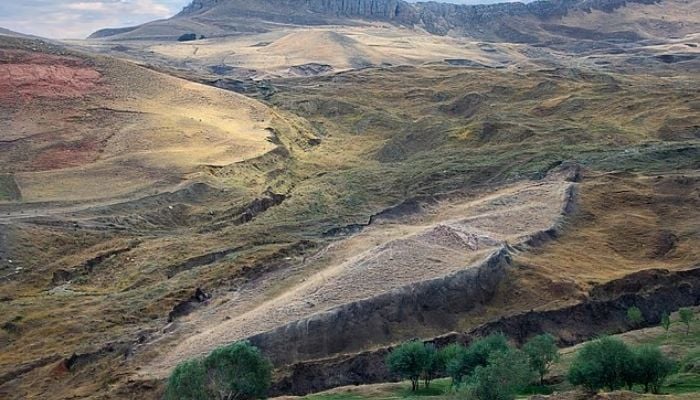
The Noah's Ark mystery has deepend after researchers found that the wood fragments recovered from a boat shaped formation from a site in eastern Turkiye dates back approximately 4,300 years, matching biblical dates.
Professor Cenker Atila of Sivas Cumhuriyet University discovered fragments of burnt wood nearly nine meters below the surface of Durupinar formation near Mount Ararat.
Researchers found that carbon dating placed the first sample of wood fragments to be between 2410 and 2269 BC and the second sample between 2349 and 2193 BC.
Both dates cover 2348 BC and 2304 BC, the two proposed dates for the Great Flood based on traditional biblical calculations of Christianity.
Do these findings also align with Islamic accounts of the flood?
The story of Prophet Nuh (Noah) is mentioned in Qur’an; however, the specific year of the flood is not mentioned. Surah Al-Ankabut (29:14) states that Nuh remained among his people for 950 years before the flood overtook them.
There is also an interesting geographical difference.
While the Bible mentions the mountains of Ararat as the resting place of the Ark, Surah Hud (11:44) specifically names Al-Judi, traditionally identified as a mountain in southeastern Turkiye.
Meanwhile, researchers are awaiting further laboratory results to determine the species of wood recovered from the site.
However, a geological study published in 1996 concluded that the boat-shaped structure was a natural rock formation.
Although the latest findings have renewed interest in the site, they do not establish whether the recovered wood belonged to Noah's Ark.