Microsoft claims quantum computing breakthrough that could put world's encrypted data at risk
Microsoft eyes quantum computing breakthrough by 2029 that could transform the world
Published November 27, 2026
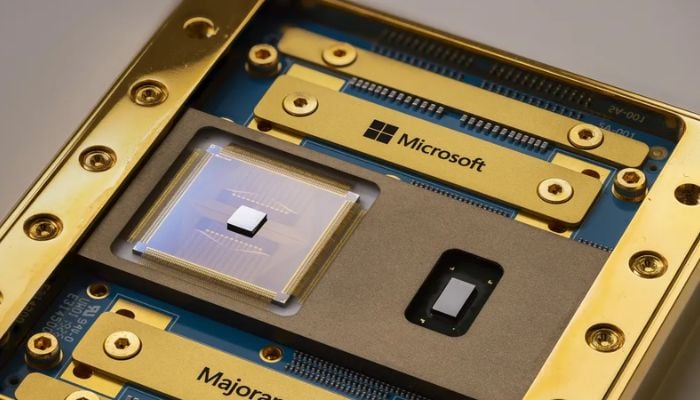
Microsoft has announced that it has achieved a major milestone towards quantum computing that would fast-track the discovery of new drugs, help tackle complex scientific issues and possibly make some of the world's current data security measures redundant.
But the company's claims have left the scientific community split, with the United States (US) Defense Advanced Research Projects Agency (DARPA) conducting independent testing.
The most significant difficulty in quantum computing is the ability to maintain the stability of the basic unit of quantum information, known as a qubit, for extended periods to enable computation.
Microsoft says its Majorana 2 processor can address some of those issues, as the qubits stay active on average for 20 seconds and in some instances up to 1 minute.
According to the company, it is 1,000 times better than the previous processor it had.
The development has also prompted Microsoft to bring forward its timeline for delivering a practical quantum computer to 2029.
A controversial 2018 study involving Microsoft researchers was retracted in 2021 over methodological problems.
Some physicists now argue that Microsoft's latest experiments have not sufficiently demonstrated the reliability of functioning qubits.
Scientists could use powerful quantum computers to develop medicines and materials that would otherwise take years to discover.
However, there is a worrying side to the technology.
Future quantum computers could break certain encryption systems currently protecting financial transactions, government communications and personal information.
Even encrypted data stolen today could potentially be deciphered years later.
The US National Institute of Standards and Technology has already introduced quantum-resistant encryption standards to prepare for such a scenario.
For now, Microsoft's claims await independent validation.