Pakistan tells UN budget cuts will adversely affect peacekeeping missions
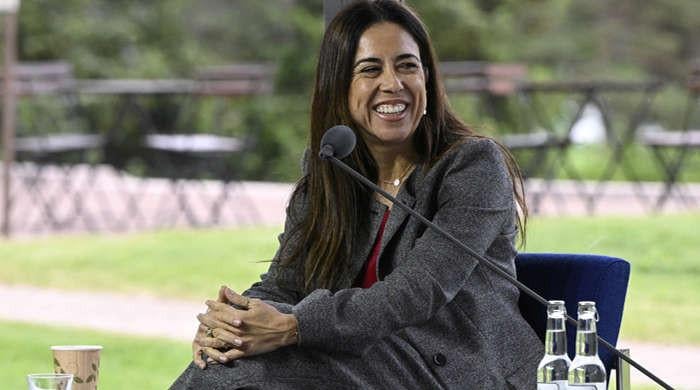
Pakistan’s Ambassador to the UN, Dr Maleeha Lodhi, said that sustaining peace requires investing in peace
Published August 30, 2017

Pakistan has informed the 15-member United Nations Security Council that ground realities, not political expediency, should guide the council’s decisions on peacekeeping.
Participating in the debate on UN Peacekeeping Operations, Pakistan’s Ambassador to the UN, Dr Maleeha Lodhi, said that sustaining peace requires investing in peace. “Saving lives, restoring order and the maintenance of international peace and security should remain the overarching objective,” she said.
Emphasising the need for adequate resources for peacekeepers, Lodhi said when lives are at risk, actual requirements should drive peacekeeping, not narrow cost considerations.
Lack of adequate resources, she said, results inevitably in non-implementation of the very mandates that we fashion for our 'Blue Helmets'.
“We should be talking about enhancing capabilities, not across the board cuts in peacekeeping budgets”, she added.
Speaking as one of the world’s top troop contributors to UN peacekeeping missions over the past six decades, the envoy said, “We can say from our experience and the expertise that we have acquired that the realisation of this objective requires mandates with realistic tasks, flexibility to adapt to changes on the ground and a clear exit strategy”.
Ambassador Lodhi called for enhanced consultations with troop contributing countries in order to achieve full implementation of mandates.
She emphasised the importance of communication between those who conceive and write mandates and those who implement them on the ground.
“We need to reinforce the interaction between key stakeholders; enhance information flow and exchange in all directions and at all stages; and improve capacities to generate accurate and objective analysis and assessments and then feed them into the decision making processes”, she said.

Pointing out the importance of dialogue and effective partnership between troop contributors and the security council, Lodhi said that this should extend from deployment and operational aspects, to a role in decision-making and policy formulation.
“This council itself must drive this partnership. Dialogue is critical. It must be on a sustained and continuous basis. A one-off meeting at the time of renewing of mandates does not serve the purpose,” she remarked.
Pakistan also called on the council to focus more attention on eradication of poverty and unemployment, ensuring socio-economic development, addressing interstate and intra-state issues, and resolution of political disputes; pointing out that the failure to comprehend and address the root causes of conflicts remains an ominous gap in peace-building strategies.
Ambassador Lodhi also emphasised greater convergence between the perspectives of development partners and host countries, based primarily on the priorities of the latter. “The objective should be the development and not the replacement of national capacities”.
She said that the peace building commission should promote coherent peace-building activities along with the provision of timely, adequate and sustained financing.
“There is a need for a fuller interface between peacekeeping and peace-building activities through early engagement of the peace building commission as part of exit and transition strategies,” she added.