Nasa's Curiosity rover shows what Martian day looks like
Nasa's Curiosity rover posted glorious GIF of a Martian day featuring its own shadow
December 30, 2023
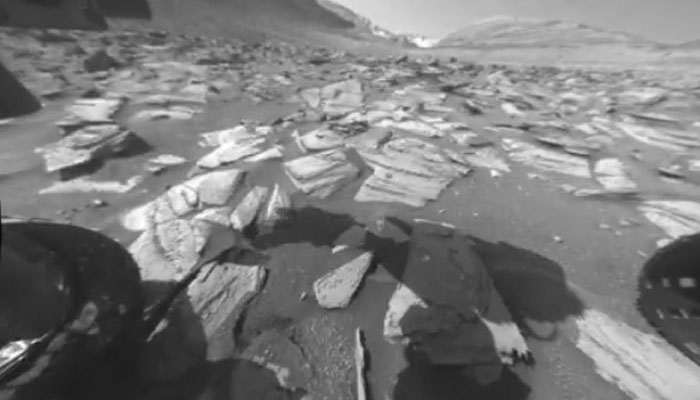
The National Aeronautics and Space Administration's (Nasa) Curiosity rover captured two animated images of the Martian landscape over 12 hours, with its own shadow in the foreground.
The images, posted by the rover on Thursday, showcase the six-wheeled vehicle's view of one Martian day, from sunrise to sunset, and showcase the beauty of Mars beyond our atmosphere.
The official Curiosity account posted the images on X, formerly known as Twitter, captioned: "Hey look – I’m a sundial! Ok, not exactly, but I did get a sol to enjoy my surroundings. During solar conjunction, I used my hazard cameras to study the Martian weather and dust."
Curiosity captured stunning images of the planet from Gediz Vallis Ridge on November 8 from 5:30am to 5:30pm local time, using its Hazard-Avoidance Cameras, which help identify obstacles and terrain.
Nasa reports that the images were taken before the Mars solar conjunction, a two-week period every two years where the sun interferes with communications between Mars and Earth.
The stitched clips provide a magnificent representation of a Martian day and Curiosity's presence during it, even though the Nasa scientists were not able to capture any Martian clouds or dust devils in the images.
Nasa's blog post reads: "As the sky brightens during sunrise, the shadow of the rover’s 7-foot (2-metre) robotic arm moves to the left, and Curiosity’s front wheels emerge from the darkness on either side of the frame. Also becoming visible on the left is a circular calibration target mounted on the shoulder of the robotic arm.
"Engineers use the target to test the accuracy of the Alpha Particle X-ray Spectrometer, an instrument that detects chemical elements on the Martian surface.
"In the middle of the day, the front Hazcam’s autoexposure algorithm settles on exposure times of around one-third of a second. By nightfall, that exposure time grows to more than a minute, causing the typical sensor noise known as “hot pixels” that appears as white snow across the final image."
However, the spots on the cameras seem to be dust which is inevitable after roaming on Mars for 11 years.