Abu Dhabi summit boosts Pakistan's push to end polio
Pakistan commits $154m to strengthen nationwide vaccination campaigns
Published December 08, 2025
ABU DHABI: Pakistan has emerged as a central focus of a global polio funding drive after international donors pledged $1.9 billion in Abu Dhabi to accelerate eradication efforts, with Pakistan remaining one of only two countries where the virus is still endemic.
Pakistan committed $154 million to strengthen nationwide vaccination campaigns, surveillance and emergency response.
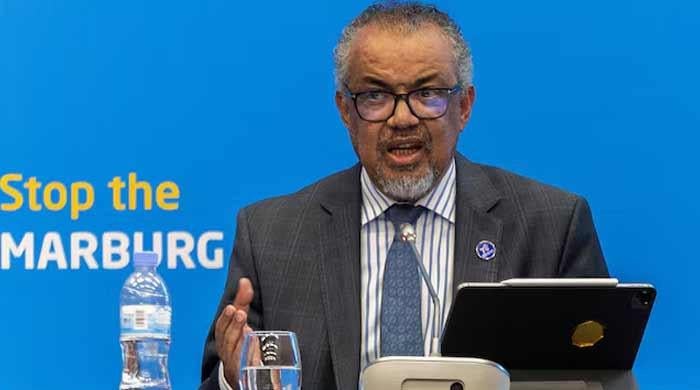
Pakistan’s Planning Minister Ahsan Iqbal represented the country at the event, which was also attended by Bill Gates, World Health Organisation Director-General Dr Tedros Adhanom Ghebreyesus, and members of the UAE leadership, including Sheikh Hamdan bin Mohamed bin Zayed Al Nahyan and Sheikha Mariam bint Mohamed bin Zayed Al Nahyan.
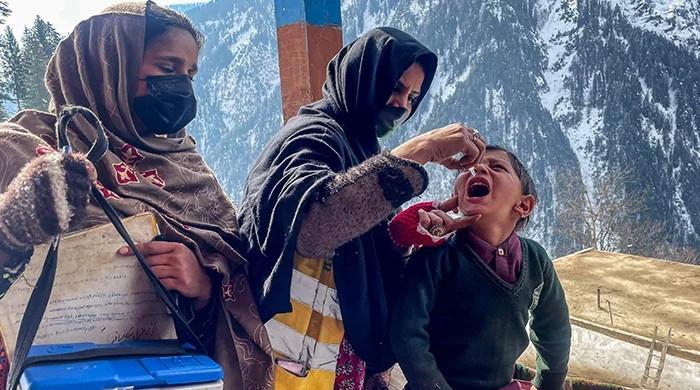
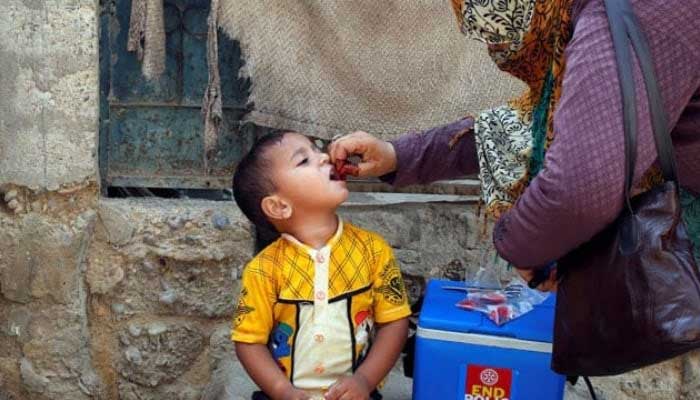
Minister Ahsan Iqbal said the country was intensifying door-to-door immunisation drives, especially in high-risk districts of Khyber Pakhtunkhwa, Balochistan and Karachi.
Major international pledges included $1.2 billion from the Gates Foundation, $140 million from the Mohamed bin Zayed Foundation for Humanity, $450 million from Rotary International, $100 million from Bloomberg Philanthropies, $62 million from Germany, $46 million from the United States, $6 million from Japan, $4 million from the Islamic Food & Nutrition Council of America (IFANCA) and $3 million from Luxembourg, along with contributions from other partner countries.
Health officials said the new funding will help Pakistan recruit and train more frontline vaccinators, improve cold-chain systems and expand monitoring of mobile and cross-border populations, particularly along the Pakistan-Afghanistan frontier.
Although global polio cases have dropped by more than 99%, Pakistan and Afghanistan reported new infections this year, underlining the need for sustained international and domestic support.
Authorities said Pakistan’s success is now considered crucial to achieving global eradication, with officials warning that failure to eliminate the virus locally would continue to pose a risk worldwide.
Polio once paralysed about 1,000 children every day in more than 125 countries. If eliminated, it would become only the second human disease ever eradicated after smallpox and could save the world more than $33 billion by the year 2100.