WATCH: Leopard spotted at Islamabad varsity as wildlife officials confirm presence
University closes units after leopard seen in bushes; officials urge calm, avoid rumours
Published December 27, 2025
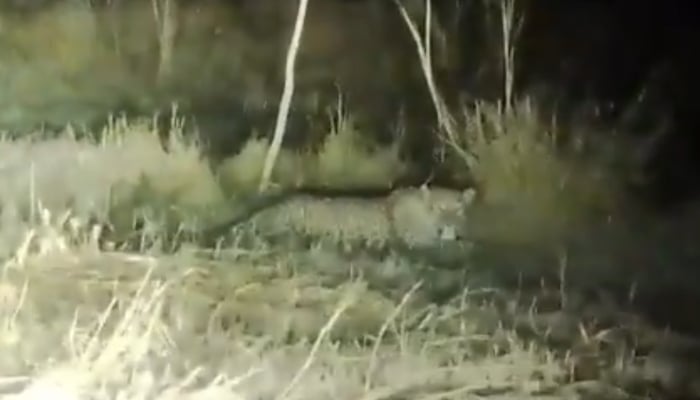
Islamabad Wildlife Management Board (IWMB) officials have confirmed the presence of a leopard at the International Islamic University (IIU), prompting the administration to close units as a search operation continues on campus.
According to the university’s spokesperson, the animal was first seen hiding in bushes inside the university grounds, triggering panic among students and staff members.
The administration said it shut down all university units immediately and informed the relevant authorities, seeking assistance from the IWMB and police.
“The safety of our students and staff is our top priority. As soon as the leopard was spotted, all university units were closed and the relevant authorities were informed,” the spokesperson said.
A wildlife team reached the campus and began a search operation, confirming signs of the leopard’s presence and indicating that the animal is still on the premises. Wildlife experts have set up traps and continue to patrol the area as a precautionary measure while coordination continues with concerned authorities.
The IWMB urged the university community and people to remain calm, avoid spreading rumours and cooperate with officials while the operation remains under way. “At this stage, there is no need to panic,” it said in a statement, adding that relevant teams were vigilant and coordinating with concerned departments.
Separately, sources said a Wildlife Board team has completed the initial inquiry into the incident, with a preliminary report suggesting the leopard may have reached the university from the Sector E-9 drain via F-9 Park.
Wildlife officials also said that if the leopard is not provoked, it does not harm humans.
The IWMB noted that leopards are naturally present in the Margalla Hills National Park area and are highly adaptable, with scientific studies suggesting a home range that can extend up to 20–30 square kilometres, meaning occasional movement into adjoining areas is possible, particularly at night. It said it is important for people to understand leopard behaviour and practise responsible coexistence.
The university said the campus would remain closed until the leopard was safely removed from the premises.
“We are closely coordinating with wildlife officials to ensure the animal is captured safely and returned to its natural habitat without harm,” the spokesperson said.