Iran signals headway in US negotiations, issues warning against strikes
President Masoud Pezeshkian warns a wider conflict would harm both Iran and America, saying Tehran does not seek war
Published February 01, 2026
- Trump confirms US–Iran talks, warns of possible military action.
- US deploys warships, led by the USS Abraham Lincoln, off Iran.
- Qatar’s PM holds talks in Tehran to help ease regional tensions.
Iran's top security official said Saturday that progress had been made towards negotiations with the United States, even as the Islamic Republic's army chief warned Washington against launching military strikes.
US President Donald Trump confirmed the two sides were talking, while keeping the threat of an attack in the foreground.
Washington has deployed warships led by the USS Abraham Lincoln aircraft carrier off Iran's shores, after Trump threatened to intervene in the wake of Tehran's deadly crackdown on anti-government protests.
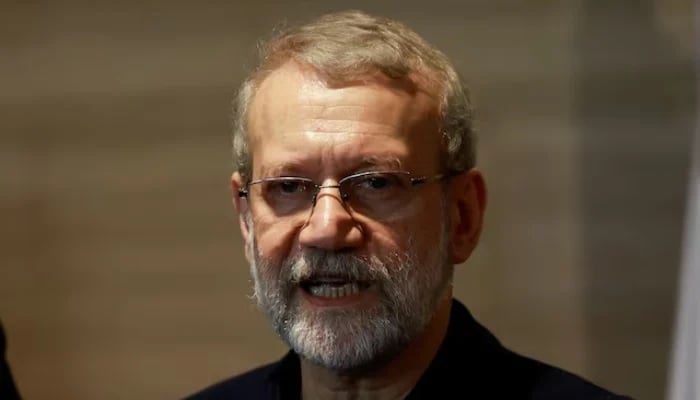
"Contrary to the hype of the contrived media war, structural arrangements for negotiations are progressing," said Ali Larijani, head of Iran's Supreme National Security Council.
He was speaking a day after the Kremlin said he held talks in Moscow with Russian President Vladimir Putin.
Iranian President Masoud Pezeshkian said Saturday a broader conflict would hurt both Iran and the United States.
"The Islamic Republic of Iran has never sought, and in no way seeks, war and it is firmly convinced that a war would be in the interest of neither Iran, nor the United States, nor the region," he said in a call with Egyptian counterpart Abdel Fattah al-Sisi, according to the Iranian presidency.
Later Saturday, Trump confirmed that there was a dialogue between Washington and Tehran.
"(Iran is) talking to us, and we'll see if we can do something, otherwise we'll see what happens... we have a big fleet heading out there," he told Fox News.
"They are negotiating," he added.
Qatar's foreign ministry said its premier, Sheikh Mohammed bin Abdulrahman Al Thani, who also serves as foreign minister, held talks in Tehran with Larijani on Saturday to try to "de-escalate tensions in the region".
Fears of conflict
The arrival of the US flotilla has raised fears of a confrontation with Iran, which has warned it would respond with missile strikes on US bases, ships and allies -- notably Israel -- in the event of an attack.
Trump has said he believes Iran will make a deal over its nuclear and missile programmes rather than face US military action.
Tehran has said it is ready for nuclear talks if its missiles and defence capabilities are not on the agenda.
Iranian army chief Amir Hatami has warned the United States and Israel against any attack, saying his forces were "at full defensive and military readiness".
"If the enemy makes a mistake, without a doubt it will endanger its own security, the security of the region, and the security of the Zionist regime," Hatami said, official news agency IRNA reported.
Iran's nuclear technology and expertise "cannot be eliminated", he added.
With tensions heightened, Iranian authorities rushed to deny that several incidents on Saturday were linked to any attack or sabotage.
They included an explosion in the southern Iranian port city of Bandar Abbas that local firefighters said was caused by a gas leak.
Naval exercise
On Friday, US Central Command (CENTCOM) said Iran's Revolutionary Guard Corps (IRGC) would conduct "a two-day live-fire naval exercise" in the Strait of Hormuz, a key transit hub for global energy supplies.
CENTCOM warned the IRGC against "any unsafe and unprofessional behaviour near US forces", drawing a sharp response from Iran's Foreign Minister Abbas Araghchi.
"The US military is now attempting to dictate how our Powerful Armed Forces should conduct target practice in their own turf," he wrote on X.
The United States designated the IRGC a terrorist organisation in 2019, a move the European Union followed on Thursday, prompting angry reactions from Tehran.
The United States carried out strikes on key Iranian nuclear sites in June when it briefly joined Israel's 12-day war against its regional foe.
Nationwide protests against the rising cost of living erupted on December 28, before turning into a broader anti-government movement that peaked on January 8 and 9 in what authorities called "riots" blamed on the United States and Israel.
'Serve the people'
The official death toll from the authorities stands at 3,117.
However, the US-based Human Rights Activists News Agency (HRANA) said it has confirmed 6,713 deaths, including 137 children.
On Saturday, Pezeshkian urged his government to heed public grievances and "serve the people".
Some Iranians at the Kapikoy border point separating Iran and Turkey, where a little over 100 people crossed on Saturday, said they wanted to be free of the clerical leaders in Tehran.
"They were shooting us in the back. We were even targeted through our windows," said Shabnan, using a pseudonym. "Everyone has lost loved ones, friends, neighbours, acquaintances."