Shahbaz Bhatti: A life given for faith, freedom, and human dignity
The only tribute equal to Shahbaz’s memory is continuation, the daily labour of building the homeland he gave his life to defend
Published March 03, 2026
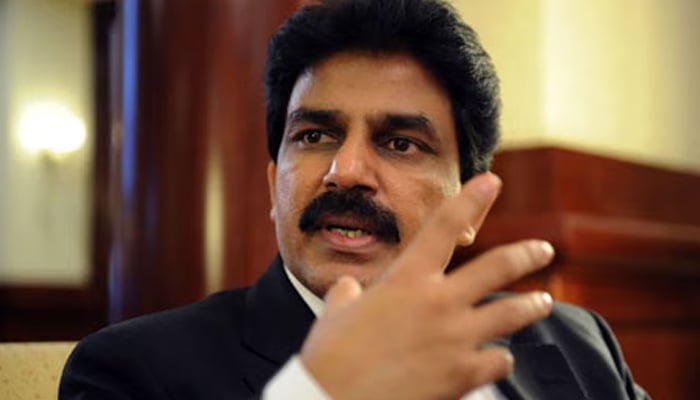
My brother Shahbaz was assassinated on 2nd March 2011, outside our mother’s home in Islamabad. He was 42 years old. The men who killed him believed they could silence a voice that had spent nearly three decades standing between the powerless and those who wished to destroy them. I have lived with the weight of that morning ever since, and I have come to understand that silence was never something Shahbaz was capable of, even in death.
He was born on 9th September 1968 — the fifth of us, six children raised by our father Jacob and mother Martha Jacob in Khushpur, a town in Faisalabad District. Our father had served in the British Army before becoming a teacher and eventually chairman of the board of churches in the area. He was a man of deep faith and discipline, and Shahbaz absorbed both. From early on, my brother experienced what he would later describe as a profound spiritual awakening. He came to believe that Christ’s sacrifice was not a story to be remembered at Sunday Mass but a call to be answered every day, in the streets, in the courts, in the prisons and in parliament. Faith, for Shahbaz, was inseparable from action.
I watched this young man with an extraordinary certainty about what he was meant to do, visiting prisoners, distributing aid, organising hunger strikes, and leading demonstrations against laws he believed were being used to persecute the innocent. In 1992, he launched the first national campaign against the misuse of Pakistan’s blasphemy laws, working alongside the renowned activist and war hero Group Captain Cecil Chaudhry, who became his closest mentor. Together, they understood that the laws introduced under General Zia ul-Haq’s military rule had created a mechanism for personal grievances to masquerade as religious offence, and that the people most exposed to this weapon were those with the least power to defend themselves.
My brother’s ability to rally tens of thousands drew the attention of former prime minister Benazir Bhutto, and after her assassination in 2007, President Asif Ali Zardari appointed Shahbaz as Federal Minister for Minorities Affairs in November 2008. It was the first time in Pakistan’s history that a Christian had held a full cabinet position. He became the sole Christian in Prime Minister Yousaf Raza Gilani’s cabinet, and he carried that responsibility with complete seriousness. He told the nation when he took office that he wanted to send a message of hope to people living in despair. He meant it. In two years, he established 126 interfaith harmony committees across Pakistan’s districts, secured legislation reserving 5% of federal employment for religious minorities, ensured four Senate seats were set aside for minority representation, and opened prayer spaces for non-Muslims in prisons. He personally followed dozens of individual cases, including that of Asia Bibi, a Christian woman sentenced to death under the blasphemy laws, whose cause he championed when almost no one else in public life dared to.
Throughout all of this, the threats never stopped. Extremist organisations had made their position on his work unmistakably clear. He was advised by people who cared about him to leave Pakistan, or at least to lower his voice. He refused. Knowing what was coming, he recorded a message to be released after his death. In it, he said: “I believe in Jesus Christ, who has given his own life for us, and I am ready to die for a cause. I’m living for my community, and I will die to defend their rights.” When I watch that recording now, I hear my brother with absolute clarity: no performance, no rhetoric, just the man I knew.
On the morning of 2nd March 2011, he had just left our mother’s house without a security escort. Gunmen from the Pakistani Taliban approached his vehicle. His driver stopped rather than flee. Shahbaz was shot multiple times and taken to a nearby hospital, where he was pronounced dead.
The grief was immense, and it was global. At his funeral in Khushpur, ten thousand people came. Catholic priests, Hindu and Sikh leaders, and Muslim representatives stood together on the same stage. Bishop Joseph Coutts of Faisalabad, barely able to speak, said Shahbaz had given his life trying to root out prejudice and plant in its place something more lasting: mutual respect.
I was living in Italy, working as a plastic surgeon, when I flew back for his funeral. At a memorial conference in Rome organised by the Community of Sant’Egidio, I publicly forgave the men who killed him. I say publicly, but the forgiveness was not a gesture. It came from the same place that everything about Shahbaz’s life came from, the belief that hatred answered with hatred only deepens the wound. I returned to Pakistan and accepted the role he had left behind, serving as Minister of National Harmony and Minority Affairs and as chairman of the All Pakistan Minorities Alliance. I did not take those responsibilities lightly. I took them because he had paid for them with his life, and because I understood, finally and completely, what he had understood all along.
Fifteen years have passed, and the pain of his absence has not dimmed. I miss the sound of his voice, his laughter, the way he could walk into a room full of frightened and exhausted people and make them feel that someone was on their side. He believed, with a conviction I have never seen in anyone else, in the founding vision of Muhammad Ali Jinnah: a Pakistan where diversity is a source of strength, where the law exists to protect those who cannot protect themselves, and where a person’s faith is their own to hold without fear or shame. He died for that vision. He died so that others would not have to. His assassination was intended to end a movement. It gave it deeper roots instead. The only tribute equal to his memory is continuation, the daily labour of building the homeland he gave his life to defend.
Dr Paul Jacob Bhatti is a medical surgeon, former federal minister for national harmony and minorities affairs of Pakistan, and a campaigner for religious freedom and minority rights