Adaptation beyond optics
If adaptation is treated as performative agenda rather than survival imperative, it risks failing precisely those communities already living with climate stress every single day
Published February 26, 2026
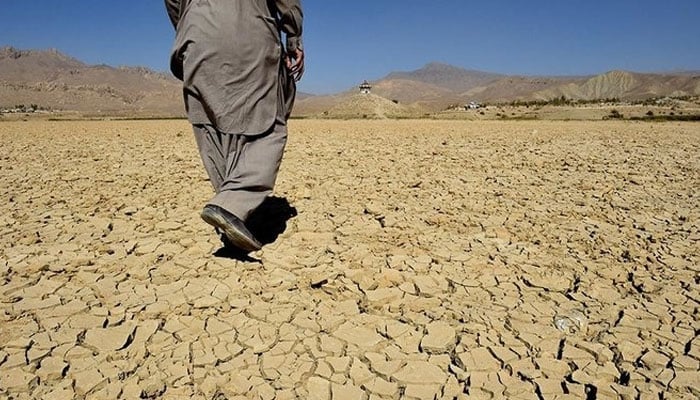
Climate adaptation in Pakistan must not become an exercise in optics, nor should it be reduced to producing attractive reports or donor-developed frameworks that look impressive on paper but barely touch realities on the ground.
If adaptation is treated as a performative agenda rather than a survival imperative, it risks failing precisely those communities that are already living with climate stress every single day. For a country ranked among the most climate-vulnerable in the world, adaptation cannot remain a rhetorical commitment; it must evolve into a deeply practical, locally anchored development strategy. Yet, despite growing global attention on adaptation, much of what is labelled ‘locally-led’ still originates from top-down processes rather than by the lived experiences of people facing climate risks.
International expertise can undoubtedly support planning but adaptation that is designed far from the realities of Pakistani communities seldom sustains itself. The climate breakdown is not experienced in conference rooms; it is experienced in fields where water no longer arrives on time, in homes where floods repeatedly damage assets and in cities where heatwaves quietly strain public health systems.
When adaptation planning begins without listening to those who face climate shocks first, it tends to misdiagnose problems and oversimplify solutions. These perspectives are not peripheral; they are central because they reveal how climate risks interact with livelihoods, gender roles and social systems. Therefore, genuinely locally-led adaptation requires a fundamental shift in mindset: communities must be treated as knowledge holders and co-architects of solutions.
Across Pakistan, people are already adjusting in quiet but meaningful ways, by altering cropping patterns, conserving water, protecting livestock or relying on informal early-warning signals derived from experience. These actions may not appear in policy documents, yet they represent adaptive intelligence accumulated over generations. The role of formal planning should be to strengthen, scale and connect such knowledge with scientific and institutional support.
However, emphasising local leadership does not mean romanticising community resilience or shifting responsibility away from the state. On the contrary, adaptation succeeds only when local knowledge is matched by institutional commitment. District administrations, municipal authorities and sectoral departments ultimately control the systems that determine resilience like water infrastructure, land-use regulation, public health services and disaster preparedness. If these systems continue to operate as if climate risks are temporary disturbances rather than structural realities, adaptation will remain fragmented and reactive.
This is precisely why adaptation must be understood as climate-proofed development rather than as a standalone climate project. Every district already invests in roads, schools, irrigation, housing and markets, but the durability of these investments increasingly depends on whether climate risks are considered from the outset. Development that ignores climate realities is not only inefficient but also unjust, because it exposes citizens to repeated losses.
The evidence is no longer speculative; rising temperatures, erratic rainfall, prolonged dry spells and intense downpours are already shaping Pakistan’s local economies. In some areas, groundwater depletion is becoming as serious as flood risk in others, and both extremes can coexist within the same province. Such patterns demonstrate that adaptation must be context-specific, since a one-size-fits-all model cannot address diverse vulnerabilities. Local planning must therefore be informed by localised climate data, hazard mapping and vulnerability assessments that translate science into usable guidance.
Yet information alone is insufficient without institutional capacity. Many local governments operate with overstretched staff and limited technical expertise, which makes it difficult to integrate climate considerations into routine planning. Expecting ambitious adaptation outcomes without strengthening local capacity is unrealistic. Training, dedicated climate coordination units and clearer mandates can gradually transform adaptation from an external project into an internal governance function.
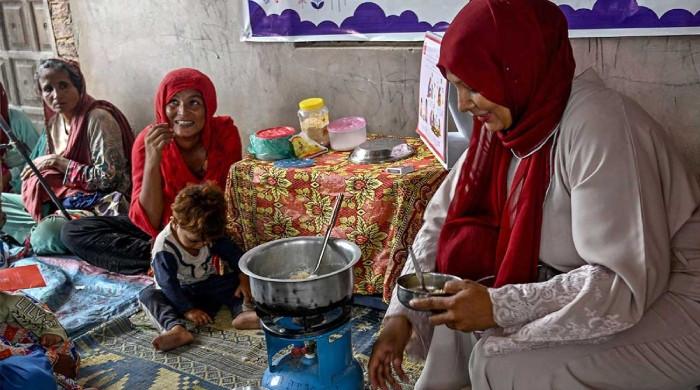
Equally important is inclusive participation, because climate risks are not socially neutral. Women often bear disproportionate burdens during water shortages and disasters, while youth face uncertain livelihood futures in climate-sensitive economies. If adaptation planning overlooks these groups or treats participation as a box-ticking exercise, it risks reinforcing inequalities.
Financing remains another decisive factor. While climate finance discussions often focus on global funds and national pipelines, local governments frequently struggle to mobilise even modest resources for resilience and without financial decentralisation, adaptation will remain aspirational. Mechanisms such as climate-sensitive budgeting, local adaptation funds and support for bankable project preparation can help bridge this gap. At the same time, the private sector cannot remain a bystander, since businesses depend on stable supply chains, water security and predictable infrastructure. Investing in resilience is therefore not philanthropy but risk management.
At the global level, however, another challenge complicates matters: the very indicators used to measure ‘successful adaptation’ are still largely shaped in the Global North, even though the harshest impacts are felt in the Global South. Countries like Pakistan, which contribute little to global emissions yet suffer disproportionately from climate shocks, are often expected to report progress against externally defined metrics that do not always reflect local realities or fiscal constraints. When adaptation success is judged through templates designed for very different contexts, it risks becoming a compliance exercise rather than a resilience-building process.
This raises legitimate concerns about fairness and climate justice. If adaptation is truly meant to be locally led, then its benchmarks must also reflect local priorities and development realities. Expecting vulnerable countries to meet idealised reporting standards while climate finance remains uncertain creates a mismatch between expectations and capabilities. A more equitable approach would allow countries on the frontlines to shape indicators that capture what resilience actually looks like on the ground.
Adaptation must also be treated as a learning process, not a fixed blueprint, as climate risks evolve – and so must responses. Regular monitoring, community feedback and periodic reviews allow adaptation to remain flexible and responsive. When local governments track what works and what fails, they build institutional memory that strengthens future planning. Importantly, locally-led adaptation should never be framed as anti-expert or anti-science. The most effective strategies emerge when scientific projections are combined with local intelligence. Climate models may indicate broad trends, but local actors know which areas flood first, which crops withstand heat and which coping strategies are viable.
There is also a governance dividend in this approach. When institutions plan seriously for climate risks, they often improve coordination, data systems and citizen engagement more broadly. In that sense, adaptation can become a pathway towards better governance rather than an additional burden. Ultimately, adaptation is about safeguarding dignity and development and ensuring that climate shocks do not repeatedly erase hard-won progress. Pakistan cannot afford a cycle in which every flood, drought or heatwave resets local development.
If adaptation remains a symbolic exercise driven by optics, Pakistan will continue to face escalating losses. But if it becomes locally owned, institutionally supported and continuously refined, it can protect livelihoods and stabilise development gains. Success should be measured not by the number of plans written, but by fewer disruptions, safer infrastructure and more secure communities.
Therefore, adaptation must move from optics to ownership, from paperwork to practice and from promises to protection of frontline communities and reducing vulnerabilities.
The writer is an environmental scientist and leads the ecological sustainability and circular economy programme at the Sustainable Development Policy Institute (SDPI), Islamabad. She is also a member of the Punjab Climate Change Committee.
Disclaimer: The viewpoints expressed in this piece are the writer's own and don't necessarily reflect Geo.tv's editorial policy.
Originally published in The News