No deal, but a door opens
Even before delegations landed, Pakistan had set deliberately modest goal: not comprehensive peace deal, but enough common ground to keep conversation alive
Published April 13, 2026
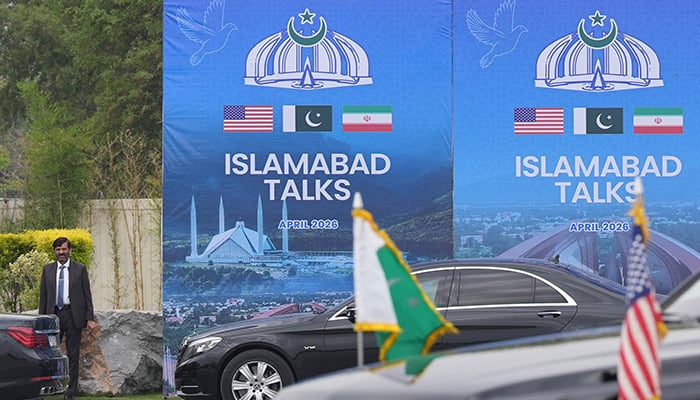
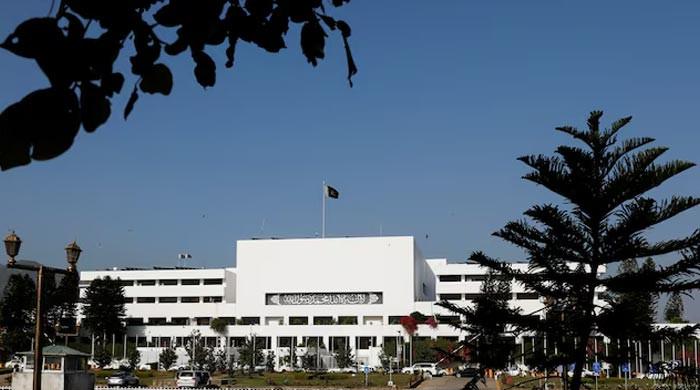
ISLAMABAD: After more than 21 gruelling hours of negotiations, American and Iranian diplomats left Pakistan’s capital on Sunday without a formal agreement. And yet, despite the failure to reach a deal, the Islamabad Talks may ultimately be remembered as a watershed moment: the first time senior officials from Washington and Tehran sat in the same building to negotiate since Iran’s 1979 Islamic Revolution.
The outcome of Saturday’s marathon talks was not surprising. Even before the delegations landed, Pakistan had set a deliberately modest goal: not a comprehensive peace deal, but enough common ground to keep the conversation alive. In an exclusive conversation with The News, Prime Minister Shehbaz Sharif said: “We undertook these efforts with a sincere and genuine intention to help create space for dialogue and give peace a real chance. While much remains to be done, I believe even the smallest steps towards de-escalation carry significance in moments such as these.”
He added: “In this regard, untiring efforts have been committed by the Chief of Defence Forces, who, without any sleep, worked through the night along with his team and the deputy prime minister. I have no doubts that Allah will reward our efforts by restoring long-term peace in the region.”
A historic first: The Islamabad Talks represent the first instance of direct high-level in-person engagement between the US and Iran since the 1979 Islamic Revolution. The sheer fact of their occurrence, with two adversaries who have spent nearly five decades communicating through proxies, intermediaries and mutual hostility, carries weight that transcends the absence of a signed agreement.
Since the Islamic Revolution, the most direct US contact had been in 2013, when President Barack Obama called the then newly elected President Hassan Rouhani to discuss Iran’s nuclear programme. Obama’s Secretary of State John Kerry and counterpart Mohammad Javad Zarif later met during negotiations towards the 2015 Iran nuclear deal, a process that lasted over a year. The Islamabad talks dwarfed those prior contacts in ambition and scope.
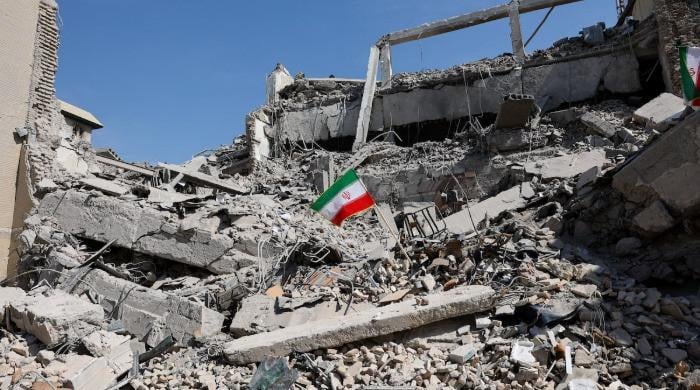
The context is one of active war. Exactly six weeks after the US and Israel launched coordinated strikes on Iran that killed Supreme Leader Ayatollah Ali Khamenei, the US-Israel-Iran conflict has affected thousands of people across multiple countries, shut down the world’s most critical oil passage and sent energy prices soaring.
The American side was led by Vice President JD Vance, alongside special envoy Steve Witkoff and Jared Kushner, President Donald Trump’s son-in-law. Iranian officials were reportedly more open to Vance’s involvement than to earlier envoys, viewing him as cautious about prolonged US military involvement in the Middle East.
Iran’s delegation of around 70 members was led by Parliamentary Speaker Mohammad Bagher Ghalibaf and Foreign Minister Abbas Araghchi. Ghalibaf arrived saying: “We have goodwill, but we do not trust”. That tension defined the entire proceeding.
Reflecting the high stakes, Chinese, Egyptian, Saudi and Qatari officials were also present in Islamabad to indirectly facilitate the talks.
The discussion: The agenda was sweeping. Iran’s spokesperson confirmed that discussions were held on various aspects of the core issues, including the Strait of Hormuz, the nuclear question, war compensation, lifting of sanctions and a complete cessation of hostilities.
The Strait of Hormuz loomed over everything. Tehran’s decision to effectively shut down the waterway through which 20% of the world’s oil and gas passes rattled global markets and drove energy prices to record highs. Washington demanded it be reopened unconditionally; Tehran insisted on sovereign control over it jointly with Oman, along with transit fees from passing ships.
On the nuclear front, the US went further than a simple commitment. Washington pushed for the physical seizure and securing of Iran’s stockpile of enriched uranium, demanding it be placed under international control as a concrete, verifiable guarantee that Tehran harbours no ambitions to build a bomb. The US also pressed Iran to degrade its arsenal of intercontinental ballistic missiles and other long-range weapons systems capable of threatening Israel.
Iran, meanwhile, demanded the release of frozen assets abroad, war reparations for damages caused by US and Israeli strikes, and a ceasefire across the region, including Lebanon.
When Vance stepped to the podium before boarding Air Force Two, he was blunt about what had broken down. “We need to see an affirmative commitment that they will not seek a nuclear weapon, and they will not seek the tools that would enable them to quickly achieve a nuclear weapon”, he told reporters. “We haven’t seen that yet”.
President Trump was even more direct in a statement, saying there was “only one thing that matters -- Iran is unwilling to give up its nuclear ambitions.”
Iran’s side framed the breakdown differently. Iran’s semi-official Tasnim news agency said that “excessive” US demands had hindered reaching an agreement, while other Iranian media said there was agreement on a number of issues but that the Strait of Hormuz and Iran’s nuclear programme were the main points of difference.
Pakistan’s role: For Pakistan, the talks were an extraordinary diplomatic achievement in their own right. The meeting has put Pakistan at the centre of the biggest story in the world, spotlighting its normally sleepy capital.
Prime Minister Shehbaz Sharif and Army Chief Field Marshal Asim Munir were credited by both sides for creating the conditions that made talks possible at all. Vance publicly praised Pakistan’s role, calling Sharif and Munir “extraordinary men”. Trump, in his statement, thanked them for their “kind and very competent leadership”.
Foreign Minister Ishaq Dar said Pakistan would try to facilitate a new round of dialogue between Iran and the US in the coming days, stating: “It is imperative that the parties continue to uphold their commitment to [the] ceasefire”.
The ceasefire, brokered through Pakistan’s mediation, remains technically in effect, with several days still remaining. Vance said the US had left a “final and best offer” on the table, and would await Iran’s response. The ball, in effect, is now in Tehran’s court.
For Prime Minister Shehbaz Sharif, the Islamabad talks may well stand as the defining legacy of his tenure: a leader who came to power amid economic crisis and political turbulence and who created his mark on history by pulling two major adversaries back from the brink of catastrophe. In brokering a moment that eluded every world capital from Washington to Geneva, Sharif has unmistakably emerged as one of the most consequential statesmen of his era.
The talks were of immense strategic significance for Field Marshal Asim Munir as a military commander who keenly understood what their failure could unleash. His active participation through the long negotiating hours represents perhaps the most consequential chapter of a career built on keeping Pakistan secure in an uncertain world.
History rarely moves in straight lines. The 2015 Iran nuclear deal took over a year of intensive back-and-forth, and even that process began with cautious first steps. The road to any lasting settlement between Washington and Tehran will almost certainly be long, contentious and non-linear. But after nearly half a century without direct senior-level talks, the two sides are at least finally talking. That alone is not nothing. In fact, that may be everything.
Rana Jawad is the Director of News at Geo News. He tweets @ranajawad