Beyond Operation Sindoor
Indian analysts now forced to acknowledge Pakistan’s geopolitical utility once again become indispensable to major powers
Published May 13, 2026
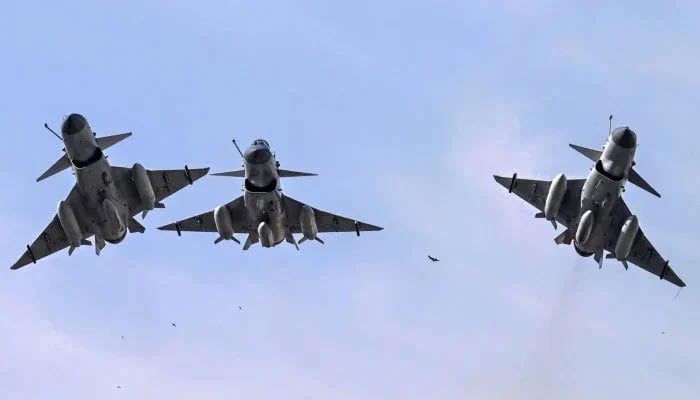
The recent essays by TCA Raghavan and Sharat Sabharwal are important not because they break new ground, but because they reveal the evolving anxieties, contradictions, and strategic recalibrations within India’s diplomatic establishment after one year of Operation Sindoor.
Both writers acknowledge, albeit reluctantly, that Pakistan has not emerged weakened or isolated after the 2025 crisis. Instead, they concede that Islamabad’s geopolitical relevance has risen, particularly due to its role in mediating between the US and Iran during the 2026 regional war. Yet their analyses remain trapped in an old framework: viewing Pakistan primarily through the lens of coercion, suspicion and strategic rivalry rather than regional interdependence and political realism.
At the heart of both articles lies a paradox. India claims Operation Sindoor established a ‘new normal’ of punitive deterrence against Pakistan, yet one year later, Indian strategic thinkers themselves admit that the operation did not fundamentally alter Pakistan’s behaviour, eliminate militancy, isolate Islamabad internationally, or produce a sustainable regional equilibrium. If anything, both authors concede that Pakistan’s diplomatic standing has improved substantially since May 2025. No one bought the Indian narrative, mainly because Pakistan displayed transparency and offered a neutral investigation of the Pahalgam incident. This alone should compel a serious reassessment in New Delhi.
The first reality that Indian analysts are now forced to acknowledge is that Pakistan’s geopolitical utility has once again become indispensable to major powers. History has repeatedly shown that predictions of Pakistan’s collapse are less analytical conclusions than recurring political fantasies. Pakistan has survived sanctions, wars, insurgencies, economic crises and diplomatic pressure because its strategic location and political relevance remain deeply embedded in the wider Asian balance of power.
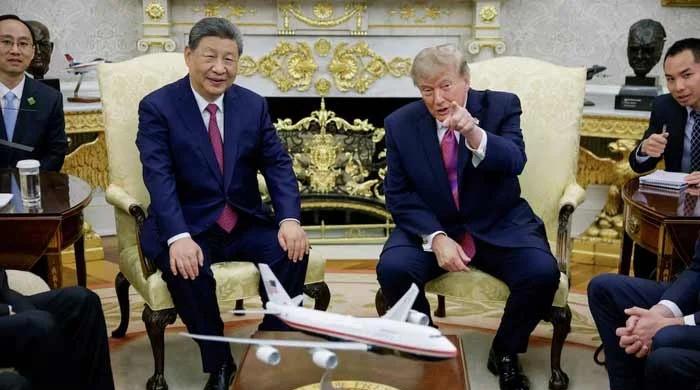
The Iran-US crisis of 2026 demonstrated this clearly. At a moment when the region stood dangerously close to a catastrophic escalation, Pakistan maintained communication channels with Tehran, Washington, Riyadh, Beijing, Ankara, Cairo and other regional capitals simultaneously. Islamabad’s mediation efforts were not accidental or opportunistic; they reflected Pakistan’s unique ability to engage competing powers without becoming fully subsumed into any single bloc. That role was publicly acknowledged by both Iran and the US. The fact that Indian commentators now openly recognise Pakistan’s diplomatic resurgence is itself significant. On the contrary, Prime Minister Modi’s visit to Israel just two days before the attack on Iran made New Delhi’s position suspicious of playing any role in the Iran war.
Equally important is the implicit admission in these essays that India’s expectation of diplomatically isolating Pakistan has failed. After the global war on terror receded, international politics returned to classical realism. States now prioritise strategic interests over moral narratives. As Sabharwal candidly admits, “Pakistan-linked terrorism” no longer mobilises the same global response it once did. This does not mean terrorism is irrelevant; rather, it means the international system increasingly evaluates countries through broader geopolitical calculations.
India must therefore confront an uncomfortable truth: coercion alone cannot produce strategic transformation in South Asia. Operation Sindoor may have demonstrated military capability, but military signalling without a political framework risks creating a perpetual cycle of escalation. Even the authors concede this indirectly. Sabharwal warns that coercion without diplomacy becomes “an endless journey of conflict and crises”. That observation deserves greater attention than the triumphalist rhetoric that often dominates Indian discourse.
The comparison both writers make between Pakistan’s approach toward Afghanistan and India’s allegations against Pakistan also requires scrutiny. Pakistan’s tensions with Afghanistan stem primarily from the TTP, a group that has conducted large-scale attacks inside Pakistan, targeting civilians, security forces and infrastructure. Islamabad’s concerns are not theoretical. Thousands of Pakistanis have died due to terrorism originating from sanctuaries across the border since the fall of Kabul in 2021.
However, equating this situation simplistically with India’s accusations ignores crucial differences. The Kashmir dispute remains an unresolved political conflict recognised internationally, whereas the TTP openly seeks to overthrow the Pakistani state itself. More importantly, the persistence of militancy in the region cannot be separated from decades of wars, occupations, intelligence rivalries, and failed regional political settlements involving multiple external actors.
The broader strategic flaw in contemporary Indian thinking is the belief that regional dominance can substitute for regional accommodation. India’s rise as a major economic and military power is undeniable. Yet great powers ultimately derive stability not merely from coercive superiority but from the construction of durable regional orders. South Asia today remains one of the least integrated regions in the world precisely because political hostility has overwhelmed economic rationality.
Ironically, both former diplomats acknowledge that what could form the basis of a workable long-term settlement is: no redrawing of borders, pragmatic management of Kashmir, transit connectivity and mutually beneficial cooperation. These ideas are neither revolutionary nor unrealistic. Variations of them have appeared repeatedly in earlier backchannel diplomacy between Islamabad and New Delhi. The tragedy is that domestic politics on both sides increasingly punish moderation while rewarding confrontation.
The danger today is particularly acute because both countries are operating under intensified nationalism, advanced military technologies, and shrinking diplomatic space. Unlike previous decades, future crises may unfold at far greater speed, leaving little room for de-escalation. The experience of the recent Iran conflict should have reinforced this lesson. Even the formidable military capabilities of the US and Israel could not easily impose political outcomes upon Iran despite overwhelming technological superiority. Geography, nationalism, asymmetrical responses, and political resilience continue to shape modern warfare in decisive ways.
Pakistan, for its part, must also avoid the temptation of strategic complacency. Diplomatic relevance cannot indefinitely compensate for internal weaknesses. The country still faces serious economic pressures, political polarisation, governance deficits and security challenges. Sustainable influence abroad ultimately depends upon stability and institutional strength at home. Pakistan’s leadership would therefore be wise to convert its renewed geopolitical relevance into economic recovery, regional connectivity and internal political reconciliation.
At the same time, India must decide whether it seeks perpetual crisis management or a broader strategic settlement in South Asia. An approach centred exclusively on deterrence, punitive strikes and maximalist rhetoric may generate short-term domestic political gains, but it does not resolve underlying disputes. Nor does it eliminate the risks of escalation between two nuclear-armed neighbours.
The writings of Raghavan and Sabharwal unintentionally reveal a deeper reality: despite military confrontation, diplomatic hostility and mutual mistrust, neither India nor Pakistan has succeeded in fundamentally altering the other’s strategic calculus. The Subcontinent remains trapped between deterrence and dialogue, coercion and coexistence.
Ultimately, the future of South Asia will not be determined by who can produce the louder nationalist narrative, but by who can demonstrate greater strategic maturity. The choice before both countries is stark: continue investing in recurring crises that drain resources and destabilise the region, or gradually rebuild political space for diplomacy, trade and managed competition.
The first anniversary of Operation Sindoor should not be remembered merely as a moment of military signalling. It should serve as a reminder that sustainable peace in South Asia cannot emerge from coercion alone. It requires political courage, diplomatic imagination and, above all, recognition that geography has made India and Pakistan permanent neighbours, whether they like it or not.
The writer is a former ambassador of Pakistan to Iran and the UAE. He is also a former special representative of Pakistan for Afghanistan and currently serves as a senior research fellow at the Islamabad Policy Research Institute (IPRI).
Disclaimer: The viewpoints expressed in this piece are the writer's own and don't necessarily reflect Geo.tv's editorial policy.
Originally published in The News