US, Iranian teams could return to Islamabad for peace talks this week, say sources
Second round of US-Iran negotiations expected within days as mediation efforts continue, reports Reuters
Published April 14, 2026
- Delegations keeping Friday through Sunday open for meeting: Iranian source.
- US Vice President Vance and Iran Speaker Qalibaf led previous delegations.
- Vance calls US proposal as 'final and best offer' after Islamabad talks.
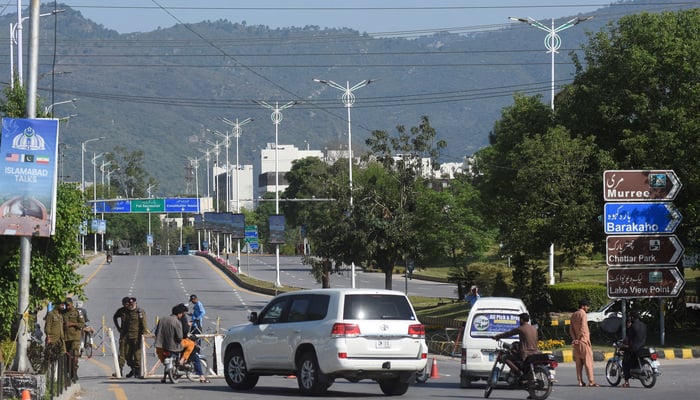
Negotiating teams from the US and Iran could return to Islamabad later this week, five sources said on Tuesday, days after the highest-level inaugural talks between the two countries in decades ended inconclusively.
A source involved in the negotiations said a date is not yet decided, but both countries could return as early as the end of this week.
"No firm date has been set, with the delegations keeping Friday through Sunday open", a senior Iranian source said.
The weekend meeting in Islamabad to resolve the conflict between Washington and Tehran, held four days after last Tuesday's ceasefire announcement, was the first direct encounter between American and Iranian officials in more than a decade, and the most senior engagement since Iran's 1979 Islamic Revolution.
A proposal has been shared with both the US and Iran to resend their delegates to resume the talks, the first source said.
Two Pakistani sources with knowledge of the talks said Islamabad is communicating with the two sides about the timing of the next round and the meeting would likely take place on the weekend.
"We have reached out to Iran and we got a positive response that they will be open to a second round of talks," a senior Pakistani government official said.
Pakistan's foreign ministry and Prime Minister's Office did not respond to a Reuters request for comment. The White House also did not immediately respond to a request for comment.
US Vice President JD Vance and Iranian Parliamentary Speaker Mohammad Baqer Qalibaf led their respective delegations in the last round of talks to work out a slew of issues, including the Strait of Hormuz, a major transit point for global energy supplies that Iran has effectively blocked but the US has vowed to reopen, as well as Iran's nuclear programme and international sanctions on Tehran.
Vance told reporters after the talks ended that "We leave here with a very simple proposal, a method of understanding that is our final and best offer."
"We'll see if the Iranians accept it."
The initial round of US-Iran talks, hosted by Pakistan in Islamabad, brought together senior delegations in what officials described as intensive, closed-door negotiations aimed at ending weeks of conflict. The trilateral ‘Islamabad Talks’ lasted nearly 21 hours after beginning on the afternoon of April 11, reflecting the complexity and high stakes involved.
Despite extensive discussions, the first round ended without a formal agreement. Officials in Islamabad, however, viewed the meeting as a significant step in opening direct channels of communication between Washington and Tehran.
The Islamabad talks were widely seen as a rare instance of direct engagement facilitated by a third party, with Pakistan coordinating closely with both sides to bring them to the table. Officials familiar with the process said the discussions focused on narrowing differences over ceasefire terms, regional security and broader political concerns.
The conflict, which began on February 28 following coordinated US-Israeli strikes on Iranian targets, has killed more than 2,000 people and destabilised the wider region. Iran responded with retaliatory actions, including disrupting shipping through the Strait of Hormuz and targeting US and Israeli interests.
A ceasefire announced on April 8 — brokered with Pakistan's involvement — has temporarily halted hostilities, but major disagreements remain. Washington has proposed a 15-point framework covering nuclear and missile issues, sanctions relief and maritime security, while Tehran has put forward a 10-point plan seeking broader sanctions removal and greater control over key waterways.
The international community has broadly welcomed Pakistan’s role in hosting the Islamabad Talks and facilitating dialogue, with its continued diplomatic efforts seen as key to sustaining momentum towards a potential agreement.
Premier Shehbaz will visit Saudi Arabia, Qatar and Turkiye, say sources, as Pakistan intensifies diplomacy.