Lead exposure poses serious health risks to children in Pakistan: study
Unicef-backed study warns of severe health, cognitive impacts, calls for urgent nationwide action
Published May 02, 2026
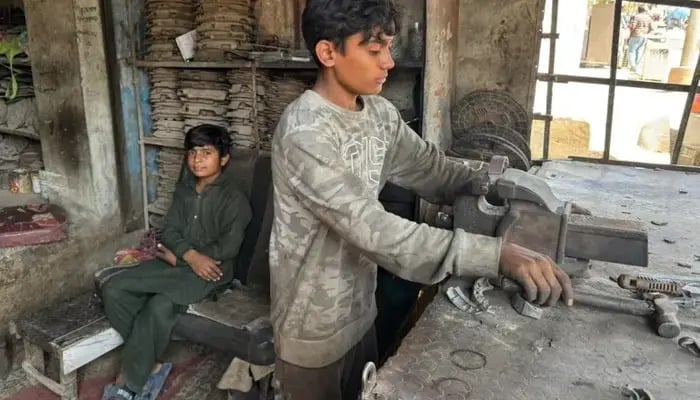
A new study by the Ministry of National Health Services, Regulations and Coordination and the United Nations Children’s Fund (Unicef) has found that four in ten children aged 12 to 36 months living in high-risk areas across seven cities in Pakistan have elevated lead levels in their blood, posing a serious public health threat.
The study highlights that lead exposure can stunt growth, cause anaemia, and weaken the immune system. It also affects brain development by lowering IQ, reducing attention span, and impairing memory, increasing the likelihood of learning difficulties and behavioural issues.
The study analysed more than 2,100 children residing in industrial zones in Haripur, Islamabad, Karachi, Lahore, Peshawar, Quetta, and Rawalpindi, revealing stark regional disparities. The highest prevalence was recorded in Hattar, Haripur, where 88% of children had elevated lead levels, compared to just 1% in Islamabad.
Officials stressed that tackling lead exposure must be treated as a national priority. “Protecting children from lead exposure is a national public health priority,” said Federal Secretary Health Muhammad Aslam Ghauri, noting the need for coordinated action across health, environmental and regulatory systems. He added that the government aims to enhance surveillance, strengthen enforcement, and integrate prevention into child health programmes nationwide.
The report identifies several likely sources of exposure, including industrial emissions, informal battery recycling, lead-based paints, contaminated food and spices, and traditional cosmetics. It notes that weak regulatory enforcement, insufficient monitoring, and low public awareness continue to sustain these risks.
Global estimates indicate the problem could be even more widespread, with up to 80% of children in Pakistan potentially affected, placing the country among those with the highest burden. Lead exposure is also linked to reduced learning capacity and long-term economic losses estimated at 6% to 8% of GDP, or roughly $25bn to $35bn annually.
Unicef’s Representative in Pakistan, Pernille Ironside, warned that children are particularly vulnerable, absorbing significantly more lead than adults. She said the metal harms multiple body systems, with especially severe and irreversible effects on developing brains, stressing that no level of exposure is considered safe.
Stakeholders at a high-level event reviewing the findings emphasised the need for sustained coordination and immediate action. Key priorities include developing a national plan to eliminate lead from high-risk products, establishing a blood lead surveillance system within child health programmes, raising public awareness, and forming a government-led multi-sectoral task force.
“Lead poisoning is one of the most preventable threats to child health and development,” said Abdullah Fadil, Director of the Partnership for a Lead-Free Future, calling for urgent regulatory action, stronger enforcement, and increased investment in prevention.
To further strengthen data, a nationwide survey is planned later this year to assess lead exposure among children and pregnant women, two of the most vulnerable groups.
The study’s launch coincided with a mission by the Partnership for a Lead-Free Future to Pakistan, aimed at supporting national efforts through technical collaboration and aligning strategies to eliminate childhood lead poisoning by 2040.