Proposed tax relief package awaits IMF approval ahead of FY27 budget
Policymakers eye increasing GST on solar panels, hybrid vehicles and nearly two dozen other products
Published June 08, 2026
- Salaried taxpayers may get slab reductions.
- Property sector incentives linked to talks.
- Super Tax cut proposal under review.
ISLAMABAD: The government is awaiting the International Monetary Fund’s (IMF) approval for a proposed package of tax relief measures, including cuts for salaried individuals and businesses, while negotiating new revenue-raising steps ahead of the 2026-27 federal budget.
Among the key proposals under discussion are lower income tax slabs for salaried individuals, a two-percentage-point cut in the Super Tax, withdrawal of 1% advance income tax on exporters and substantial incentives aimed at reviving the property sector.
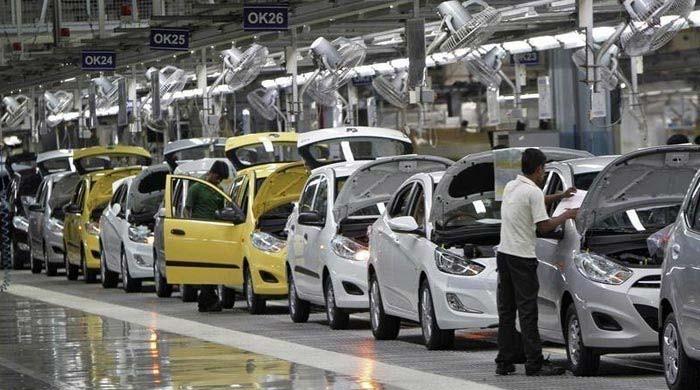
At the same time, the policymakers are weighing plans to increase the General Sales Tax (GST) to the standard 18% rate on solar panels, hybrid vehicles and nearly two dozen other products as part of efforts to boost revenue collection.
Pakistan has also approached the IMF to retain the concessional GST regime for electric vehicles (EVs), arguing that the measure supports energy conservation goals and aligns with commitments under the $1.4 billion Resilience and Sustainability Facility (RSF) programme.
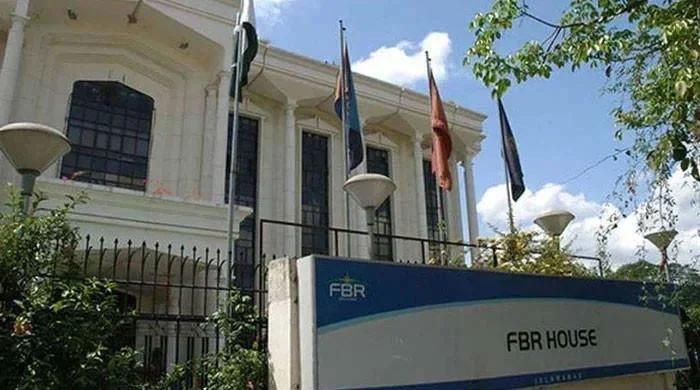
Speaking to The News, top officials confirmed that it was becoming harder for the government to undertake number-crunching with the IMF to raise the tax collection target to Rs15,264 billion in the Fiscal Year 2026-27 after revising downward the tax collection target of Rs13,428 billion for the outgoing fiscal year ending on June 30, 2026.
This indicates that the FBR will have to generate an additional Rs1,836 billion in the next fiscal year if it achieves the target for the outgoing fiscal year.
However, insiders say that the FBR’s collection will hover around Rs13,000 billion in the outgoing fiscal year, and it will have to generate an additional Rs2,264 billion in the next budget to achieve the desired target of Rs15,264 billion.
Sources said the government had proposed a cut in tax slabs for the salaried class, especially for middle-income groups, in the range of 5%, but it will depend on the available fiscal space agreed with the IMF.
The taxable ceiling for the maximum tax rate of 35% for the salaried class might be enhanced. On the super tax, the government has proposed a 2% reduction, bringing it down from 10% to 8% for selected higher-income companies and individuals.
The government has also proposed major relief for property transactions, as it wishes to reduce the sale and purchase tax on property to zero for filers. However, the IMF has insisted that there should be some transaction tax, even in the range of 0.5% to 1%, for documentation purposes.
On revenue mobilisation efforts, the IMF wants to bring the majority of two dozen items from reduced GST rates to the standard rate of 18% in the next budget.
There is an existing rate of 5% on second-hand and worn clothing or footwear; 5% on natural gas supplied to fertiliser plants for use as feedstock in manufacturing fertiliser; 5% on phosphoric acid imported by fertiliser companies for manufacturing DAP; 10% on rock phosphate; 1% on locally manufactured electric vehicles other than cars; 1% on locally manufactured electric cars and SUVs; 8.5% on locally manufactured hybrid electric vehicles; 16% on goods supplied from tax-exempt areas of erstwhile FATA/PATA to taxable areas; 10% on imported personal computers, laptops and notebooks; 3% , with no supply adjustment, on locally manufactured articles of jewelry or parts thereof made of precious metal or metal clad with precious metal; 12.5% on electric vehicles in CBU condition; 1% on EV transport buses with 25 seats or more in CBU condition; 1% , with no input adjustment, on substances registered as drugs under the Drugs Act, 1976; 1% on raw materials for the basic manufacture of pharmaceutical active ingredients and pharmaceutical products; 5% on DAP fertiliser; 10% on colouring sets and stationery; 10% on oil cake; 10% on tractors; 10% on the local supply of vermicelli, sheermal, bun, and rusk, excluding those sold in bakeries and sweet shops falling under the category of Tier-1 retailers; 10% on the local supply of poultry feed, cattle feed, sunflower seed meal, rapeseed meal and canola seed meal; 12% in 2026-27 and 14% in 2027-28 on imports of plant, machinery and equipment for installation in tribal areas and imports of industrial inputs by industries located in tribal areas and 10% GST on solar panels.
The IMF wants to impose the standard GST rate of 18%, and it remains to be seen how many products the government will be able to persuade the IMF to exempt from the higher GST rate in the upcoming budget, particularly highly sensitive consumer items.
Originally published in The News