Key takeaways from Federal Budget 2026-27
Rs18.8tr budget combines targeted tax relief with an ambitious revenue collection plan
Published June 13, 2026
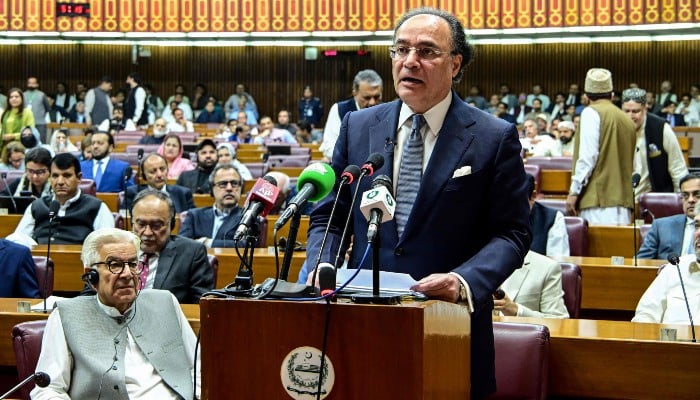
Finance Minister Muhammad Aurangzeb unveiled a Rs18.77 trillion expansionary budget for fiscal year 2026-27, targeting a fiscal deficit of 3.6% of GDP as the federal government navigates strict International Monetary Fund (IMF) discipline.
The federal budget for FY2026-27 offers targeted relief to salaried individuals, exporters, real estate and selected market sectors, while keeping fiscal consolidation at the centre of the government's IMF-linked economic plan.
According to AHL Research, the budget is broadly positive for the equity market as it combines fiscal discipline with relief measures, tariff rationalisation and no new taxes on stock market transactions.
Here are the key takeaways from the federal budget:
- Total federal budget outlay has been set at Rs18.8 trillion, up 20% from the revised estimate for FY2025-26.
- The FBR tax collection target has been fixed at around Rs15.3 trillion, reflecting an ambitious revenue-growth requirement.
- The overall fiscal deficit has been projected at Rs5.2 trillion, or 3.6% of GDP.
- Debt servicing remains the largest pressure point, with mark-up payments budgeted at around Rs8.1 trillion.
- The defence allocation has been proposed at Rs3 trillion.
- Federal PSDP has been set at Rs1 trillion, up 22% year-on-year. Combined PSDP stands at Rs3.7 trillion after including provincial development allocations.
- Salaried individuals have been given tax relief through restructuring of income tax slabs.
- The threshold for the maximum 35% salaried tax rate has been increased from Rs4.1 million to Rs7 million.
- Tax on deemed income from immovable property under Section 7E, effectively charged at 1% of fair market value, has been abolished.
- Advance tax on purchase of immovable property has been reduced to 1.25% of fair market value, while tax on sale or transfer has been reduced to 2.75% of consideration value.
- Tax collection on export proceeds has been reduced from 2% to 1.25%.
- The reduced tax rate of 0.25% for IT and IT-enabled services exports has been extended up to tax year 2029.
- Advance tax on foreign payments through debit, credit and prepaid cards has been reduced from 5% to 0.5%.
- A tax credit equal to 10% of investment in electronic resources has been introduced for integration with FBR’s computerised systems.
- Super tax has been abolished for persons having income up to Rs500 million, according to the Finance Bill's salient features.
- The Finance Bill says the super tax rate for income above Rs500 million has been reduced from 10% to 8%, except for banking, E&P and fertiliser sectors.
- The petroleum levy target has been budgeted at around Rs1.68 trillion for FY2027.
- The budget introduces 5% withholding tax on social media earnings, which applies to income from platforms including YouTube, Facebook, Instagram and TikTok.
- Banks and financial institutions will deduct the tax when payments are credited.
- Several consumer goods are being moved to retail-price sales tax collection, meaning tax will be charged at the manufacturer or import stage on the printed retail price.
- GST changes are expected to make several commonly used items costlier.
- Items added include milk products, edible oils, ketchup, jams, footwear, crockery, sanitaryware, hair products, plastic household goods and bags.
- Tampon tax has been abolished.
- The reduced 0.25% tax rate for IT and IT-enabled services exports has been extended to tax year 2029.
- Withholding tax on international debit and credit card transactions has been reduced from 5% to 0.5%.
- Solar panels and photovoltaic cells continue to appear among major tax-exempt items.
- The government expects to collect Rs50 billion through the Climate Support Levy.
- The Ministry of Climate Change and Environmental Coordination has been allocated nearly Rs5 billion.
- The climate ministry’s development allocation stands at Rs2.48 billion.
- Almost 94% of the ministry’s development budget is allocated to the Green Pakistan Programme.
- Token tax on motor vehicles in Islamabad Capital Territory has been increased.
- Vehicles up to 1000cc will face token tax of Rs20,000 in ICT.
- Vehicles above 1000cc will be taxed on the basis of invoice value.
- Imported vehicles above 2000cc will face 40% to 41% FED.
- Luxury imported vehicles and luxury EVs will also face FED.
- E-cigarette e-liquid FED has been increased from Rs10,000 to Rs16,500 per kg.
- Export tax has been reduced from 2% to 1.25%.
- Capital Value Tax on foreign assets of resident Pakistanis has been abolished.
- Minimum tax for distributors and wholesalers has been raised from 0.25% to 0.5%.
Overall, the budget gives selective relief, supports market sentiment and keeps the IMF fiscal path intact, but its success depends on whether the government can meet ambitious revenue targets without hurting documented businesses.