Govt eyes more global bond issues, sees budget upside from Iran deal
"I do see upsides in what we have projected for next year," says Finance Minister Aurangzeb
Published June 16, 2026
- Commercial borrowing may replace some bilateral debt.
- Defence-export upside too early to quantify.
- Crypto taxation to follow regulation, licensing.
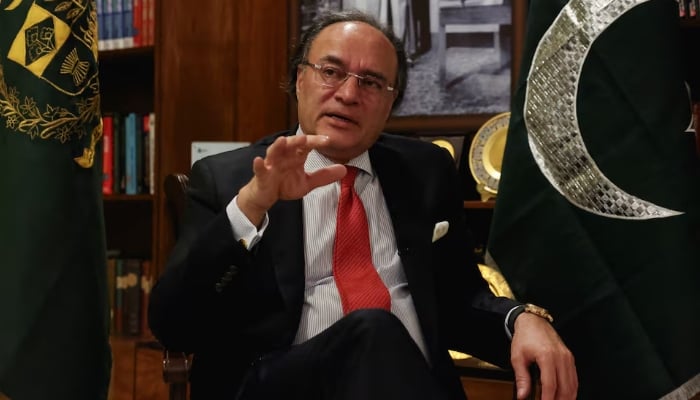
ISLAMABAD: Pakistan could improve economic projections for 2027 after the end of the US war on Iran, but it is still too early to revise the budget, Finance Minister Muhammad Aurangzeb told Reuters, hours after the US and Iran signed a deal to end the fighting.
Damaged energy infrastructure meant supply chains would take time to return to normal, after the conflict pushed inflation back into double digits, Aurangzeb said.
"We were looking at how we manage the second, third-order impact in case this conflict continues," he said. "The energy infrastructure has been hit. And therefore, it will take time before we return to normalcy in terms of supply chains."
He added: "I do see upsides in what we have projected for next year," but cautioned it would be "way too premature" to revise the budget.
Pakistan's FY2026-27 budget, presented in parliament on Friday, targets growth of 4% and inflation of 8.2%.
It raised defence spending 18% to Rs3 trillion ($10.8 billion), while relying on higher tax revenue to keep a $7-billion IMF programme on track.
Commercial borrowing to change creditor profile
The government may use commercial borrowing in fiscal year 2027 to change its creditor profile without increasing overall external debt, Aurangzeb added in comments on Monday.
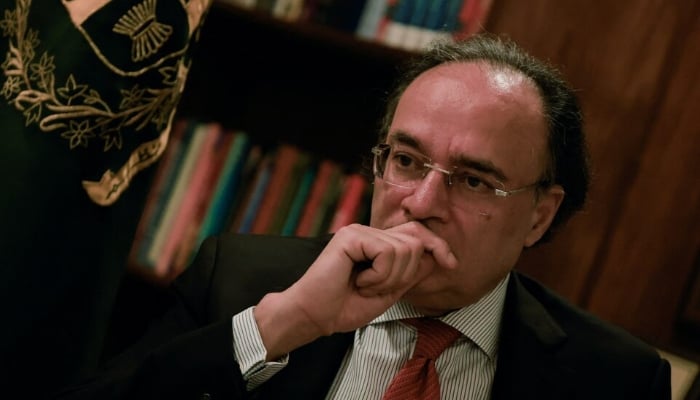
"Ideally, what we want to do is to see if we can replace some of the bilateral through commercial," he said. "We do not intend to increase the size of our external debt."
Pakistan repaid $3.4 billion in bilateral UAE deposits last month but has also tapped UAE commercial banks for financing, reflecting the creditor-profile shift Aurangzeb wants to formalise.
It plans further Panda Bond, Eurobond, US dollar and first rupee-linked, dollar-settled issues, though the sizes have yet to be decided, he said.
The FY2026-27 budget envisages $2.82 billion in commercial and Eurobond financing, while Pakistan has approval for the equivalent of $1 billion in Panda bonds after a $250 million debut that was 95% backed by the ADB and AIIB.
Former banker has presented three budgets
A former banker, Aurangzeb has presented three consecutive budgets, achieving a rare run in Pakistan, where governments often fail to complete their terms and finance ministers are frequently replaced.
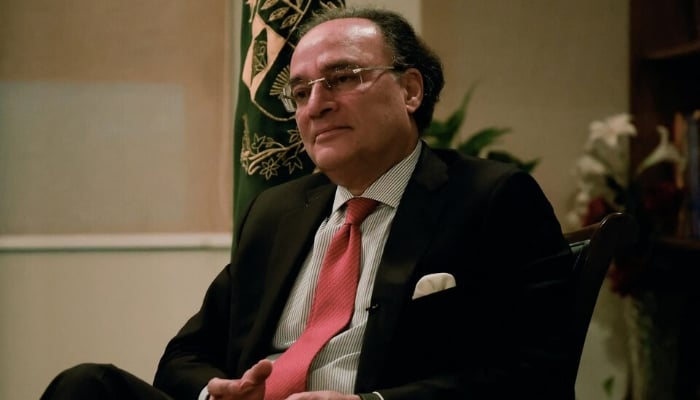
Interest has surged in Pakistan's burgeoning defence industry after last year's conflict with India, but Aurangzeb said it was too early to project any defence-export upside.
The government's immediate focus is on allocations, given two "active" borders, he added, as Pakistan shares borders with Afghanistan and India.
Pakistan's defence manufacturing industry has been running red-hot since its jets, drones, and missiles earned the coveted "combat-tested" tag in the India conflict, drawing a slew of buyers.
Pakistan has moved to formalise the digital asset sector this year, for example by signing pacts with Binance and World Liberty Financial.
Aurangzeb said Pakistan would regulate crypto, tokenisation and digital-asset exchanges before taxing the sector, saying revenue gains would follow once it was formalised.
"Yes, at some point we have to bring it into the taxation timeframe," he added. "But this was not the time to do it."