PSX extends rally as SBP policy rate hold, oil losses lift sentiment
Slump in global crude prices and surging global equities played a catalyst role in bullish activity, says expert
Published June 16, 2026
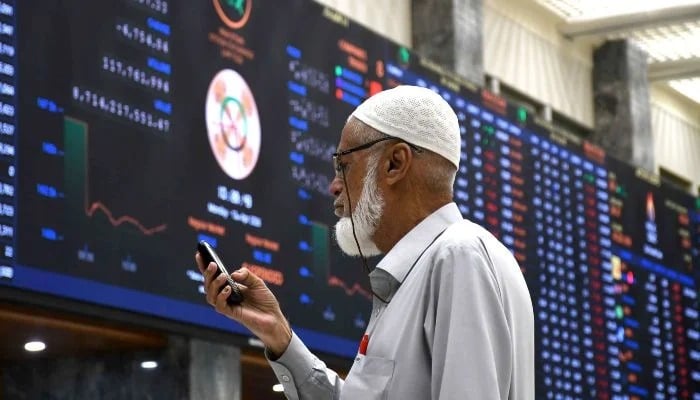
- KSE-100 Index closed at 180,392.97, up 3,353.15 points, or 1.89%.
- Index hit intraday high of 180,503.55, up 3,463.73 points, or 1.96%.
- Index recorded a low of 177,741.46, still up 701.64 points, or 0.4%.
The equity market traded higher on Tuesday as investors extended the previous session's rally after the State Bank of Pakistan (SBP) held the policy rate unchanged, while falling global oil prices and optimism over a US-Iran interim peace deal further lifted sentiment.
The Pakistan Stock Exchange's (PSX) benchmark KSE-100 Index settled at 180,392.97 points, up 3,353.15 points, or 1.89%, from the previous close of 177,039.82.
During the session, the index climbed to an intraday high of 180,503.55, gaining 3,463.73 points, or 1.96%, before retreating to a low of 177,741.46, reflecting an increase of 701.64 points, or 0.4%.
"Stocks trading bullish after SBP status quo in the policy announcement yesterday, owing to expected low inflation and US-Iran interim peace deal," said Ahsan Mehanti, Managing Director and CEO of Arif Habib Commodities.
"The slump in global crude prices and surging global equities played a catalyst role in bullish activity at the PSX," he added.
The State Bank of Pakistan left its key interest rate unchanged at 11.5% on Monday, as policymakers assessed the impact of the Middle East conflict on inflation and growth.
"The committee noted that global oil prices have eased following the recent positive geopolitical developments, yet they remain elevated as compared to pre-conflict levels," the central bank said after its Monetary Policy Committee meeting.
The SBP said the impact of the conflict was now being reflected in recent economic indicators, with headline inflation rising to double digits in April and May and core inflation also edging up.
The MPC noted that headline inflation increased from 7.3% in March to 10.9% in April and 11.7% in May, reflecting the direct impact of higher domestic energy prices linked to the Middle East conflict and indirect effects through transportation and production costs.
The development contributed to an increase in core inflation to 8.2% in April and 8.7% in May, the central bank added.
The MPC projected inflation to remain in double digits for the next few months before gradually easing.
"This outlook is subject to multiple risks, including geopolitical developments, the extent of pass-through of global prices to domestic fuel prices, magnitude of adjustments in power and gas tariffs, potential fiscal slippages, and uncertain food prices amidst weather-related challenges," it said.
The Pakistan Stock Brokers Association (PSBA) has called Budget FY27 a "balanced and investor-friendly package" that supports economic growth and the development of the capital market.
In a statement issued on Monday, the association said several budget measures were in line with its recommendations for strengthening the stock market and boosting investor confidence.
The PSBA particularly praised the government's decision to retain the existing tax regime for the stock market and avoid imposing any new taxes on investors, saying the move had removed uncertainty created by market speculation about possible additional fiscal measures.
According to the association, a stable and predictable taxation framework is essential for attracting both domestic and foreign investment and will help reinforce market stability and encourage broader participation.
The association also said a number of sector-specific measures announced in the budget were expected to benefit listed companies and improve corporate profitability.
Global equities mostly rose on Tuesday and oil prices held losses following the previous day's rally sparked by the US-Iran peace deal, which is expected to reopen the Strait of Hormuz.
Investors are watching developments ahead of Friday's signing ceremony in Switzerland, which is expected to bring an end to more than three months of war that sent shockwaves through energy markets and pushed global inflation higher.
Oil prices extended losses on Tuesday as markets weighed prospects for resumed supply through the Strait of Hormuz against weak physical market drivers and a lack of details from the preliminary deal to end the Iran war.
By 0436 GMT, Brent crude futures fell 25 cents, or 0.3%, to $82.92 a barrel, while US West Texas Intermediate slipped 9 cents, or 0.1%, to $80.66 a barrel.
On Monday, oil prices fell nearly 5% to their lowest close since March 4 after US President Donald Trump said a memorandum of understanding had been signed to end the US-Israeli war with Iran, though full details have not been made public.
Early indications are that the deal would reopen the blockaded Strait of Hormuz and extend a ceasefire for 60 days, allowing negotiators to tackle difficult issues such as the future of Iran's nuclear programme.
On Monday, Iranian President Masoud Pezeshkian called the US-Iran pact an "important step" towards stopping the fighting but cautioned that a final agreement for a lasting truce "has yet to take shape".
The central bank said on Monday that it was confident of meeting its target of $18 billion in foreign exchange reserves for the outgoing fiscal year, with remittances expected to exceed $41 billion.
SBP Governor Jameel Ahmad informed analysts following the monetary policy meeting that most debt repayments for FY26 had either been completed or rolled over or refinanced, except for $700 million due in the next two weeks.
The SBP expects remittances to remain above $41 billion, approaching $42 billion for FY26, consistent with estimates provided in January.
The PSX had extended its winning streak on Monday, when the KSE-100 Index jumped 4,639.92 points, or 2.69%, to close at 177,039.82, compared with the previous close of 172,399.90.
The index touched an intraday high of 177,176.72 and a low of 175,085.79 during Monday's session, while the KSE-30 Index advanced 1,462.27 points to close at 52,890.43.