Govt ends fuel subsidy for motorcyclists, public transporters
DPM Dar-led National Steering Committee notes significant drop in global, local fuel prices
Published June 22, 2026
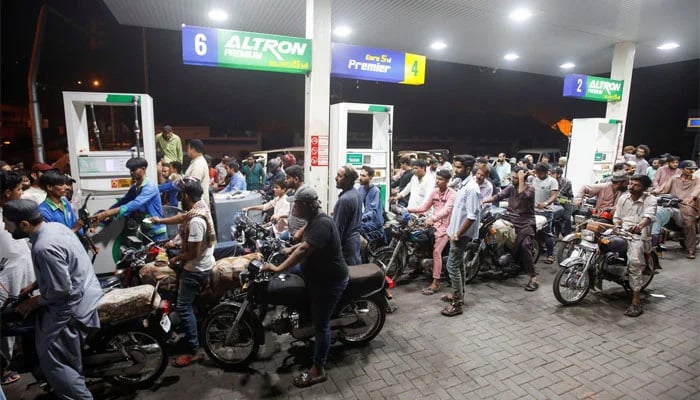
- Committee reviews subsidy across provinces, GB and AJK.
- PM Shehbaz Sharif approves subsidy withdrawal decision.
- DPM Ishaq Dar directs improvements in data systems.
The federal government has decided to discontinue fuel subsidies for motorcyclists, small farmers, and public and goods transport operators following a sharp decline in global oil rates.
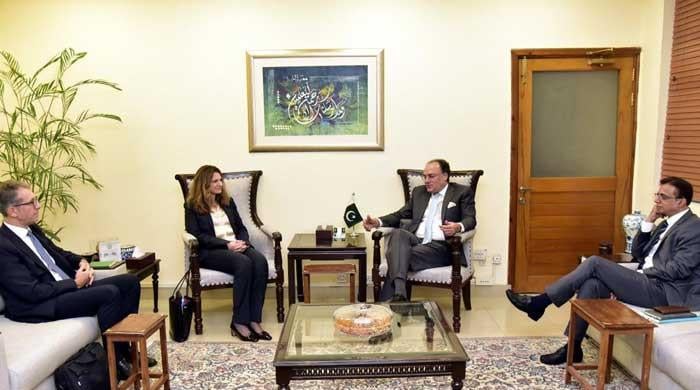
The decision was taken at a meeting of the National Steering Committee on Fuel Subsidy chaired by Deputy Prime Minister Senator Ishaq Dar on Monday.
The committee reviewed the implementation of the subsidy programme for motorcyclists, small farmers, and public and goods transport operators across the provinces, as well as in Gilgit-Baltistan and Azad Jammu and Kashmir (AJK).
According to a statement, the committee noted that global fuel prices had fallen significantly and that the resulting relief had already been passed on to consumers.
It subsequently agreed to withdraw the subsidy scheme with the approval of Prime Minister Shehbaz Sharif.
DPM Dar appreciated the committee’s work, noting sustained interprovincial coordination.
He directed that lessons learned from the exercise be used to address gaps in data and delivery mechanisms, and to strengthen future initiatives aimed at improving public service delivery.
The meeting was attended by Special Assistant to the Prime Minister Tariq Bajwa, the federal secretaries for petroleum and information technology, the State Bank of Pakistan (SBP) governor, and senior representatives from the provinces, Gilgit-Baltistan and AJK.
The subsidy programme was introduced after fuel prices surged following the closure of the Strait of Hormuz in the wake of US-Israeli attack on Iran in February this year.
Under the scheme, motorcycle, rickshaw and 800cc vehicle owners received subsidies ranging from Rs50 to Rs100 per litre.
Public and goods transport operators were provided monthly support of between Rs70,000 and Rs100,000 to help keep fares and transportation costs low, while small farmers received a diesel subsidy of Rs100 per litre.
Last week, the government reduced petrol price by Rs74.28 per litre and diesel price by Rs67.31 per litre, bringing the new rates to Rs299.50 and Rs311.47 per litre, respectively.
The reduction followed a US-Iran peace agreement and the reopening of the Strait of Hormuz, a key global oil shipping route.
Fuel prices had reached record levels earlier this year as global energy markets came under pressure. In April, petrol prices rose by Rs137 per litre to a record Rs458.40 per litre, while diesel climbed from Rs275.70 per litre to as high as Rs520.35 per litre.
Petrol is widely used by motorists, rickshaw drivers and motorcyclists, making price increases particularly burdensome for middle- and lower-income households.
Diesel, meanwhile, is extensively used in freight transport and agriculture, meaning higher prices can have a broader impact on inflation and supply chains.