What did I see in the new Gaza of Lebanon?
Israeli PM Netanyahu has turned Nabatieh into a new Gaza for political gain — a move that threatens not only US-Iran peace talks but also the global economy
Published June 27, 2026
Great Pakistani poet Faiz Ahmad Faiz once wrote a poem, ‘Ek Naghma Karbala-e-Beirut Key Liey’. He spent three years in Beirut from 1979 to 1982. He wrote this famous poem in the Cafe Younis of Hamra Street in Beirut. He compared Beirut with Karbala.The Battle of Karbala occurred on October 10, 680CE (Muharram 10, AH61). Hazrat Husain ibne Ali was martyred in that battle but he became a symbol of resistance and his killer is a symbol of oppression and tyranny.
Faiz hoped that Beirut would resist the Israeli occupation and he proved right again and again. Faiz was the editor of a trilingual political and cultural magazine, "Lotus", published in English, French, and Arabic from Beirut. The office of “Lotus” was located on Hamra Street. This magazine was financed by the former Soviet Union and the Union of Palestinian Writers provided an office to this magazine in Beirut due to the friendship between PLO Chief Yasser Arafat and Faiz Ahmad Faiz.
Faiz was actually living in exile because he never accepted the military regime of General Ziaul Haq in Pakistan. Yasser Arafat never liked General Zia because he was part of an anti-PLO operation in Jordan in 1969 and the PLO was forced to move from Jordan to Lebanon. At the famous Cafe Younis, Faiz Ahmed Faiz would sit with his other exiled friends, Edward Said, Dr Iqbal Ahmed, and Mahmoud Darwish, and recite their poems to each other. In 1982, Israel attacked Lebanon and when the Israeli army reached near Beirut, the dance of death began everywhere in Lebanon.
Faiz was a guest of the Palestinian Liberation Organisation (PLO) in Beirut. He was told by the PLO that he would have to leave Beirut and move the “Lotus” office to Tunisia with them. At that time, Faiz Ahmad Faiz had compared Beirut to Karbala and said that...
Beirut, ornament of our world
Beirut, exquisite as Paradise’s gardens
Those shattered mirrors were
Smiling eyes of children
Now are star-lit
These city nights are bright
And luminous is Lebanon
Beirut, ornament of our world
Faces decorated with blood
Dazzling beyond beauty
Their elegant splendour
Lights up the city lanes
And radiant in Lebanon
Beirut, ornament of our world
Faiz Ahmad Faiz died in 1984 and Israel ended its occupation of Lebanon in 2000. I visited Beirut many times in the last two decades to cover wars but never got a chance to visit Café Younas in Hamra Street near American University Beirut. On a hot afternoon in June 2026, I finally got a chance to visit Cafe Younas and I also tried to find Faiz in some old pictures hanging on the walls of this cafe. This cafe was founded in 1935. This cafe survived many wars along with the city of Beirut and now has many branches. While sipping Turkish coffee in this cafe I was thinking about Faiz and his poem about Beirut. He proved right about Beirut.
This city resisted foreign occupation and Karbala is repeatedly created in this city again and again. I saw this Karbala very closely in 2006 during the Lebanon-Israel war, then I saw this Karbala in the 2024 war and now for the third time in June 2026, I am witnessing Karbala again. In mid-June, a senior colleague of Geo News told me that Iran and the US are going to hold talks in Switzerland. He wanted me to go to Switzerland and do my TV talk show from there. I told my respected colleague that the situation in Lebanon will be a major obstacle in the talks between Iran and the US, so I should go to Lebanon because Israel will sabotage the peace talks by increasing its bombing on Lebanon. He agreed and, in a few days, I reached Beirut with my cameraman.
On June 18, when I came out of the Beirut airport, the first thing I heard was the sound of an Israeli drone. The presence of Israeli drones over Beirut airport was very disturbing. The next morning, June 19, I left with my cameraman, Himran Alexander, for the southern Lebanese city of Nabatieh, where Israel had been raining fire for the last three months. According to local law, foreign journalists have to report their arrival to the Lebanese Army office before entering war-torn areas. We stopped at a Lebanese Army office near Nabatieh to register our details.
It was 8am and all the relevant people had been in the office since 7:30am.
Only one officer had not arrived yet.
He was the one who was supposed to issue us a permit. We started waiting for him. After 20 minutes, this officer came in a panic and told us that a few minutes ago, Israel had targeted civilian cars and motorcycles on the road leading to Nabatieh. He said that bodies were scattered on the road, due to which the road was closed, so he was late. He gave us the permit but said that go back to Beirut now and when the road opens, you will be able to visit Nabatieh. For the next three days, Israel tried hard to capture Nabatieh, but it did not succeed. On June 23, negotiations between Lebanon and Israel were to start in the United States, so Israel reduced its attacks on Nabatieh. When the situation improved a bit, the road leading to Nabatieh was opened and I reached Nabatieh that same day.
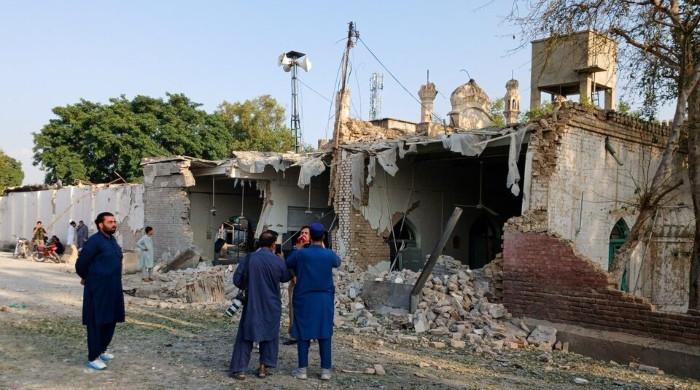
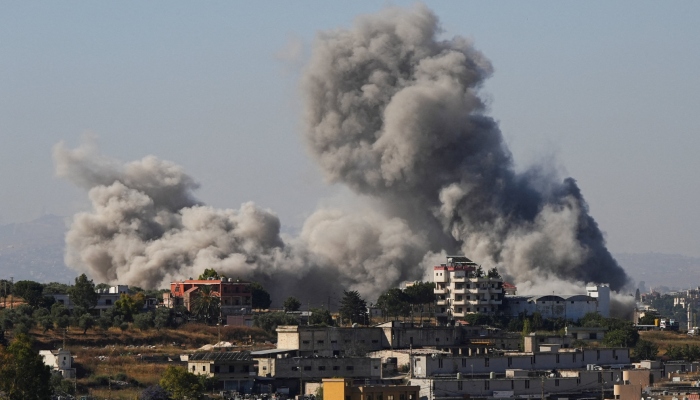
As soon as I entered Nabatieh, I realised that this was not Lebanon, but Gaza. Israel had turned Nabatieh into Lebanon's Gaza, where the rubble of destroyed buildings and the stench of human corpses were everywhere. I saw a similar disaster in Gaza in 2009. A local journalist, Rana Jouni, told me that there were many dead bodies under the rubble of the destroyed buildings in Nabatieh, and the work of removing them would begin today. It was the month of Muharram and this city was looking like a new Karbala.
Rana Jouni works for Al Jazeera. Despite the heavy Israeli bombing, she never ran away from Nabatieh; she took refuge in the Lebanese Civil Defence office and reported casualties from a civil defence hospital. I also met a brave Lebanese lady doctor, Sarra, who registered more than 500 deaths only in her hospital during the last few weeks. Under the guidance of Rana Jouni, we visited many destroyed areas of Nabatieh. Rana Jouni took me inside the destroyed building of a mosque which was built 200 years ago. Some of the mountainous areas of the city are under Israeli occupation, while Hezbollah resistance is still ongoing in some mountains. Rana Jouni was showing us the mountains of Ali al-Taher, behind which there were Israeli tanks and artillery. She was explaining to us the military importance of these mountains. During this time, Israel opened artillery fire towards Nabatieh, so we left Nabatieh and moved towards Al-Sayyidah. Israel intends to occupy Nabatieh in any case because occupying the peaks of Nabatieh means establishing control over all of southern Lebanon.
After a one-day break, Israel started new attacks on Nabatieh on June 24th and 25th. Israel and the Lebanese Government signed a peace agreement on June 26th in Washington DC but the same day Israel killed many Lebanese in Nabatieh. Israel agreed to withdraw its forces from Southern Lebanon but on ground its forces are trying to advance towards Beirut. Netanyahu wants to capture Nabatieh at every cost. If Israel succeeds in occupying Nabatieh, the negotiations between Iran and the United States will not be able to move forward. Both the US and Iran are bombing each other despite signing MoU in Switzerland.
They may find a solution to a dispute over the Strait of Hormuz but it's difficult to find a solution about Lebanon. A sixty-day deadline has been set to end the forty-seven-year-old enmity between Iran and the United States. The question is, why has Iran conditioned the negotiations with the United States on the withdrawal of Israeli troops from southern Lebanon? The reason is understandable because when Israel and the United States attacked Iran jointly on February 28; Hezbollah opened a large front against Israel in southern Lebanon and facilitated Iran. Now that Iran has defeated the plans of Israel for regime change in Tehran, it cannot leave Hezbollah alone. If Iran has decided to be loyal to Hezbollah, will the United States be loyal to its old friend Israel?
We cannot ignore the aspect that Iranian public opinion stands firmly behind Hezbollah, but American public opinion does not seem to stand with Israel. In reality, American public opinion has turned against Israel. For the success of Iran-US negotiations, it is necessary to remove Israel from southern Lebanon, because another Gaza in Lebanon will become a huge threat to the US-Iranian negotiation process. This negotiation process is no longer limited to the relations of the two countries but has become a guarantee for the stability of the global economy. If Israel withdraws from southern Lebanon, Iran can also provide a guarantee to prevent Hezbollah from attacking Israel.
The US and Israel want to disarm Hezbollah.They forced the Lebanese government to sign an agreement which says that Hezbollah will be disarmed. The Lebanese government banned the armed wing of Hezbollah a few months back but this ban became a joke because the Lebanese Army is not in a position to disarm Hezbollah. There were big protests on Beirut roads against an agreement between Lebanon and Israel in the evening of June 26 by Hezbollah supporters. Disarming Hezbollah is currently difficult, but after the withdrawal of the Israeli army from Lebanon, Iran can at least stop Hezbollah from firing rockets on Israel. Hezbollah fighters can ultimately become part of the Lebanese Army. Step one for the road to peace in Lebanon is the withdrawal of Israeli forces from the southern parts of this country.
Israeli Prime Minister Netanyahu may not withdraw his troops from Southern Lebanon, at least in the next few months. He wants to occupy Nabatieh to become a hero in the coming elections to be held in October this year. He turned Nabatieh into a new Gaza just for his politics. Another Gaza in Lebanon is a threat not only to US-Iran peace talks but also to the global economy. It’s time for the international community to wake up and save Karbala-e-Beirut.
The writer is a senior journalist, anchor, and columnist, associated with Geo News, who covered wars in Afghanistan, Kashmir, Sri Lanka, Iraq, Syria, Lebanon, Palestine, Ethiopia and Chechnya. He posts on X@HamidMirPAK