Pakistan's trillion-rupee interest burden to persist beyond 2028 riba deadline
Over Rs8tr allocated for interest payments in budget 2026-27 alone
Published July 08, 2026
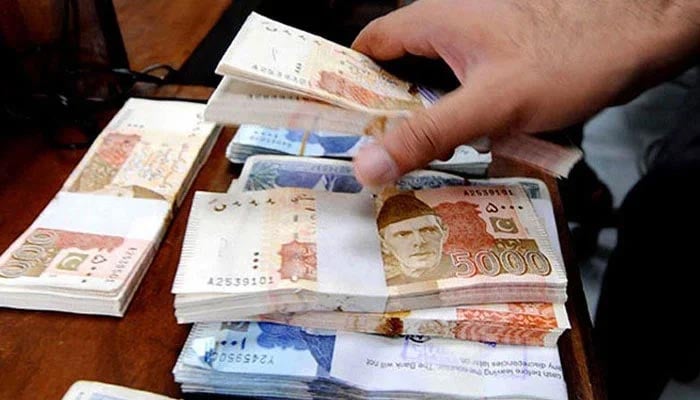
- Over 70% of interest payments go to local banks.
- Foreign debt beyond govt's control for riba transition.
- Pre-2028 conventional debt to be replaced only at maturity.
ISLAMABAD: Pakistan's massive interest payment burden will continue well beyond the constitutional deadline of January 1, 2028, as the government's strategy for transitioning to a riba-free financial system allows existing conventional debt to be serviced under original contractual terms until maturity, The News reported.
Interest payment, which makes almost half of the total federal budget, will remain payable even in case of local debt.
Government sources said that while the fresh government borrowing after December 2027 is expected to increasingly shift to Shariah-compliant modes, conventional debt raised before the cut-off date will continue to be honoured under existing interest-based contractual commitments.
While government has no control over the foreign debt, the local banks despite being converted into Islamic banks will continue to get massive interest from the government.
Just in the budget 2026-27, the government has allocated over Rs 8 trillion (Rs 8000 billion) for interest payments.
Interesting the vast majority of the interest payments, more than even 70 percent, goes to the local banks.
All conventional public debt outstanding as of December 31, 2027, will be replaced with Shariah-compliant financing only on its respective maturities. Until then, the government will continue servicing the debt in accordance with the original terms of the contracts.
The 26th Constitutional Amendment, passed in October 2024, mandates the complete elimination of riba (usury and interest) from the country’s financial system by January 1, 2028. It updates Article 38(f) of the Constitution, paving the way for a fully Shariah-compliant economy.
Although the government has committed that it would honour its contractual obligations on the subject, in the wake of the 26th constitutional amendment the issue particularly pertaining to interest payments on local debt may be referred to the judiciary for adjudication for being directly in conflict with the constitution.
Domestically owned banks are bound to transform into Islamic institutions after December 2027, the finance ministry’s post December 2027 strategy protects their pre-2028 riba-related interests.
There is a roadmap for eliminating interest-based financing from future government borrowing, the transition will not affect existing debt obligations, which will continue to be serviced until they mature before being replaced with Shariah-compliant financing.