Geography without governance
Debate is not about oil storage but about whether Pakistan finally recognises that geography itself can be monetised
Published July 22, 2026
There are nations blessed with oil. There are nations blessed with gas. There are nations blessed with minerals. Pakistan possesses something arguably more valuable in an age of geopolitical fragmentation and supply-chain insecurity: geography.
Yet, unlike natural resources that eventually deplete, geography is a permanent strategic asset. In today’s world where logistics, storage, connectivity and resilience increasingly determine national competitiveness, Pakistan’s location between the Gulf, Central Asia, China and South Asia represents one of the world’s most underutilised strategic assets.
Pakistan sits at the intersection of almost every major energy corridor in Asia. Nearly one-third of global crude oil production originates in the Gulf. China remains the world’s second-largest oil consumer, consuming around 16 million barrels per day while importing roughly 11 million barrels daily.
India has become the world’s third-largest oil consumer, using approximately 5.6 million barrels daily. North of Pakistan lies landlocked Central Asia, increasingly seeking diversified export and import routes amid shifting geopolitical realities. Every one of these regions is connected by one unavoidable fact: Pakistan lies in the middle.
The Strait of Hormuz, only a short distance from Pakistan’s coastline, carries close to one-fifth of globally traded petroleum. Every military confrontation involving Iran, every disruption in the Gulf, every escalation affecting commercial shipping immediately reminds energy markets that storage and alternative logistics are becoming as important as oil production itself. The twenty-first-century energy economy is no longer built solely around extracting hydrocarbons; it increasingly revolves around securing supply chains, diversifying storage locations, and ensuring uninterrupted movement. Geography has become infrastructure.
This explains why some of the world’s largest energy companies including Saudi Aramco, Kuwait Petroleum, QatarEnergy, PetroChina, Vitol, Trafigura and Vopak have shown sustained commercial interest in Pakistan’s storage, refining and logistics potential. These firms are responding to economics. Pakistan offers proximity to producers, immediate access to growing Asian demand, deep-sea ports and an opportunity to reduce concentration risks associated with Gulf-only storage. Yet despite repeated expressions of interest over many years, Pakistan has failed to transform this commercial curiosity into a coherent national strategy.
The explanation lies less in politics than in the entrenched habits of the bureaucracy. Pakistan’s civil administration remains overwhelmingly compliance-driven rather than opportunity-driven by continuing to operate in institutional silos.
Successive governments have announced ambitious visions for Gwadar, special economic zones, refinery upgrades, energy corridors and logistics modernisation. However, capital can price market volatility. It cannot easily price institutional confusion.
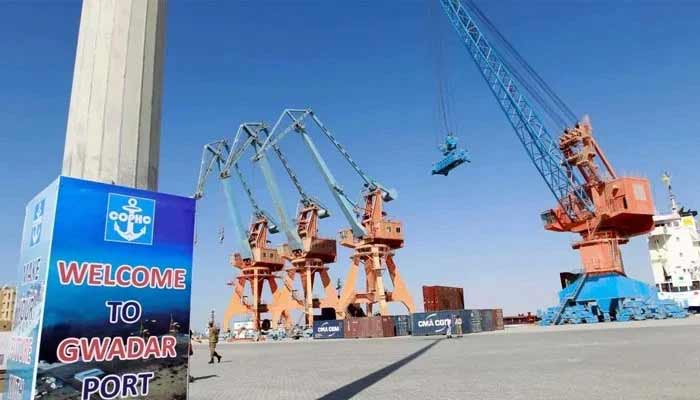
Consider Gwadar. For almost two decades, it has symbolised Pakistan’s aspirations to become a regional gateway. Yet its commercial utilisation remains significantly below its potential. Cargo volumes remain modest compared to regional competitors. Supporting infrastructure, industrial ecosystems, storage terminals, hinterland connectivity and integrated logistics services have developed far more slowly than originally envisioned. Meanwhile, competing ports across the Gulf continue to expand aggressively, adding petrochemical complexes, LNG terminals, storage facilities, bunkering services, and multimodal logistics capabilities.
Countries with far less strategic geography have successfully monetised logistics. Singapore imports virtually no oil of its own, yet it has become one of the world’s largest oil trading and bunkering centres because it built trust, predictable regulation and world-class infrastructure. Rotterdam became Europe’s energy gateway despite having limited domestic hydrocarbon resources. Fujairah in the UAE transformed itself into one of the world’s leading oil storage and bunkering hubs largely because it offered certainty, speed and commercial efficiency outside the Strait of Hormuz. None of these economies relied primarily on resource ownership. They monetised location.
Pakistan can do exactly the same. Strategic storage terminals at Gwadar, Hub and Port Qasim could provide emergency reserves, commercial storage, blending facilities, bunkering services, pipeline connectivity, quality testing, insurance support and regional redistribution. Initial strategic storage of around 17 million barrels could attract investments estimated between $500 million and $1 billion.
Annual storage revenues alone could generate tens of millions of dollars, while scaling capacity towards 50 million barrels alongside mature logistics ecosystems could eventually create annual economic activity exceeding $1 billion through storage fees, port charges, pipeline tariffs, blending margins, customs revenues, shipping services and associated taxation.
More importantly, such investments would generate substantial multiplier effects throughout the economy. Construction activity would stimulate domestic industries. The engineering, transport, insurance, banking, maritime services and IT sectors would all experience increased demand. Thousands of skilled and semi-skilled jobs would emerge across Balochistan and Sindh. Ancillary industries ranging from warehousing to equipment maintenance would expand. Exportable logistics services would diversify Pakistan’s traditionally narrow foreign exchange earnings.
Politically, however, continued policy paralysis carries increasing costs. Global supply chains are undergoing permanent restructuring. The Russia-Ukraine conflict, Red Sea disruptions, US-China strategic competition and repeated Gulf tensions have fundamentally altered how multinational companies evaluate logistics resilience. Nations capable of offering alternative routes and secure storage are rapidly attracting investment. Those that delay risk permanent exclusion.
If Pakistan continues to postpone structural reforms, regional competitors will consolidate first-mover advantages. The Gulf itself continues investing aggressively in downstream infrastructure. India is rapidly expanding strategic petroleum reserves and refining capacity. Saudi Arabia is investing heavily in integrated energy cities. The UAE continues strengthening Fujairah’s role as a global energy logistics hub. Kazakhstan and Azerbaijan are diversifying export corridors. Every year Pakistan delays, the opportunity cost compounds.
Pakistan requires a comprehensive legal framework governing commercial petroleum storage, transhipment, blending, bunkering and re-export. Investors require clarity regarding ownership rights, taxation, dispute resolution, environmental regulation and customs treatment. Rules must remain stable across political transitions.
The government must offer bankable contractual arrangements. International infrastructure investors commit capital over decades, not election cycles. Long-term concession agreements backed by credible sovereign commitments and internationally accepted arbitration mechanisms are essential to reducing perceived political risk.
Regulatory predictability must replace bureaucratic discretion. Investment approvals should operate through integrated digital single-window systems with clearly defined timelines, transparent licensing procedures and minimal institutional overlap.
Equally important is a change in bureaucratic mindset. Pakistan’s civil service must evolve from acting primarily as a gatekeeper to becoming a facilitator of economic transformation. Performance indicators should increasingly measure completed investment-enabled projects, reduced processing times and achieved institutional coordination, not simply procedural compliance. Strategic governance requires institutions capable of anticipating opportunities rather than merely responding to files.
The debate is not about oil storage but about whether Pakistan finally recognises that geography itself can be monetised. The country has spent decades discussing its strategic location in diplomatic speeches while failing to convert that location into measurable economic value. Geography creates comparative advantage only when governance creates commercial confidence.
History rarely offers identical opportunities twice. The convergence of geopolitical fragmentation, energy security concerns, Asian demand growth and supply-chain diversification has created a narrow window in which Pakistan can position itself as the region’s Energy City. Saudi Arabia seeks strategic depth. China seeks supply resilience. Central Asia seeks access to global markets. Global energy traders seek storage diversification. Pakistan seeks investment, foreign exchange and sustainable growth.
The intersection already exists. The demand already exists. The investors already exist. The only missing component is policymakers capable of recognising that the country’s greatest untapped natural resource is not buried beneath its soil but visible on every map of Asia.
The writer is a trade facilitation expert, working with the federal government of Pakistan.
Disclaimer: The viewpoints expressed in this piece are the writer's own and don't necessarily reflect Geo.tv's editorial policy.
Originally published in The News