Kevin Warsh's Jackson Hole speech: Everything you need to know about fed rates, inflation, AI
The next Fed meeting is scheduled for September 15-16
Published August 28, 2026
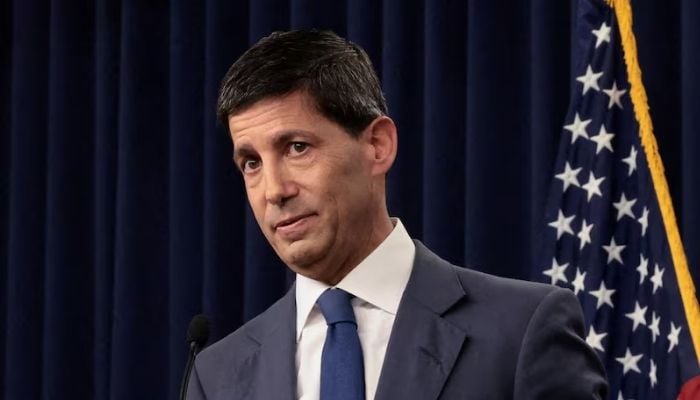
Federal Reserve Chairman Kevin Warsh used his first major Jackson Hole speech to send a clear warning to markets: the US central bank is not satisfied with the pace of inflation and could raise interest rates if price pressures remain too high.
Warsh did not announce a rate hike for September. But his comments made clear that another increase remains on the table, a message that immediately pushed up expectations for a possible hike at the Fed’s September 15-16 meeting.
What did Kevin Warsh say about inflation?
The Fed’s preferred inflation gauge, the personal consumption expenditures price index, rose 3.7% over the 12 months through July, well above the central bank’s 2% target.
Warsh said recent inflation readings were better than expected, but he did not believe they showed a meaningful improvement in the underlying trend.
He pointed to another figure that caught investors’ attention: 54% of goods and services in the PCE basket recorded price increases above 3% over the past year.
That is down considerably from the inflation surge following the pandemic, but still far above the pre-pandemic norm.
Warsh’s message was straightforward: the Fed needs to be confident that inflation is moving toward 2% “clearly and at sufficient speed.”
“Otherwise, we have work to do,” he said.
Does this mean the Fed will raise interest rates?
Warsh deliberately stopped short of giving markets a timetable for another rate move. But his comments made a September increase look considerably more plausible.
Before his speech, traders had put the probability of a September hike at roughly 35%. That jumped to nearly 60% after he spoke, according to market pricing reported Friday.
The next Fed meeting is scheduled for September 15-16.
Warsh's argument is that the economy does not currently look weak enough to make lower rates an obvious choice.
He said the economy appears to have strengthened, business investment is rising rapidly and the labour market remains relatively stable.
Is the US economy actually strong?
Warsh said he was “impressed” by the overall performance of the economy and pointed to strong business investment and corporate profits.
Equipment and intangible investment has been growing at around 9% over four quarters, while profits among S&P 500 companies have risen more than 20% over the past year, according to his speech. More than half of this year's capital expenditure growth may be linked to AI-related investment.
The labour market also remains fairly stable.
Warsh pointed to a 4.1% unemployment rate and said the labour market was broadly consistent with full employment. That leaves inflation as the Fed’s main concern for now.
What did Warsh say about AI?
AI was another major part of Warsh’s speech. He said artificial intelligence could become a major new factor in the US economy and potentially lead to substantially higher productivity and economic growth.
He pointed to the enormous amount of money being poured into AI infrastructure and said the technology is developing faster than even many of its supporters expected.
But he also acknowledged that the Fed does not yet know how AI will ultimately affect workers, productivity, investment or the structure of the economy.
One of the biggest questions is whether AI will complement workers or replace some of their jobs.
Warsh said the Fed has created a task force focused on productivity and jobs to study those questions.
Why did Warsh criticize Fed “forward guidance”?
This could prove to be one of the biggest changes of his chairmanship.Warsh wants the Fed to give investors less explicit guidance about where interest rates are going.
He argued that forward guidance, which became a regular feature of Fed communication after the 2008 financial crisis, can sometimes create more problems than it solves.
His concern is that investors begin trading around what they believe the Fed will do rather than making their own judgments about the economy.
Warsh wants markets to pay more attention to actual economic data, Treasury yields, the dollar, credit conditions and other market signals.
He also suggested that the Fed's forward guidance during 2021 may have contributed to a slower response to the inflation surge that followed.
“You can call it an outline … you can call it a trail map … just don’t call it forward guidance,” Warsh joked at the beginning of his speech.
What is Warsh's new approach to Fed policy?
Warsh laid out several principles that he said should guide monetary policy.
The most important is that the Fed should focus on current and reliable data, rather than becoming overly dependent on forecasts.
He also reaffirmed that the Fed’s 2% inflation target is a firm target.
Short-term interest rates, he said, should remain the Fed's main tool for achieving its goals, while unconventional measures such as large-scale asset purchases should generally be reserved for genuine crises.
Warsh also made an unusual point about money, arguing that the Fed should pay more attention to money created through the banking and financial system.
And he called for what he described as a “quieter Fed” — one that communicates less frequently but focuses more on delivering results.
What does the speech mean for Americans?
For ordinary Americans, the immediate issue is interest rates.
If inflation stays elevated and the Fed decides that rates need to go higher, borrowing costs could remain high or increase for mortgages, credit cards, business loans and other forms of credit.
On the other hand, the Fed has to be careful not to raise rates too aggressively and weaken the labor market.
That is the balancing act facing Warsh.
The economy currently looks resilient enough to withstand relatively tight monetary policy, while inflation remains far above the Fed's target.
What happens next?
Warsh has not committed the Fed to a rate increase, and the economic data released between now and the September meeting could change the picture.
But his Jackson Hole speech made one thing clear: a return to lower interest rates is not automatic.
If inflation fails to move convincingly toward 2%, Warsh has already warned that the Fed may need to act.