NATO catches Russian subs testing mysterious weapon to cripple undersea cables
Officials say the weapon was designed to damage undersea cables without leaving obvious fingerprints
Published September 10, 2026
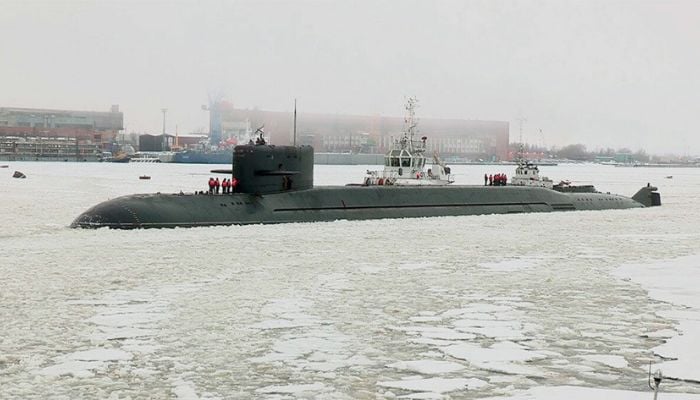
NATO forces caught Russian submarines testing a secret weapon designed to disable critical undersea cables without leaving a trace in a covert operation.
The operation took place near Norway's remote Svalbard archipelago earlier this year and involved Russia's secretive deep-sea warfare unit known as GUGI.
Two Western officials told Reuters that Russian deep-sea submersibles were rehearsing how the technology could be deployed in the event of a conflict with NATO.
Britain, Norway and the United States tracked the Russian vessels before confronting them at sea, forcing them to eventually leave the area. No cables were damaged.
What exactly Russia was testing remains secret. Officials declined to explain how the technology works, but said it was designed to damage undersea cables without leaving obvious fingerprints.
And the location was particularly sensitive.
Two fiber-optic cables, each around 1,400km long, connect Svalbard with mainland Norway. They run as deep as 2,700 metres below the sea and carry huge amounts of satellite data from SvalSat, the world's largest satellite ground station and part of NASA's Near Space Network.
Undersea cables also carry much of the world's internet traffic and financial transactions, making them a major target during any future conflict.
“Through our joint operation, we sent a clear message to Russia that they cannot operate covertly,” Norwegian Defence Minister Tore Sandvik said.