Pakistan's solar revolt
Instead of treating that investment as a threat, Pakistan should regard it as a national asset
Published September 27, 2026
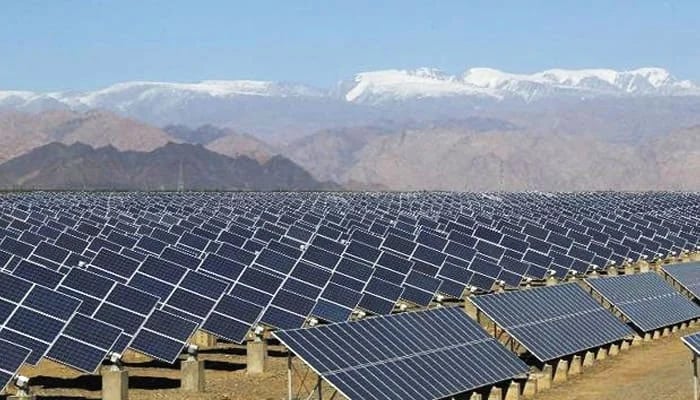
Pakistan is witnessing one of the fastest and most unusual energy transitions in the developing world. It is not being led primarily by government policy, public investment or climate targets. Households, farmers and businesses are driving it in response to electricity prices and reliability.
The numbers are extraordinary. According to the International Energy Agency's September 2026 Electrification Special Report, Pakistan imported about 51GW of solar panels between 2021 and 2025. Installed distributed solar capacity in 2025 is estimated at between 28 and 38GW, with rooftop systems accounting for roughly 80% and residential consumers for around half of installations. Battery imports also rose sharply, from about $120 million in 2022 to nearly $300 million in 2025.
Perhaps the most revealing number has nothing to do with solar. The IEA reports that the median firm in Pakistan experiences around 45 hours without grid electricity every month. That helps explain what has happened.
Pakistan's solar boom is therefore a consumer response to an electricity system that has become too expensive and, for many users, insufficiently reliable. Consumers are no longer waiting for power-sector reform. They are building their own reliability. The solar revolution is, in that sense, a market verdict on the existing system.
For decades, Pakistan's electricity debate was dominated by shortages and loadshedding. The response was to add generation capacity through long-term, exorbitantly expensive contracts designed to attract investment when the country desperately needed power.
The problem has now changed. Pakistan has substantial installed generation capacity, yet electricity remains unaffordable for many households and uncompetitive for much of industry. Circular debt continues to accumulate. Distribution losses, theft and poor recoveries remain serious, while transmission constraints impede efficient dispatch. Consumers ultimately pay through tariffs, taxes or public debt.
Then came a technological shock. Global solar-panel prices fell sharply just as grid tariffs were rising. Businesses discovered that electricity generated on their roofs could cost considerably less than electricity purchased from the grid. Households followed. Farmers began solarising tube wells. Falling battery prices are now allowing consumers to store daytime generation and reduce dependence on the grid after sunset.
Consumers responded to economic incentives much faster than institutions. Solar should therefore not be viewed only through the lens of climate policy. For industry, it is about competitiveness; for households, affordability; and for farmers, greater energy independence.
Pakistan has effectively developed a second electricity system alongside the first: decentralised, privately financed and increasingly independent of the conventional grid. That is a remarkable achievement, but also a serious challenge for policymakers. The electricity system was built on the assumption that utilities would sell increasing volumes of electricity and recover fixed generation, transmission and distribution costs through those sales. Distributed solar has severely disrupted that model.
As consumers generate more electricity themselves, grid sales decline. Fixed costs, however, do not disappear. Capacity payments, transmission and distribution networks, debt servicing and other legacy obligations still have to be financed. This has created a vicious cycle. Higher tariffs make solar more attractive. As more consumers install solar, grid sales fall. Fixed costs then have to be recovered from fewer units sold, putting further pressure on tariffs and making solar and batteries still more attractive.
There is also an equity problem. Consumers most able to install solar and batteries tend to have access to capital. Poorer households and small businesses remain dependent on the grid. Unless the system changes, Pakistan risks creating a two-tier electricity economy: affordable and reliable self-generation for those who can invest, and an increasingly expensive grid carrying legacy costs for those who cannot.
The wrong response would be to blame solar. Consumers did not create circular debt, inefficient Discos, transmission bottlenecks, poor recoveries or expensive legacy contracts. They responded rationally to the product offered. Punitive charges, abrupt policy changes or barriers to distributed generation may slow the transition temporarily, but they will not solve the economics that caused consumers to leave the grid. The question must change from how we protect the grid from solar to how we redesign the grid for a solar economy.
The grid remains indispensable. Solar produces electricity when the sun shines, while a modern economy requires electricity around the clock. Industry cannot operate on intermittency, hospitals cannot depend on weather and cities need resilient networks. But the grid of the future cannot operate like the grid of the past.
Discos will have to evolve from geographic monopolies that depend on selling more units into modern distribution-system operators managing two-way electricity flows among consumers, generators, batteries and the national grid. That requires smart metering, digital networks, better forecasting, storage and tariffs that reflect the changing value of electricity during the day.
Time-of-use pricing should encourage demand when abundant solar makes electricity cheaper and discourage avoidable consumption during expensive peaks. Batteries should not be seen as another way to leave the grid; properly integrated, they can help balance the system.
Pakistan must also move towards a more competitive electricity market. Large consumers should increasingly be able to purchase electricity through wheeling and the Competitive Trading Bilateral Contract Market rather than remain captive to geographic monopolies. Disco reform and private-sector participation should be judged by investment, governance and measurable performance, not merely by ownership.
Energy policy should also avoid becoming an ideological contest between solar, hydro, nuclear, coal or gas. Pakistan needs the least-cost, reliable and increasingly indigenous energy mix capable of supplying electricity around the clock while reducing exposure to imported fuels.
If solar and storage can reduce production costs for textiles, engineering, agriculture, IT services and SMEs, that is a competitive advantage Pakistan should capture. The objective should not be to force consumers back into an expensive system but to make the grid valuable enough that they choose to remain connected. A modern grid can provide what individual solar installations cannot easily offer: balancing, backup, reliability, electricity trading and access to power generated elsewhere in the country.
Another remarkable feature is that households and businesses have effectively financed tens of gigawatts of generation — capital the government did not have to borrow, guarantee or add to public debt.
Instead of treating that investment as a threat, Pakistan should regard it as a national asset and redesign the electricity market so it can be productively integrated.
The solar revolt is therefore both an opportunity and a warning. It shows how rapidly consumers can move when technology provides a better alternative, and what happens when institutions adapt more slowly than the people they serve.
The answer is not to resist the revolution, but to redesign the grid, Discos, tariffs, regulation and the electricity market around a reality that has already arrived.
The writer is a former managing partner of a leading professional services firm and has done extensive work on governance in the public and private sectors. He tweets/posts @Asad_Ashah
Disclaimer: The viewpoints expressed in this piece are the writer's own and don't necessarily reflect Geo.tv's editorial policy.
Originally published in The News