Former House Speaker Dennis Hastert is dead, but ‘Hastert Rule' still shapes Congress: Here's how
He was the longest serving Republican to serve as speaker from 1999-2007
Published October 05, 2026
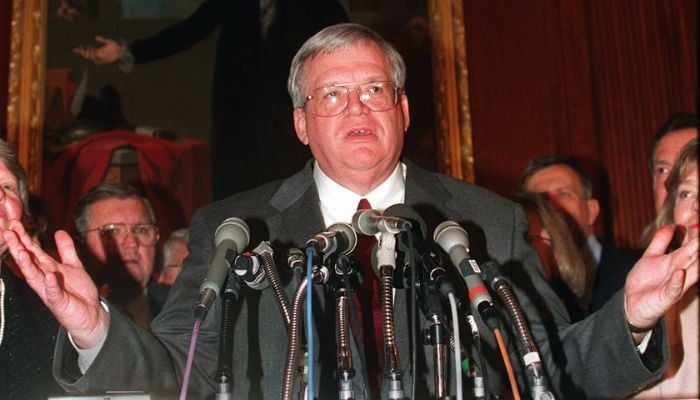
Dennis Hastert, the U.S. Speaker of the House whose political reputation had ultimately collapsed under allegations of sexual abuse of young boys, passed away Saturday at age 84.
Nearly twenty years after Hastert’s departure from Congress, Hastert’s name still continues to appear at Capitol Hill; specifically to an uncodified political norm known as the "Hastert Rule.” Ironically, Hastert himself has insisted that the term was made up after he left Congress.
Hastert died of natural causes at his home in Yorkville, Ill., where he received hospice care over the weekend, according to Kendall County Coroner Jacquie Purcell.
He was the longest serving Republican to serve as speaker (from 1999-2007). Hastert led his caucus through the lens of a very simple concept: do not move a legislative measure forward on the House Floor if most of the members of your own party do not agree. This concept came to be known as the "Majority of the Majority."
A key point about the "rule" is that there has never been a formal House rule bearing its name. When asked about using the name "Hastert Rule" by CNN in 2013, Hastert replied there is "no Hastert Rule," referring to the concept more as a governing philosophy.
Later in an oral history with NPR, Hastert described why he thought a speaker should work to get support from their own party prior to relying on opponents voting for a measure. He stated, “If you begin bringing up bills that you do not have support for within your own party, you cease being a leader.”
Although Hastert rejected the name, "Hastert Rule," it continues to remain an element of Washington D.C.'s jargon and was frequently referenced during debates about whether or not Republican leaders should allow measures that garnered wide bipartisan support but did not receive full backing from all members of their party.
Prior to entering politics and rising through the ranks to become one of America's most influential individuals, Hastert worked as a high school teacher and wrestling coach in Illinois.
It wasn’t until 2015 when federal investigators discovered that Hastert agreed to pay $3.5 million dollars in hush money to conceal past wrongdoing.
Eventually, Hastert pleaded guilty in court admitting he had engaged in a pattern of child sex abuse as a wrestling coach decades ago. Because the statute of limitations had expired, Hastert could not be charged with the abuse itself.
Instead, he pled guilty to breaking laws regarding structuring banking transactions related to hush-money payments and was subsequently convicted and imprisoned for fifteen months.
Many institutions that once honored him, have since removed his name. An example includes Wheaton College renaming a center focused on public policy that bore his name. Additionally, Hastert’s portrait has been removed from the U.S. Capitol.
However, despite these changes, Hastert’s name has proven to be far more difficult to remove from Washington’s lexicon. More than twenty years after the term “Hastert Rule” entered into mainstream American politics, it remains tied to the ongoing discussion of how many votes a member of Congress requires from their own party before allowing their body to hold a vote on legislation.