The economics of an uneasy peace
Some commentators argue that Trump’s ‘unprecedented’ protocol for Xi indicates the balance of power in US-China relations is finally tilting towards Beijing
Published October 14, 2026
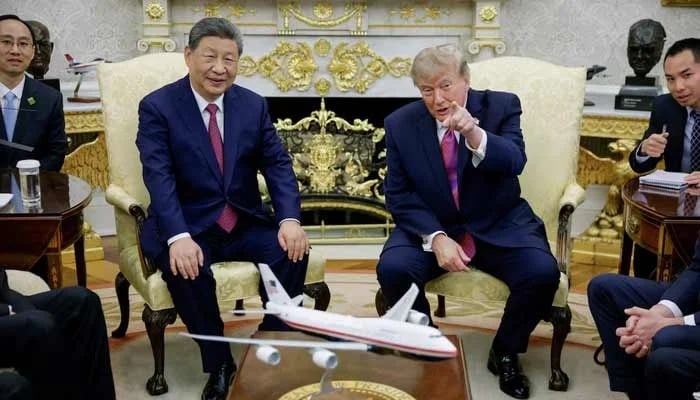
In recent months, US-China summits, regardless of their substantive outcomes, have been remarkably ceremonial and focused on optics.
Earlier this May, Chinese President Xi Jinping, in a departure from usual protocol, walked about 100 steps down from his office in Beijing to welcome his American counterpart, Donald Trump. Now, in September, Trump visibly went a step further when he received Xi on the tarmac as Xi stepped down from his aircraft during his visit to the US.
The last time a US top leader went in person to the airport to receive his foreign counterpart was in 1962 when US president Kennedy greeted British prime minister Macmillan.
Some commentators argue that Trump’s ‘unprecedented’ protocol for Xi indicates the balance of power in US-China relations is finally tilting towards Beijing. Such an opinion carries little weight. Despite tremendous all-round progress in recent decades, China still lags well behind the US on all key military and economic indicators, except merchandise exports. But let’s look at the substantive outcome of Xi’s visit.
The summit was immediately preceded by negotiations between senior officials from the two countries, led by US Treasury Secretary Scott Bessent and Chinese Vice-Premier He Lifeng. The negotiations set the stage for the Trump-Xi talks. Arguably, the most significant outcome was the two sides’ agreement to extend their trade truce, due to expire in November, to January 2027.
For background, the trade truce was reached in October 2025 in Busan, South Korea, when the world’s two largest economies agreed not to raise import duties on each other’s products, reversing the tit-for-tat tariff escalation triggered by Trump’s Liberation Day (April 2, 2025) trade war. As part of the truce, Beijing suspended its controls on exports of rare earths and critical minerals, which are vital to high-tech industries in the US. The two sides also agreed to operationalise the US-China Board of Trade, a mechanism to strengthen bilateral trade established during Trump’s May visit to Beijing.
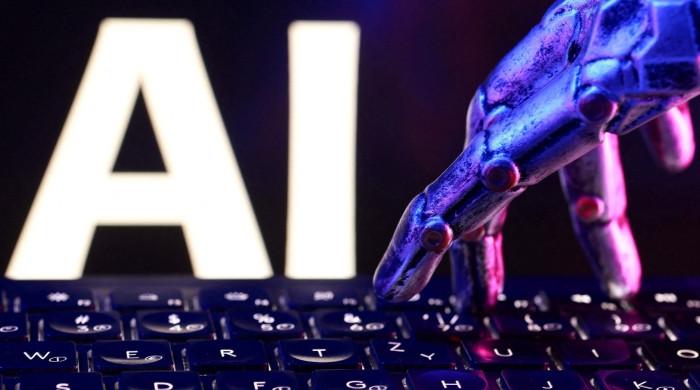
Reining in the untrammelled rise of artificial intelligence (AI) was also on the agenda. Xi stated at the White House that the US and China have “both the capability and responsibility to develop and manage AI for good, and ensure that the development of AI is always under human control and serves the well-being of the people”.
As in May 2025, no joint statement was issued at the end of the latest Trump-Xi summit. According to an announcement made by the office of the State Council (cabinet) of China, the two countries reached a consensus on several matters including: extending the trade truce; building a constructive bilateral relationship of strategic stability based on respect, fairness and reciprocity; supporting each other on hosting international events later this year including 2026 Asia-Pacific Economic Council (APEC) meeting by China in November and the G20 summit in December by the US; keeping international maritime routes open and toll free; Iran not developing nuclear weapons; jointly preventing drug trafficking; and establishing a joint AI dialogue to exchange views on AI-related risks and benefits.
The Beijing-Washington consensus that Iran shouldn’t develop nuclear weapons is a major takeaway of the summit. After Trump’s visit to China in May 2025, the Chinese Ministry of Foreign Affairs (MFA) failed to explicitly endorse the White House claim that “both countries agreed that Iran can never have a nuclear weapon”. However, this time, the Chinese statement on Iran’s nuclear programme is categorical and is in line with Beijing’s overall stance on proliferation of nuclear weapons.
Likewise, the agreement to keep international maritime routes (an oblique reference to the Strait of Hormuz) open and toll-free is logical from Beijing’s perspective. China is the world’s largest crude oil importer. Imports make up about 70 per cent of its total oil consumption. In 2025, it purchased some 11.6 million barrels per day (BPD) of crude oil. China buys oil not only for current consumption but to maintain its strategic reserves as well, to safeguard its mammoth population (1.41 billion) and a massive industrial infrastructure (valuing over $5 trillion) from a supply shock. The country stockpiled about half a million BPD in 2025. More than 90 per cent of China’s crude imports arrive by sea.
The Strait of Hormuz accounts for more than 40 per cent of China’s total oil imports. A surge in oil prices hurts China, given its massive oil imports. Oil supply interruptions are even worse for it. Besides, petro imports are only a part of China’s gigantic trade portfolio. The country is the world’s largest trading nation, the largest exporter, and the second-largest importer. Over the decades, the economy has been the mainstay of China’s rise and foreign trade has been the mainstay of the economy. China trades over $400 billion with Middle East countries. The Persian Gulf and the Strait of Hormuz provide maritime passage for much of this trade.
Another significant takeaway from the Xi-Trump summit was that the two sides agreed to use the phrase ‘super intelligence’ instead of ‘artificial intelligence’. But call it whatever you like, the envisaged Sino-US cooperation in this area faces the familiar Prisoner’s Dilemma, a situation in which cooperation benefits all participants but each has an incentive to cheat. If either the US or China puts effective curbs on AI’s unbridled growth while the other doesn’t, the former will lose the race to the latter. Losing the AI race means losing the race for tech and, by implication, economic and military supremacy, something neither can afford.
The two countries also differ in AI management or governance, as the Chinese would call it. The US is a complete market economy and all the mega tech companies are profit-oriented and privately-owned and exercise a substantial influence on government policies. Any government restrictions that may slow technological growth and undermine their profits are likely to be met with disdain. Already, Big Tech, including OpenAI, Anthropic and Meta, have announced that they would prefer self-regulation – which is also subject to the Prisoner’s Dilemma – to any government regulations.
At the other end of the scale, China is a state- and party-led economy (Communist Party of China), where the government, not the profit motive, effectively regulates even the largest private enterprises. Thus, in one case, profit-maximising enterprises lead the government; in the other, the government leads the enterprises. Hence, the US advocates a decentralised, market-oriented AI governance model, while China practises and champions a highly integrated, state-controlled model. Which model is better is open to debate.
Anyway, officials from China and the US will meet in November to discuss AI cooperation further. For now, Trump has ruled out any AI collaboration with China through joint ventures, fearing it could lead to significant technology transfer to China and erode his country’s core competitive advantage.
The writer is an Islamabad-based columnist. He tweets/posts @hussainhzaidi and can be reached at:[email protected]
Disclaimer: The viewpoints expressed in this piece are the writer's own and don't necessarily reflect Geo.tv's editorial policy.
Originally published in The News