Earth has a second moon, but scientists say it's already preparing to leave
Astronomers initially mistook tiny space rock for satellite debris before confirming it was Earth's temporary companion
Published November 21, 2026
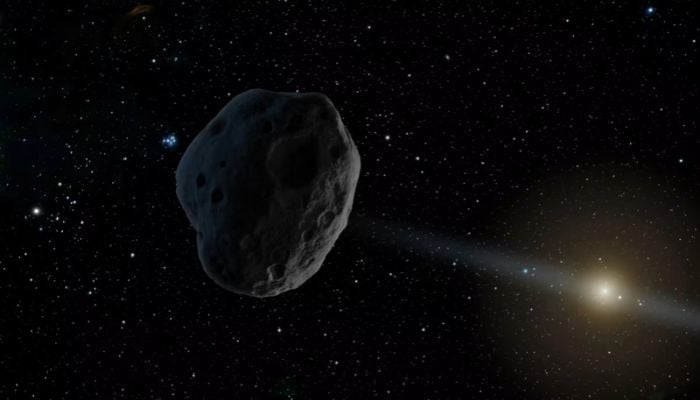
Earth has now gotten a second moon, but if anyone is searching for it next to the already familiar moon, they won't find it.
The visitor, named 2026 QQ8, is a tiny asteroid measuring just one to two metres across. It was captured by earth's gravitational pull and put in a temporary orbit in April, but not discovered until August.
Initially, scientists were unable to decide if it was a natural space rock or a fragment of an old spacecraft. It was first spotted by Hungarian astronomer Krisztián Sárneczky on August 20.
Follow-up observations with telescopes in Arizona and Hawaii eventually confirmed its natural origin and it was officially catalogued by the Minor Planet Center of the International Astronomical Union on October 29.
Will Earth's new moon stay forever?
Unfortunately, no.
The mini-moon is expected to leave the Earth's gravitational field sometime in December or January, after which it will continue its orbit around the sun.
The closest approach of 2026 QQ8 to the Earth is about 1.5 times the distance of our normal Moon, at about 568,000 kilometres.
Intriguingly, the object is too small and too dim to be seen with a standard-sized amateur telescope or the naked eye.
Could the mini-moon hit Earth?
Astronomers say there is no known collision threat. Even if it entered Earth's atmosphere, the tiny asteroid would likely burn up harmlessly.
Temporary moons are not particularly unusual.
Another asteroid, 2020 CD3, remained captured by Earth's gravity for approximately three years.
Scientists believe our planet may have at least one such temporary companion at any given time.