Can COP32 do what COP31 couldn't?
COP31 has failed, but we are already witnessing a transition away from fossil fuels
Published November 24, 2026
Climate change is multidisciplinary and multidimensional. Scientists explain why the planet is warming. Economists trace the costs of a changing climate through household incomes and national budgets. Psychologists weigh its impact in terms of stress.
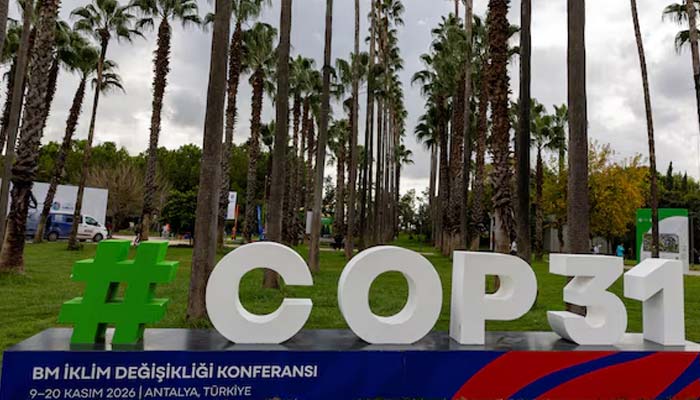
Interestingly, much about how to tame global warming in multilateral huddles is decided through political economy considerations, which determine what each government stands to gain through decisions made in such forums, what it might lose and what it can defend at home. That political economy helps explain why COP31 ended in Antalya on Sunday evening without agreement on its main pact.
The immediate dispute was over wording that governments had already accepted. In Dubai in 2023 (COP28), after nearly three decades of negotiations, countries agreed for the first time to transition away from fossil fuels in energy systems. In fact, it was the first time the term ‘fossil fuels’ appeared in any COP declaration. The countries chose flexibility, agreeing to transition away from fossil fuels at their own pace, while also committing to the Paris Agreement goal of limiting the global temperature rise to 1.5-2.0C above pre-industrial levels.
After it became clear that meeting the Paris Agreement commitments was not possible under current national commitments, some 130 countries wanted to reaffirm the commitment to transition away from fossil fuels at COP31.
Saudi Arabia, backed by other oil and gas exporters including Iran and Russia, resisted. When the Turkish and Australian chairs of COP31 omitted ‘fossil fuels’ from their final draft, the EU, Britain, Canada, Norway, Panama, Vanuatu and the Marshall Islands all refused to endorse it. Because COP decisions are made by consensus, two days into overtime (the longest COP ever), COP31 president Murat Kurum acknowledged the failure of climate talks.
The positions and priorities of different countries and blocs are always known; so why was compromise possible in earlier COPs – and what went wrong in Antalya?
In Paris in 2015, the Marshall Islands helped bring rich and poor countries together around a commitment to pursue a 1.5C limit. Washington and Beijing could accept it because each would set its own emissions target. At Glasgow (COP26) in 2021, India secured a change from phasing out unabated coal power to phasing it down. Island states reluctantly accepted the amendment. Through this compromise, for the first time, a COP decision named coal.
The mention of coal was extended to oil and gas through a general term, ‘fossil fuels’, at COP28 in Dubai, while leaving governments room to choose their pace. In Antalya, the chairs tried to convince the Marshall Islands to accept a weaker statement than it had secured in Dubai. The COP31 final draft recalled the Dubai agreement but omitted its call to move away from fossil fuels.
Contrarily, the COP31 chairs found room for a 2035 ambition to expand carbon capture, use and storage to a billion-tonne scale. Saudi Arabia defended the technology on behalf of the Arab Group. For an oil exporter, capturing emissions offers the prospect of selling oil for longer. It should not have been an either-or situation. However, both sides held firm in their positions, and they could not reach consensus on the draft text.
Palau’s environment minister expressed reservations about carbon capture but wanted to retain the provisions on oceans, finance and clean electricity. Bhutan wanted to retain the provisions on mountains and glaciers. Pakistan also urged delegates to preserve what they could agree on. India and China were also willing to accept the text. India, speaking for the Like-Minded Developing Countries, pressed wealthy governments to honour their finance obligations.
China and Australia separately welcomed a voluntary goal to meet 35% of global final energy demand with electricity by 2035. Pakistan backed the pledge. It is a voluntary commitment, as the full conference never adopted the target. Without a clear, binding commitment that the electricity target would be met through clean energy, many argued it would open the door to further fossil fuel use.
While ministers in Antalya debated whether to mention fossil fuels, Xi Jinping, Vladimir Putin and Donald Trump announced plans to increase production and supply of refined petroleum products. Trump had withdrawn the US from the Paris Agreement and the Green Climate Fund and sent no federal delegation to Antalya.
European ministers who wanted stronger language at Antalya faced questions about domestic energy security. Greece signed four offshore exploration concessions in February. The Dutch coalition agreement provides for continued gas extraction in the North Sea. Britain opposes licences to explore new fields, yet approved production at the already-licensed Jackdaw gas field in October. European governments can reasonably argue that they must keep energy affordable while replacing existing supplies. But the same argument can be used by India, Australia and the petrostates in the case of coal and oil, respectively.
Pakistan has to rely on fossil fuel imports. It receives most of its oil on deferred-payment terms, so it is not in a position to oppose the Middle Eastern friends in multilateral forums. However, like all other developing countries, it has a strong interest in climate finance, another unresolved issue at COPs.
At Glasgow, the EU joined the US and Australia in opposing a loss-and-damage fund. A year later, at Sharm el-Sheikh (COP27), thanks to Pakistan’s strong leadership, the EU backed a fund while seeking a broader donor base. The dispute resurfaced in Antalya. Developing countries wanted talks to focus on wealthy countries’ duty to provide finance.
Europe wanted to discuss who else should contribute. On climate finance, the first Antalya draft proposed at least $120 billion per year for adaptation by 2035. By the fourth draft, the figure had been removed, upsetting African countries and contributing to the COP’s collapse.
COP31 has failed, but we are already witnessing a transition away from fossil fuels. In 2025, one in four new cars sold worldwide was electric. The International Energy Agency estimates that Pakistan had 28-38 gigawatts of distributed solar capacity that year. China is exporting its green technologies and electric vehicles at scale, helping societies transition to greener economies.
These trends should offer Ethiopia some reason for optimism as it prepares to host the next COP in November 2027. Ethiopia can take encouragement from Mexico’s achievements in 2010, following the failure of the Copenhagen COP in 2019. At the 2010 COP, governments recognised national emissions pledges and established the Green Climate Fund, with developing countries holding half the seats on its board. It was a compromise: major emitters could defend the targets they had set at home, while developing countries gained a say in how the money was allocated.
Ethiopia could bring those interests together again at COP32. Governments could spell out how quickly they can move away from fossil fuels, while donors could specify what they will provide in adaptation grants to the developing world. If all can defend the same agreement for different reasons, Addis Ababa could do for Antalya what Cancun did for Copenhagen.
The writer heads the Sustainable Development Policy Institute (SDPI), and was an observer at COP31.
Disclaimer: The viewpoints expressed in this piece are the writer's own and don't necessarily reflect Geo.tv's editorial policy.
Originally published in The News