India was fifth-biggest military spender in 2016: SIPRI
India’s defence budget rose by an annual 8.5 per cent to $55.9 billion
April 24, 2017
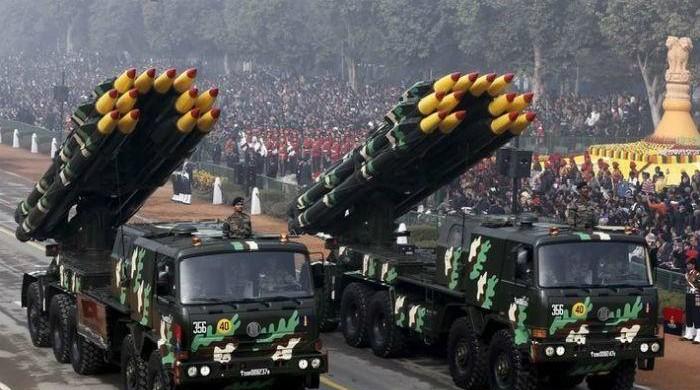
India’s defence budget was at the fifth highest in 2016, rising by an annual 8.5 per cent to $55.9 billion, according to the Stockholm International Peace Research Institute’s annual report on defence spending.
Earlier in February, the country’s finance minister announced a 10% hike in the country's military spending for fiscal 2017-2018, Indian media reported.
According to the SIPRI report, global military expenditure rose for a second consecutive year to $1,686 billion, with the United States topping the list with spending growth of 1.7% to $611 billion.
China came at the second place, with its military spending increasing by 5.4% to $215 billion, considerably lower than reported in past years.
The third largest spender is Russia with an increase of 5.9% to $69.2 billion, while Saudi Arabia fell from the spot to the fourth-largest, recording an increase of 30% to $63.7 billion.
The report further said that global defence spending increased for a second consecutive year to a total of $1,686 billion, the first consecutive annual increase since 2011, when spending reached a peak of $1,699 billion.
Regions including Asia and Oceania, Central and Eastern Europe and North Africa continued to see defence expenditure increase. Spending fell in Central America and the Caribbean, the Middle East, South America and sub-Saharan Africa, the report said.
“The growth in US military expenditure in 2016 may signal the end of a trend of decreases in spending, which resulted from the economic crisis and the withdrawal of US troops from Afghanistan and Iraq,” the report said.
Western Europe saw an increase of defence spending by 2.6% which experts said is due to increased security threats perceptions.
On the contrary, various oil-exporting countries reduced their military spending in the wake of “falling oil revenue and associated economic problems attached to the oil-price shock.”