Nasa detects issues in James Webb Space Telescope
Glitch was seen in MIRI of JWST, however, telescope's other critical instruments remain unaffected, says Nasa
April 25, 2023
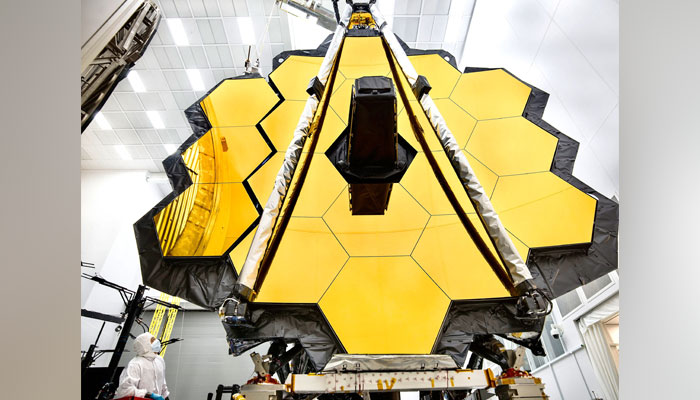
Nasa said that its scientists have found "discrepancies" in data from one of the 17 observatories of the James Webb Space Telescope (JWST) as it has been going under routine monitoring.
The space agency said that the glitch was seen in the Mid-Infrared Instrument (MIRI) of JWST however, the telescope's other critical instruments remain unaffected.
According to Nasa, "MIRI has both a camera and a spectrograph that sees light in the mid-infrared region of the electromagnetic spectrum, with wavelengths that are longer than our eyes see. MIRI covers the wavelength range of 5 to 28 microns."

In its official press release, Nasa maintained the issue in JWST: "Further analysis of MIRI’s Medium Resolution Spectroscopy (MRS) mode revealed that at the longest wavelengths, the throughput, or the amount of light that is ultimately registered by MIRI's sensors, has decreased since commissioning last year."
The US-based space administration also added: No effect has been seen for MIRI imaging, and there is no risk to the instrument. All other observation modes — within MIRI and each of Webb’s other scientific instruments — remain unaffected.
The team is analysing data and investigating the cause of what led to the issue in the observatory. Meanwhile, the Webb team will continue MIRI observations as planned.
Nasa's statement added while highlighting a strategy to prevent such issues in future: "The team will gather all relevant ground test and flight data to fully assess MRS performance. Further test observations will be taken to completely characterise the nature of the issue using this particular mode of observation.
Next, a plan for long term-monitoring will be enacted, while the team continues to investigate the cause, identify risks, and explore mitigations that would potentially improve performance. One possible mitigation strategy includes taking slightly longer exposures at the affected wavelengths to increase the signal to noise."
Medium Resolution Spectrometer is not witnessing issues for the first time. From August to November last year, MIRI had a stuck grating wheel for a few months however, it continued its operations with the help of other modes.

JWST was built at the cost of $10 and was launched in December 2021. It is stationed at a distance of one million miles from the earth — known as Lagrange Point 2, a place gravitationally stable in space.
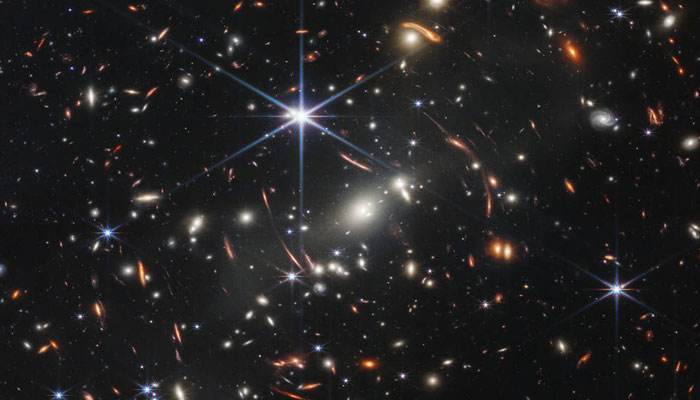
It has a durability of at least 20 years in space and so far collected remarkable images that were helpful in providing insights to astronomers.