Life-supporting molecule detected in Orion Nebula
Experts note that objects in the universe are bombarded by strong ultraviolet light from nearby hot, large stars
June 27, 2023
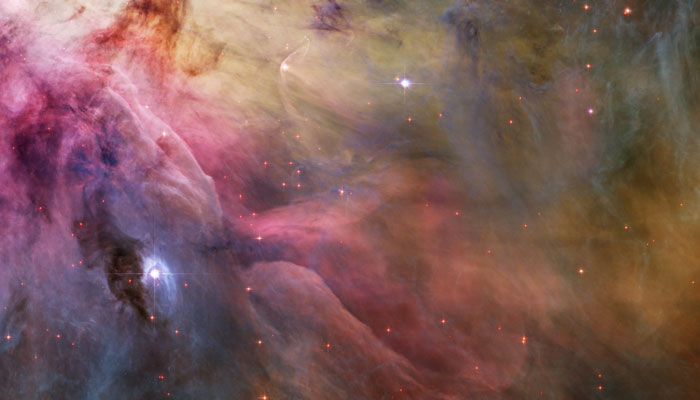
Scientists with the help of the James Webb Space Telescope (JWST) have discovered a crucial life-supporting molecule in a young star system at a distance of around 1,350 light-years away for the first time.
According to Nasa researchers from Goddard Space Center, the discovery of the methyl cation (CH3+) in the Orion Nebula is important as it is used to form more complex carbon-based molecules, required to support life.
Scientists have been finding these carbon compounds in space to trace any extraterrestrial life in the universe.
Astronomers noted that Webb’s exceptional resolution and sensitivity make it a pivotal observatory to look for carbon-based molecules in deep space.
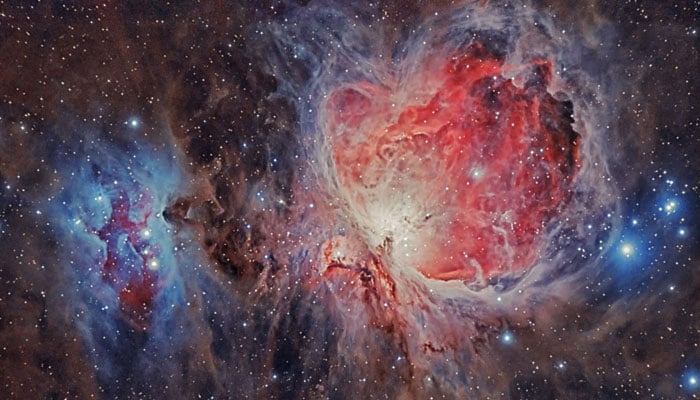
They also noted that in particular, the detection of a series of key emission lines from the methyl cation cemented the latest discovery, which has been published in the journal Nature Monday.
A co-author of the study Marie-Aline Martin-Drumel from the University of Paris-Saclay, said: “This detection not only validates the incredible sensitivity of Webb but also confirms the postulated central importance of CH3+ in interstellar chemistry.”
While observation, experts noted that objects in the universe are bombarded by strong ultraviolet (UV) light from nearby hot, young, large stars.
And when this UV radiation hits the planet-forming gas disks, it kills complex organic molecules, and this is why the discovery of methyl cation molecules is a surprise.
Scientists, however, noted that UV radiation might actually be providing the necessary source of energy for CH3+ to form in the first place.
“Once it forms it could promote additional chemical reactions to build more complex life-building block organic molecules,” they added.
“While there were traces of water identified, the molecules found in d203-506 are, however, distinguished from typical protoplanetary disks,” according to astronomers.
“This clearly shows that ultraviolet radiation can completely change the chemistry of a protoplanetary disk. It might actually play a critical role in the early chemical stages of the origins of life,” study author Olivier Berné of the French National Center for Scientific Research in Toulouse, said.