A doughnut rock on Mars leaves baffled Nasa scientists longing for coffee
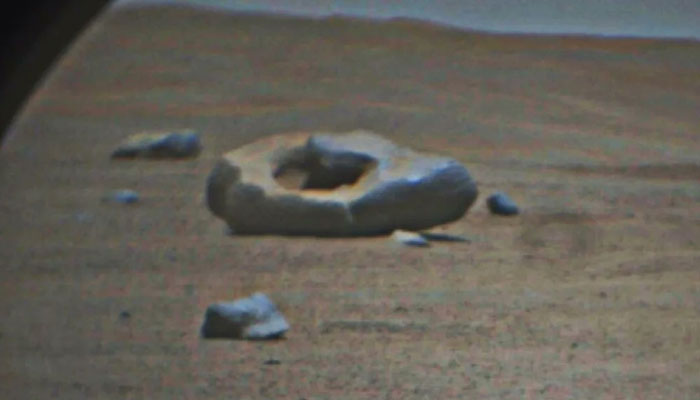
Nasa's Perseverance rover took the picture using the SuperCam Remote Micro-Imager on 23 June 2023 of a doughnut-shaped rock off in the distance
June 28, 2023
Since its landing on Mars, Nasa’s Perseverance Rover has been sending remarkable images to scientists allowing them to have further information about the red planet as the SUV-sized vehicle has sent an image of a strange Martian rock to Earth.
The rock is shaped like a doughnut, having a hole at the centre, which is thought to be a crashed meteorite. It was surrounded by a number of stones as can be seen in a picture snapped by the rover’s remote-sensing camera.
The California-based SETI institute tweeted Monday: "Nasa Perseverance took a picture using the SuperCam Remote Micro-Imager on 23 June 2023 of a doughnut-shaped rock off in the distance, which could be a large meteorite alongside smaller pieces."
Nasa’s Preserverane Rover had also earlier found similar rocks on Mars. Earlier this year, Nasa scientists identified a strange structure resembling a bear face.
The rock formation consisted of two craters that appeared to make up the eyes of the "bear", and a V-shaped collapsed hill for its snout.
According to researchers, following the discovery in January, the circular fracture pattern was likely due to the settling of a deposit over a buried impact crater while the bear nose-like structure is likely a volcanic or mud vent.
The Curiosity Rover in February revealed a strange shiny metallic rock on the Red Planet that appeared to be an iron-nickel meteorite.
In its previous findings, Curiosity also spotted a strange rock formation that looked like an “alien doorway”, likely formed on Mars due to seismic activities.
In May, Nasa's Curiosity rover found a rock which looked like a book on its 3,800th day on the red planet, captured on April 15 and dubbed "Terra Firme".
According to Nasa officials: "The strange shape of Mars rocks like this one are usually due to water trickling in the area billions of years ago when the Red Planet was much wetter."
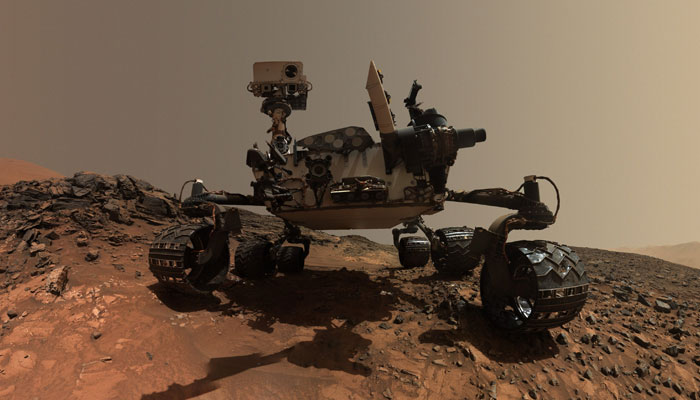
Jet Propulsion Laboratory said: "Curiosity has been exploring Mars' Gale Crater since August 2012, with key results in science papers including the discovery of persistent liquid water on ancient Mars, potential evidence of ancient life through organics, and examinations of radiation at the surface."
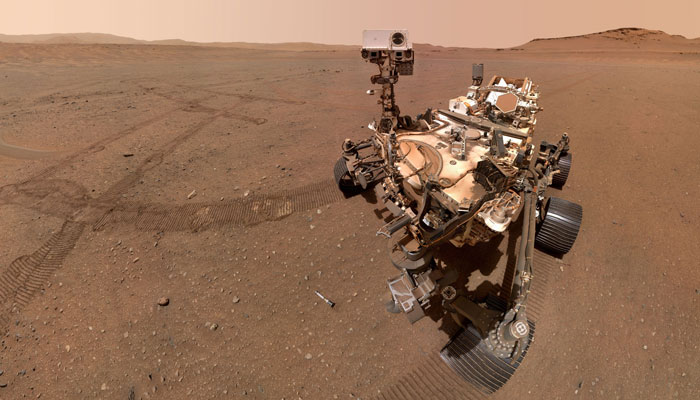
Nasa's Preservance Rover is continuing its work in the Jezero Crater area of Mars and caching tubes of samples for bringing them back to Earth for further investigations.