Netflix's $72bn Warner Bros. deal faces Trump's scrutiny: Will it survive?
'They have a very big market share (referencing Netflix); when they have Warner Bros. That share goes up a lot,' said Donald Trump
Published December 08, 2025
US President Donald Trump has weighed in on the multibillion-dollar deal that was finalized between Warner Bros. and video streaming giant platform Netflix last week on December 5, 2025.
Donald Trump has raised concerns over Netflix’s planned $70bn deal in a bid to acquire Warner Bros Discovery’s movie studio and its HBO streaming networks, saying it ‘could be a problem.’
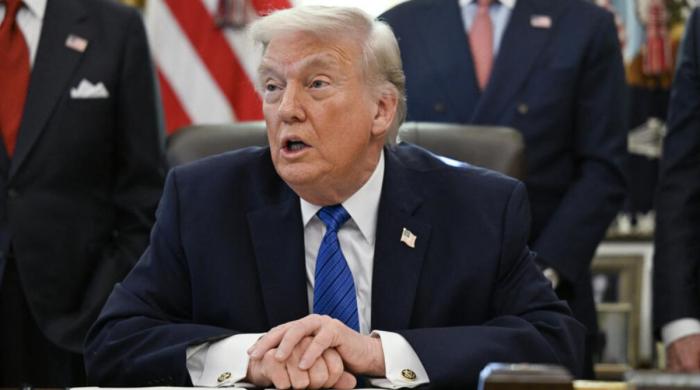
President Trump, while speaking to reporters at the Kennedy Center Awards’ red carpet in Washington, DC, on Sunday, December 7, said, “Well, that’s got to go through a process, and we’ll see what happens.”
“They have a very big market share (referencing Netflix); when they have Warner Bros. That share goes up a lot,” Trump added.
For context, Netflix, which has over 300 million subscribers, is currently the No. 1 streaming service. Warner’s HBO Max is ranked slightly lower.
While suggesting that economists should weigh in, he said, “that’s going to be for some economists to tell… But it is a big market share. There’s no question it could be a problem.”
Netflix had announced the deal on December 5, that it agreed to buy Warner Bros. Discovery’s TV and film studio and streaming division for $72 billion, a deal that would potentially give the streaming pioneer control of one of Hollywood’s most prized and oldest assets.
Although the agreement is yet to get a nod from competition authorities, the US Justice Department’s competition division could challenge the merger, alleging it violates competition law by giving the combined company excessive control over the streaming market, after Donald Trump’s recent remarks mentioning the deal.
On the other side, the Writers Guild of America (WGA), representing screenwriters across America, has urged on the regulators to block the merger.
In a statement on Friday, December 5, the union said, “The world’s largest streaming company swallowing one of its biggest competitors is what antitrust laws were designed to prevent.”
The guild warned that the merger could lead to job losses, lower wages, poorer working conditions, higher consumer prices, and a reduction in both the volume and diversity of content available to viewers.
The deal is anticipated to close only after Warner Bros. divides its business in the second half of 2026, according to the companies.