How Taiwan will define Sino-US relations in 2026?
As a matter of fact, both countries are taking aggressive steps to fortify their positions on this island
Published January 03, 2026

The year 2026 has begun with renewed tension between the United States of America and China over Taiwan. And it is highly likely that the escalation will cast aspersions on the bilateral relations between the two rival countries.
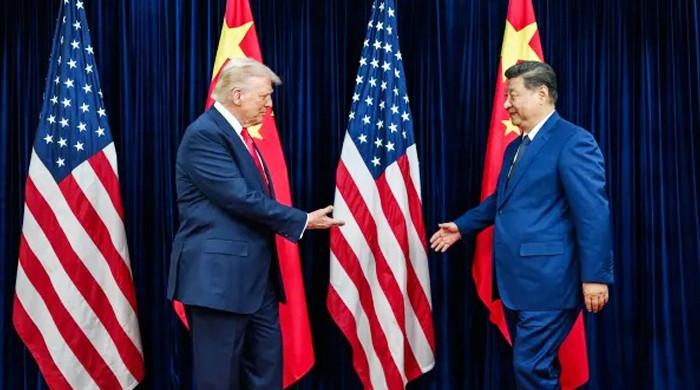
In April, US President Donald Trump is scheduled to visit Beijing. And President Xi Jinping is expected to reciprocate the gesture later.
During these interactions, even if it is not discussed in open, the question of Taiwan will surely loom large.
As a matter of fact, in the name of their national interest, both countries are taking aggressive steps to fortify their positions on this island.
So, no surprise that the dawn of 2026 started with a strong commitment by Chinese President Xi Jinping that reunification of Taiwan with mainland China is imminent.
"We Chinese on both sides of the Taiwan Strait share a bond of blood and kinship. The reunification of our motherland, a trend of the times, is unstoppable," President Xi declared in his New Year's message.

On the other hand, the US blamed China for increasing tension in the region by conducting military exercises near Taiwan.
"China’s military activities and rhetoric towards Taiwan and others in the region increase tensions unnecessarily. We urge Beijing to exercise restraint, cease its military pressure against Taiwan, and instead engage in meaningful dialogue. The United States supports peace and stability across the Taiwan Strait and opposes unilateral changes to the status quo, including by force or coercion," warned Principal Deputy Spokesperson of the Department of State Tommy Pigott.
A couple of days before this war of words, Taiwan had claimed that the Trump administration was providing it with High Mobility Artillery Rocket System (HIMARS), Howitzers, Javelin anti-tank missiles, Altius loitering munition drones and other military equipment worth over $11 billion.
For Washington, it is "preserving military overmatch" against China. And President Trump’s second term is expected to arm Taiwan far more than it did during the first term.
This policy has bipartisan support. The US National Security Strategy focusses on building a Taiwan military capable of "denying aggression" anywhere in the First Island Chain. The strategic location of Taiwan speaks volumes about this approach.
"Taiwan provides direct access to the Second Island Chain and splits Northeast and Southeast Asia into two distinct theatres. Given that one-third of global shipping passes annually through the South China Sea, this has major implications for the US economy. Hence deterring a conflict over Taiwan, ideally by preserving military overmatch, is a priority", explains the document of National Security Strategy.
However, arms supply to Taipei is taken seriously by China. Beijing has viewed this step as against the One-China principle and a violation of the three China-US Joint Communiqués.
It immediately took countermeasures against 20 US military-related companies and 10 senior executives who were engaged in arming Taiwan.
"We stress once again that the Taiwan question is at the very core of China’s core interests and the first red line that must not be crossed in China-US relations. Anyone who attempts to cross the line and make provocations on the Taiwan question will be met with China’s firm response," a spokesman of the Chinese foreign ministry observed.
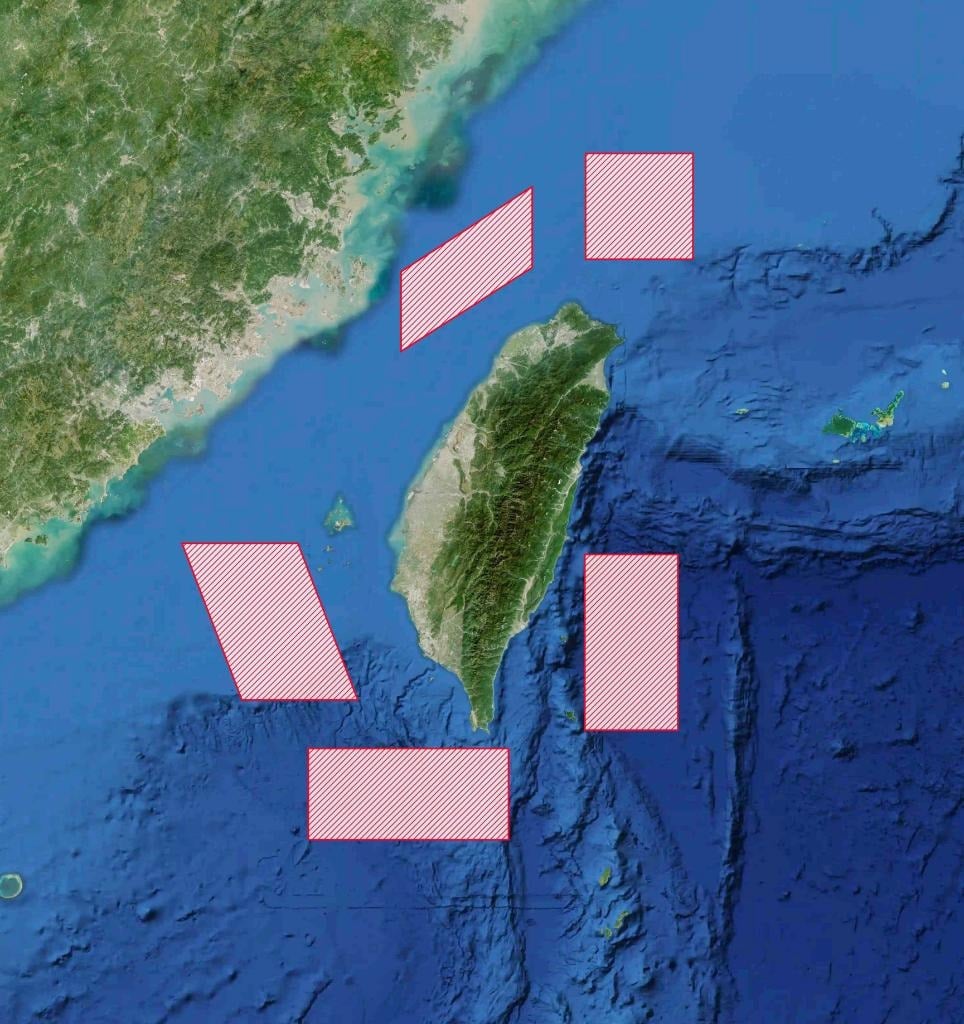
Beijing not only issued a hollow threat, but it also conducted military drills codenamed 'Justice Mission 2025' in the waters and airspace around the Taiwan Island.
The live firing exercises in the Island’s North, Southwest, Southeast and East areas were coordinated by the Army, Navy, Air Force and Rocket Force.
PLA Eastern Theatre Command Spokesperson Shi Yi called the drill "a stern warning against Taiwan independence separatist forces and external interference, and a legitimate and necessary action to safeguard China’s sovereignty and national unity".
This dramatic escalation followed a much-awaited meeting between President Trump and his Chinese counterpart Xi, in October 2025.
President Trump had rated that meeting 12 out of 10. Apparently, for keeping things from turning sour, the word Taiwan was not uttered even once during that Busan Summit.
However, President Xi was open to admit that, "We do not always see eye to eye with each other and it is normal for the two leading economies of the world to have frictions now and then…. In the face of winds, waves and challenges, we should stay the right course, navigate through the complex landscape, and ensure the steady sailing forward of the giant ship of China-US relations".
According to the Brookings Institution, "US leverage over China has dissipated as Beijing has demonstrated a consistent willingness to retaliate against the United States."
This retaliation is being witnessed in almost every domain. And probably that is why, since 2017, the Trump administration has labelled China as a "strategic competitor".
Taiwan, however small, can play a role in containing or at least derailing China from its continued progress in achieving the 10-year development agenda and increasing its power of retaliation.
As the leadership of Taiwan seems willing to play this dangerous game, it is highly likely that the year 2026 may witness more confrontation than concord between China and the United States of America.
For those who inhabit the Indo-Pacific region, this confrontational approach is alarming.
After all, Washington views this Island as "on the front lines of the global contest between democracy and authoritarianism." And it is working with Taiwan to advance "a shared vision of a free, open, and resilient Indo-Pacific region".
Well, both Beijing and Washington have the power to withstand such a confrontation; it will be a question of how the emerging economies of this region will exhibit resilience in any adverse scenario over Taiwan.