If US attacks Iran, what day will President Trump opt for?
For launching an all-out attack, Monday is considered the worst day, while Friday evening, Saturday or even Sunday is relatively contemplated as safer day
Published February 24, 2026
Despite talks, the storm clouds of war are increasingly growing thick over Tehran. A number of distinguished diplomats, I talked with over the last month, are convinced that diplomacy will prevail.
Yet, there are some indications that Washington has opted for war. The question is, if the US attacks Iran, what day will it opt for?
By looking at the recent history, a few signs can help understand the probability of the day and even the timing of such an extreme action.
After all, every administration tries its best to limit the impact of the war on its own economy.
In most wars, the stock market is an obvious victim. For this very reason, avoiding or delaying a market crash had been a priority during the previous wars.
For launching an all-out attack, Monday is considered the worst day. On the other hand, Friday evening, Saturday or even Sunday is relatively contemplated as a safer day.
Choosing the weekend gives a cushion, however small, to manage the stock market before it opens and crashes by wiping out billions of dollars.
The best date, February 13, to launch war this month has already passed.
If a strike was made on Friday night, the Trump administration had three full days to manage the impact. The reason is simple — Monday, February 16, was an official holiday (President’s Day or Washington’s Birthday).
There is no official bank holiday on the federal level in March, but there is one on Friday, April 3, as the markets close for Good Friday.
As far as Iran is concerned, a decision is expected to be made well before April.
“Maybe we’re going to make a deal. You’re going to be finding out over the next probably 10 days.”… I would think that would be enough time, 10, 15 days, pretty much, maximum,” President Trump made it known on February 19.
For President Trump, it is far more important to consider his moves and the selection of a day.
In 2025, one misleading post about tariffs had cost the stock $2 trillion in a matter of minutes. Almost the same amount of money was spent on the Afghan war, waged between 2001 and 2021.
Maybe that was the reason why President Trump attacked Venezuela on Saturday, January 3, 2026, at 7pm ET.
There was no fear of a geopolitical conflict, so the stock didn’t react adversely.
Operation ‘‘Midnight Hammer” was launched on Sunday, June 22, 2025, when the US Air Force and Navy attacked three Iranian nuclear sites in Fordow, Isfahan and Natanz.
Then, Iran had opted for a restrained response on US airbase in Qatar.
At that point in time, there was no apparent danger of the disruption of crude supply. So, the US stocks rose while crude prices tumbled.
Even the assassination of Iranian Revolutionary Guard Corps (IRGC) Commander Major General Qaseem Soleimani was carried out on Friday, January 3, 2020.
However, airstrikes to topple the Saddam Hussein regime in the name of “Operation Iraqi Freedom” were launched on Thursday, March 20, 2003.
According to Chase de Vere, “For the 2003 Iraq War, the S&P 500 fell over 7 trading days but only by 5.3%, before taking 16 days to recover”.
Following the 9/11 attacks, the then-president George W Bush had also launched a war against Afghanistan on Sunday, October 7, 2001.
9/11 had jolted the United States so badly that the NYSE and Nasdaq were closed for four trading days, the longest since 1933. Yet, stocks had shown a muted initial reaction to the attack on Afghanistan.
The case of a potential full-fledged war against Iran is totally different.
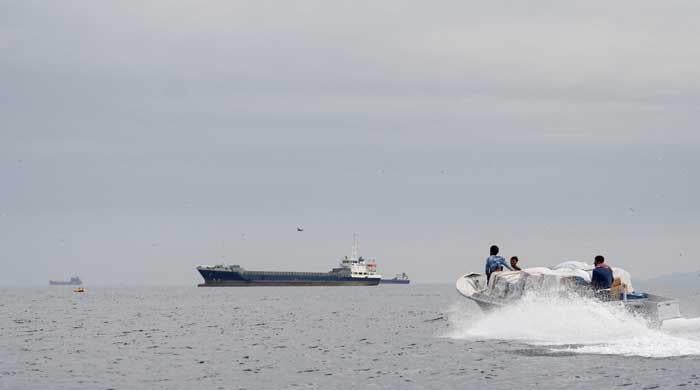
Last week, Iran had temporarily closed parts of the strategic Strait of Hormuz for naval exercises. It’s an energy corridor, and one-fifth of the world’s daily oil consumption is transported through this area.
By flexing muscles in this strait, Tehran has sent a clear warning that it can target Western-linked oil tankers while selectively allowing China to continue trade.
At the top of it, in case of war, Tehran has threatened retaliatory strikes on US bases in the region.
“They should know that if they start a war this time, it will be a regional war,” Supreme Leader of Iran Ayatollah Syed Ali Khamenei has apprised the Trump administration.
The next round of talks between the United States and Iran is taking place on Thursday. Till now, the only apparent progress made is the continuity of the talks.
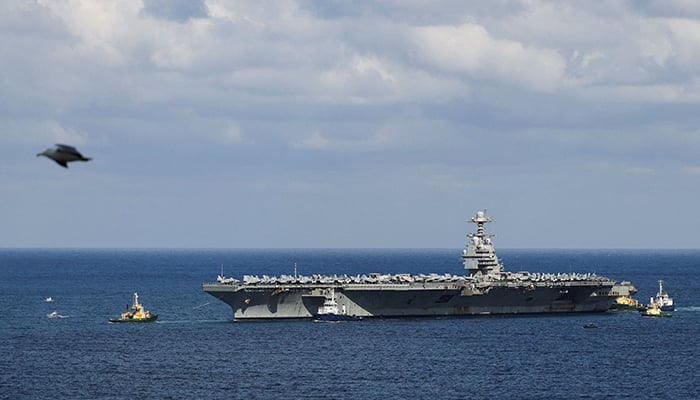
Some diplomats believe that the United States is utilising this time to strategically position its military assets in the region. Soon, they will be locked and cocked.
There is some weight in this argument.
In the last two decades, no one has seen such a high level of direct diplomatic engagements and so massive simultaneous military buildup, as we witness now between Washington and Tehran.
“The world is also not the same as it was three years ago,” another diplomat remarked by remaining anonymous, as he was not authorised to speak on record.
Another diplomat said, “If President Trump opts for war, he will ensure there is no genocide of investors. Though, in any case, he cannot avoid their bloodbath.”