Legality of US capture of Venezuela's Maduro in focus at United Nations
Cuban govt says that 32 of its citizens were killed during US raid to extract Venezuelan president
Published January 05, 2026
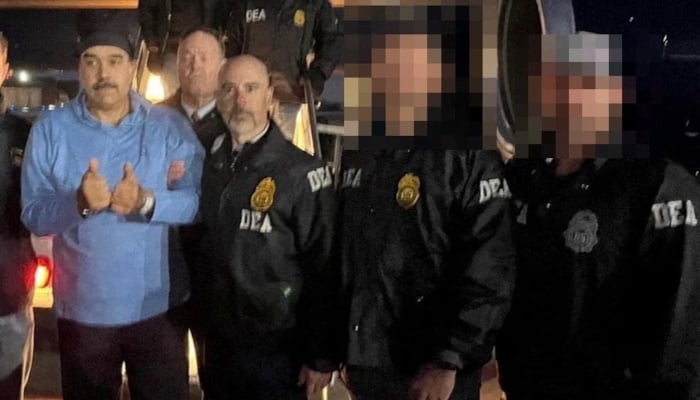
- US veto power prevents accountability at UN Security Council.
- US cites self-defence under UN Charter Article 51.
- Legal experts argue US operation violated international law.
UNITED NATIONS: The legality of the US capture of Venezuelan President Nicolas Maduro will be under the spotlight at the United Nations on Monday, but Washington is unlikely to face strong criticism from allies over its military operation in the Latin American state.
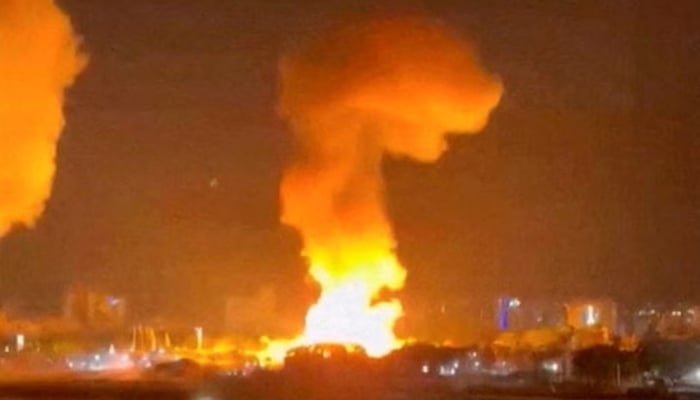
The 15-member UN Security Council will meet on Monday after US Special Forces seized Maduro in an operation on Saturday that knocked out power in parts of Caracas and struck military installations. Venezuelan authorities also said it was deadly. Maduro is now in detention in New York awaiting a court appearance on Monday on drug charges.
Russia, China and other Venezuelan allies have accused the United States of violating international law, but US allies - many of whom opposed Maduro - have been less vocal about any concerns over the use of military force.
"Judging by the reactions from European leaders to date, I suspect that US allies will equivocate exquisitely in the Security Council," said Richard Gowan, director of global issues and institutions at the International Crisis Group, a think-tank.
UN Secretary-General Antonio Guterres views the US operation as setting "a dangerous precedent," his spokesperson said on Saturday. Many legal experts also say the US action was illegal, although Washington will be able to block any attempts by the UN Security Council to hold it accountable.
Washington cites self-defence
In the wake of the US operation, European states have largely called for international law to be respected without specifically calling out Washington, though French Foreign Minister Jean-Noel Barrot said the US had violated "the principle of not resorting to force, that underpins international law."
The UN Charter states that members "shall refrain in their international relations from the threat or use of force against the territorial integrity or political independence of any state." There are currently 193 members of the United Nations.
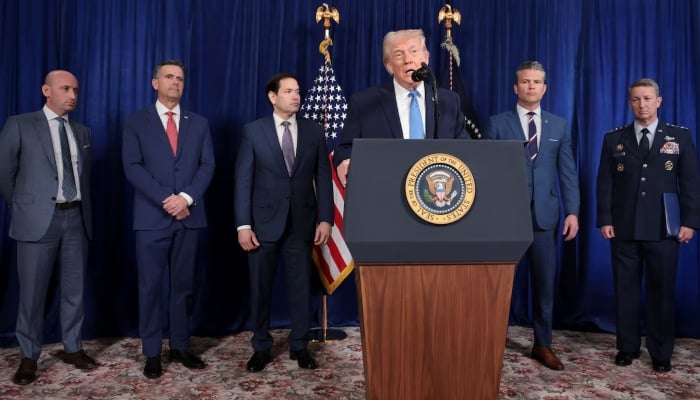
US Ambassador to the UN Mike Waltz on Sunday cited Article 51 of the UN Charter, which says that nothing "shall impair the inherent right of individual or collective self-defence if an armed attack occurs against a member of the United Nations."
"In this case, you have a drug kingpin, an illegitimate leader indicted in the United States, coordinating with the likes of China, Russia, Iran, terrorist groups like Hezbollah, pumping drugs, thugs, and weapons into the United States of America, threatening to invade its neighbours," he told Fox News.
However, legal experts say the US operation was illegal because it lacked UN Security Council authorisation, did not have Venezuelan consent, and does not constitute self-defence against an armed attack.
"The action violated international law," said Tom Dannenbaum, a professor at Stanford Law School. "Serious legal objections to Maduro's regime do not eliminate the need for a legal basis to use military force in Venezuela."
US veto shields Washington
But Washington cannot be held accountable for any violation by the UN Security Council, which is charged with maintaining international peace and security. The US wields a veto - along with Russia, China, Britain and France - so can block action.
Maduro was indicted in 2020 on US charges including narco-terrorism conspiracy. He has always denied any criminal involvement.
"Even if Maduro were to be responsible for the smuggling of some drugs into the US, such smuggling of drugs does not constitute an armed attack and does not authorise the US to use force in self-defence," said Milena Sterio, a professor at Cleveland State University College of Law.
She also said Washington "cannot exercise extra-territorial jurisdiction to arrest individuals anywhere it pleases."
Adil Haque, a professor at Rutgers Law School, also said the US capture of Maduro "was an illegal infringement of the inviolability and immunity of a sitting Head of State, who may lack democratic legitimacy but was clearly effectively discharging his official functions on behalf of his State."
Cuba says 32 of its citizens killed in Maduro extraction
The Cuban government said on Sunday that 32 of its citizens were killed during the US raid on Venezuela to extract Maduro for prosecution in the United States.
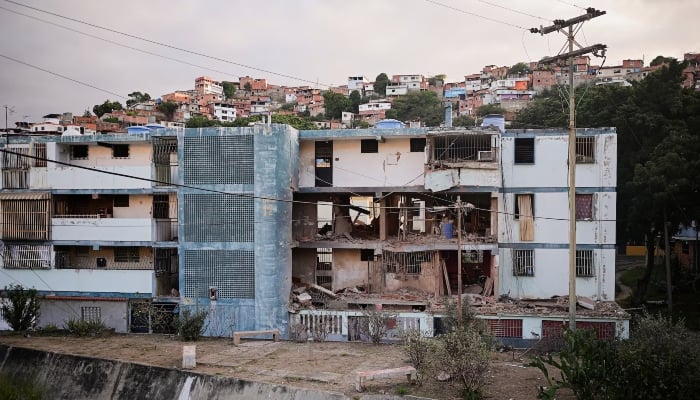
Havana said there would be two days of mourning on January 5 and 6 in honour of those killed and said funeral arrangements would be announced.
The Cuban government statement gave few details, but said all the dead were members of the Cuban armed forces and intelligence agencies.
"True to their responsibilities concerning security and defence, our compatriots fulfilled their duty with dignity and heroism and fell, after fierce resistance, in direct combat against the attackers or as a result of bombings on the facilities," the statement said.
Cuba has provided some security for Maduro since he came to power. It was not clear how many Cubans were guarding the Venezuelan president when they died and how many may have perished elsewhere.
Maduro, 63, and his wife Cilia Flores were seized by US forces in the Venezuela capital Caracas on Saturday and flown to the United States. Maduro is being held in a New York detention center awaiting a Monday court appearance on drug charges.