How US attack on Venezuela changes global oil trade
"We're going to have a presence in Venezuela as it pertains to oil because we're sending our expertise in," says Trump
Published January 07, 2026
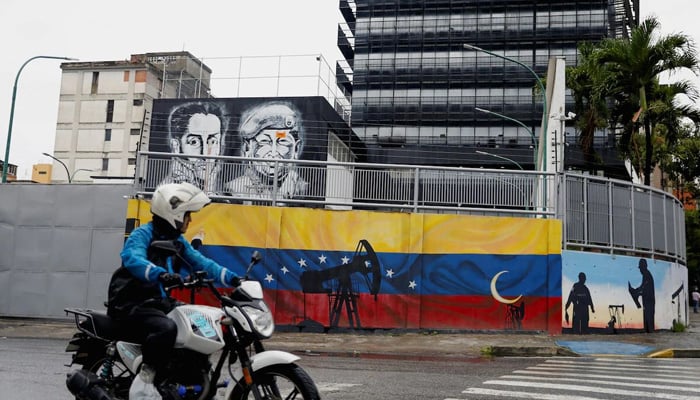
How US attack on Venezuela changes global oil trade
By taking military action against Venezuela and capturing President Nicolas Maduro, the United States of America has taken the edge over China and Russia. At the same time, it has changed the global dynamics of oil trade.
This unprecedented act against a sitting president has also enabled Washington to fuel any war against major oil-supplying countries. After all, Venezuela is a black gold mine that has five times more oil reserves than the US.
If Venezuela doesn’t export a single barrel of oil, at the current rate of consumption, it has enough reserves to last 1,374 years. The country has 303 billion barrels of oil deposits, the world's largest proven reserves, excluding the unproven ones.
On January 3, 2026, that black gold turned out to be the worst resource curse for Venezuela. President Maduro knew what was coming. That is why he was in a safe house. Yet, none could stop the invasion.
In a 58-minute post-attack press briefing, President Donald Trump, Secretary of State Marco Rubio, Secretary of War Pete Hegseth and Chairman of the Joint Chiefs of Staff General Dan Caine briefed the media what "peace through strength" means to the world. And how "peace on earth" will be ensured.
During the briefing, the three words that resonated most were "Venezuela", "Maduro" and "oil".
"We're going to have a presence in Venezuela as it pertains to oil because we're sending our expertise in. We're going to be taking out a tremendous amount of wealth out of the ground," declared President Trump.
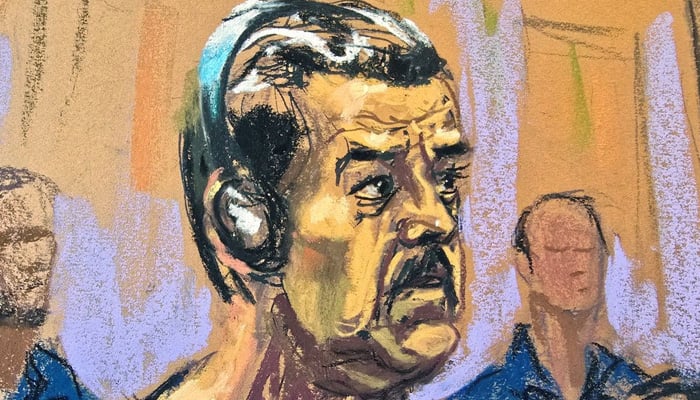
And that wealth, he continued, "is going to the people of Venezuela and people from outside of Venezuela who used to be in Venezuela. And it also goes to the US in the form of reimbursement for the damages caused to us by that country".
The US invasion was carried out exactly 50 years to the date when the then-president of Venezuela Carlos Andres Perez had proclaimed the takeover of the petroleum industry.
On January 1, 1976, that step was taken after the then Libyan leader Muammar Gaddafi had presented Venezuela with the blueprint of nationalisation. Gaddafi himself had nationalised that industry in 1970.
Three decades later, citing international law that gives inherent rights to all sovereign states to permanently own their natural resources, Hugo Chavez nationalised the remaining foreign oil companies.
Those who packed and left included Texas-based American oil companies ConocoPhillips and Exxon Mobil. Chevron, however, managed to stay back after entering into a joint venture.
For President Trump, Venezuela's nationalisation is tantamount to unilaterally seizing and selling American oil and assets worth billions of dollars.
"We built the Venezuelan oil industry with American talent, drive, and skill. And the socialist regime stole it from us during those previous administrations. And they stole it through force. This constituted one of the largest thefts of American property in the history of our country. Massive oil infrastructure was taken like we were babies", remarked President Trump.
So, for this raid, President Trump was building momentum from day one. After taking the oath of office, Donald Trump had signed an executive order that paved the way for labelling a Venezuelan street gang Tren de Aragua as a foreign terrorist organisation.
Then, without providing evidence, he tried linking President Maduro with that gang, started military deployment, continued bombing boats departing from Venezuela and seized oil ships heading to different destinations.
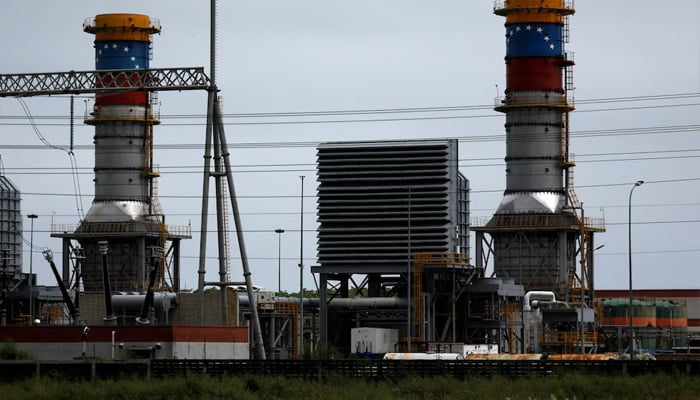
By now, Venezuela, which had once exported oil 3.5 million barrels per day was reduced to 900,000 bpd. China, US, India, Spain, Cuba, Italy, Malaysia, Singapore and Poland were its major buyers. Now, the dynamics are changing, especially for China.
‘"We're in the oil business. We'll be selling large amounts of oil to other countries, many of whom are using it now. But I would say many more will come", hinted President Trump without naming countries.
Donald Trump also didn't elaborate if he intends to supply this oil to Europe, which is gearing itself for a long war with Russia.
Washington had opened the Caracas front during President Trump's first term in office when Venezuela’s largest oil company PDVSA and the Central Bank were put under sanctions. It was seen as an attempt to bring the oil-based economy of 30 million people to its knees.
Yet, after regime change, Washington has vowed to send its major companies to invest in infrastructure and "get the oil flowing the way it should be".’ Or in Marco Rubio’s words, ‘‘getting back the oil that was stolen from us"’.
This can only be ensured by sending US companies back to Venezuela. Chevron is already working there so it has an upper hand. Recently, the World Bank has awarded Exxon Mobil with $77 million in claim against Venezuela. And ConocoPhillips is seeking $10 billion in compensation.
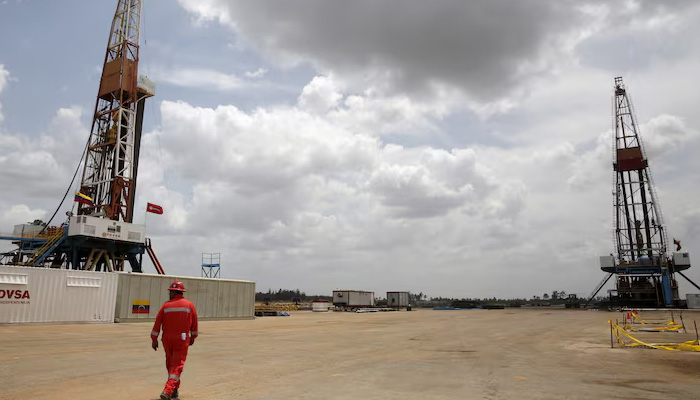
Exxon Mobil has not commented on the situation. And ConocoPhillips has avoided speculating on any future business activities or investments.
However, in a reply to American media, ConocoPhillips spokesman Dennis Nuss said that they are monitoring developments and their potential implications for global energy supply and stability.
No doubt, there is an element of uncertainty, instability, fear of riots and attacks on US companies. At the top of it, trust deficit in honouring contract is another impediment.
"The rotten Venezuelan oil industry would take years, if not a decade, to rebuild and get its prime place in Opec. As far as future political instability and corruption is concerned, it may still exist at higher levels of government but not within American oil companies as they maintain highest standards of operations, commented president of Texas-based Midland Energy Javaid Anwar who is a friend of former president Bush and also close to President Trump.
The other problem is the nature of the oil produced by Venezuela. The extra-heavy crude needs to be diluted and processed before transportation. Caracas also produces residual fuel, particularly with high-sulphur fuel oil, which is mostly exported to Asia.
If Washington is at the helm of affairs, it is highly unlikely that such oil will be provided on subsidised rates to compensate freight expenses.
"The rotten Venezuelan oil industry would take years, if not a decade to rebuild and get its prime place in Opec As far as future political instability and corruption is concerned, it may still exist at higher levels of government but not within American oil companies as they maintain highest standards of operations, commented president of Texas based Midland Energy Javaid Anwar who is a friend of former President Bush and also close to President Trump.
"US Gulf Coast refineries are designed to process heavy-grade crude. So, if President Trump is successful in sending American companies on good terms and they found conducive environment in Venezuela, then there is every chance that revitalisation will be fairly quickly and Caracas will become the oil production powerhouse of the world", remarked Anwar.