Losses of state-owned entities surge 300% to Rs123 billion in FY25
Cabinet committee on SOEs informed that aggregate revenue stands at about Rs12.4 trillion in fiscal year 2024-25
Published January 10, 2026
- NHA suffers Rs153bn loss and toll model strains finances.
- QESCO, SEPCO report Rs58bn, Rs29bn losses, respectively.
- Pakistan Railways, PESCO, PSM add billions to SOE losses.
ISLAMABAD: Major loss-making state-owned enterprises (SOEs) recorded a combined net loss of Rs123 billion in the fiscal year 2024–25, reflecting a sharp increase of nearly 300% compared with losses of Rs30.6 billion reported in FY2023–24, The News reported on Saturday.
The figures highlight a significant deterioration in the financial performance of public sector entities.
In the first half of FY2025, major loss-making SOEs reported a combined net loss of Rs343 billion. The National Highway Authority (NHA) recorded a loss of Rs153.3 billion, pushing its accumulated losses to Rs1,953.4 billion — reflecting the unsustainable toll revenue model amid massive road infrastructure expansion.
Quetta Electric Supply Company (QESCO) and Sukkur Electric Power Company (SEPCO) followed with losses of Rs58.1 billion and Rs29.6 billion, respectively, with accumulated losses of Rs770.6 billion and Rs473.0 billion, underscoring chronic inefficiencies and poor recoveries in the distribution segment.
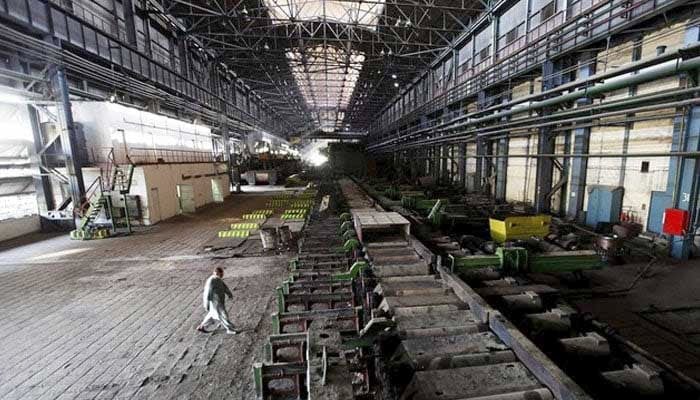
Other notable contributors to the fiscal drain included Pakistan Railways (Rs26.5 billion loss; accumulated losses Rs6.7 billion), Peshawar Electric Supply Company (PESCO) with a Rs19.7 billion loss (Rs684.9 billion accumulated), and Pakistan Steel Mills (PSM) reporting Rs15.6 billion in losses, raising its accumulated shortfall to Rs255.8 billion.
Additionally, Pakistan Telecommunication Company Limited (PTCL) posted Rs7.2 billion in losses (accumulated: Rs43.6 billion), Pakistan Post Rs6.3 billion (Rs93.1 billion accumulated), and Utility Stores Corporation Rs4.1 billion (Rs15.5 billion accumulated), revealing persistent operational and structural issues.
Among power generation entities, the GENCOs (I-IV) together posted over Rs8.3 billion in combined losses: GENCO-II (Guddu) at Rs3.8 billion, GENCO-III (Muzaffargarh) at Rs3.1 billion, and GENCO-I (Jamshoro) at Rs1.3 billion. Neelum Jhelum Hydro Power Company posted Rs2.3 billion in losses (accumulated: Rs58.2 billion).
Collectively, “All other” loss-making SOEs added Rs2.7 billion to the burden, with their cumulative losses totalling Rs1,285.96 billion, bringing the total accumulated losses of these 15+ entities to Rs5,893.2 billion — a stark indicator of deep-rooted financial inefficiencies and the urgent need for turnaround strategies.
A meeting of the Cabinet Committee on State-Owned Enterprises (CCoSOEs) was held on Friday at the Finance Division under the chairmanship of the Federal Minister for Finance and Revenue, Senator Muhammad Aurangzeb.
The Cabinet Committee was presented with the Annual Consolidated Performance Report of Commercial and Non-Commercial State-Owned Enterprises (SOEs) for FY 2024–25, prepared by the Central Monitoring Unit (CMU) of the Finance Division.
The presentation, delivered by Majid Soofi, Director General CMU, covered in-depth details of the SOE 360-degree view, including the financial and non-financial performance of SOEs, government support and fiscal flows, the contribution of SOEs to the exchequer, debt profile, corporate governance and compliance status, business plan assessments, and the proposed way forward under the SOEs Act, 2023.
The committee was informed, reflecting a decline largely attributable to reduced profitability in the oil sector following lower international oil prices.
Aggregate profits of profit-making SOEs declined by 13% to Rs709.9 billion, compared to Rs820.7 billion last year, while aggregate losses of loss-making SOEs showed improvement, declining by around 2% to Rs832.8 billion.
On fiscal support, the Committee noted that total government support to SOEs increased to Rs2,078 billion during FY 2024-25, driven mainly by higher equity injections to clear circular debt stock, while subsidies showed a modest decline.
At the same time, inflows from SOEs to the government increased to Rs2,119 billion, supported by higher dividends, tax receipts, and interest income on government lending.
The debt profile of SOEs was discussed in detail. Total SOE debt at the portfolio level increased to Rs9.57 trillion, comprising cash development loans, foreign re-lent loans, bank borrowings, and accrued interest.