Iran says ready for war and dialogue as Trump weighs response to crackdown
China opposes foreign 'interference' in Iran, expresses hope for stability in oil-rich Middle Eastern nation

Published January 12, 2026
- Trump considers range of options, including military action against Iran.
- Iran warns it will strike US military and shipping targets if attacked.
- Trump to meet senior advisers on Tuesday to discuss Iran options.
The situation in Iran is "under total control" after violence linked to protests spiked over the weekend, the country's Foreign Minister Abbas Araqchi said on Monday via English translation.
"We are ready for war but also for dialogue," Iranian Foreign Minister Abbas Araqchi said on Monday in a briefing to foreign ambassadors in Tehran via English translation.
He added that Trump's warning against Tehran of action should protests turn bloody had motivated "terrorists" to target protesters and security forces in order to invite foreign intervention.
FM Araqchi's response came after Trump said that he was considering potential military action against Iran, amid mounting mass anti-government protests in the country.
"They're starting to, it looks like," Trump said, when asked by reporters aboard Air Force One if Iran had crossed his previously stated red line of protesters being killed.
"We're looking at it very seriously. The military is looking at it, and we're looking at some very strong options. We'll make a determination," he said.
He also said that Iran's leadership had called seeking "to negotiate" after his threats of military action.
"The leaders of Iran called" yesterday, Trump said, adding that "a meeting is being set up... They want to negotiate."
However, Trump added that "we may have to act before a meeting."
Separately, Iranian embassy in Islamabad said that pro-government protesters demonstrated in various cities of the country to condemn recent unrest.
Meanwhile, China said on Monday it hopes the Iranian government and people would be able to overcome the current difficulties the country faces and maintain stability, referring to deadly protests taking place in the oil-rich Middle Eastern nation.
China opposes the use of force or the threat of it in international relations matters, a Chinese foreign ministry spokesperson said when responding to a media question about US President Donald Trump's threat to intervene with military on behalf of the protesters.
"We have always opposed interference in other countries' internal affairs and consistently advocated that the sovereignty and security of all nations should be fully protected by international law," spokesperson Mao Ning said at a regular news briefing.
Trump to meet senior advisers
Trump was to meet with senior advisers on Tuesday to discuss options for Iran, a US official told Reuters on Sunday.
The Wall Street Journal had reported that options included military strikes, using secret cyber weapons, widening sanctions and providing online help to anti-government sources.
Earlier, Iranian Parliament Speaker Mohammad Baqer Qalibaf warned Washington against "a miscalculation."
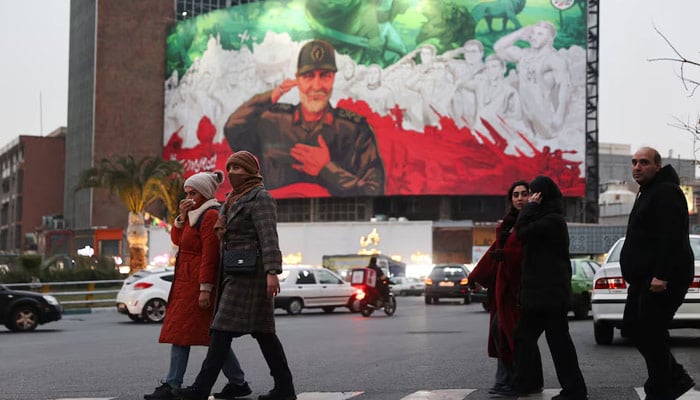
"Let us be clear: in the case of an attack on Iran, the occupied territories (Israel) as well as all US bases and ships will be our legitimate target," said Qalibaf, a former commander in Iran's elite Revolutionary Guards.
Iranian president calls for 'national resistance march'
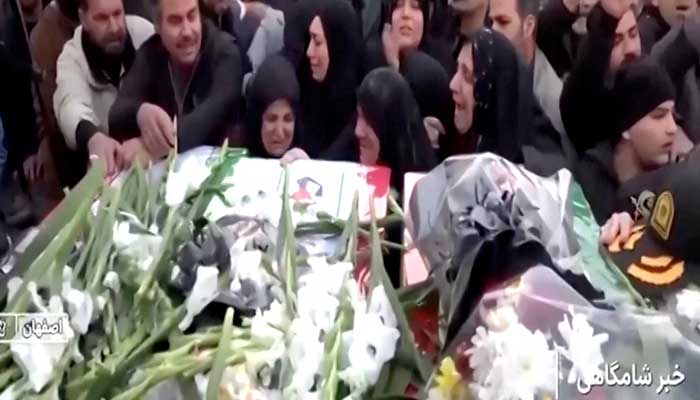
The Iranian government declared three days of national mourning for "martyrs" including members of the security forces killed in two weeks of protests, state television reported on Sunday.
The government described the fight against what it has termed "riots" as an "Iranian national resistance battle against America and the Zionist regime", using the clerical leadership's term for Israel, which the Islamic Republic does not recognise.
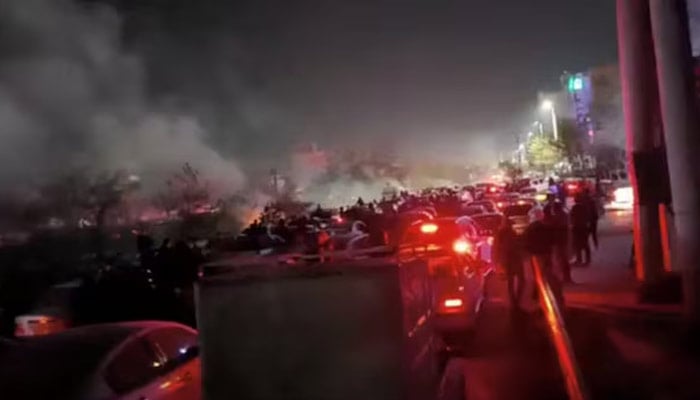
President Masoud Pezeshkian urged people to take part in a "national resistance march" of nationwide rallies on Monday to denounce the violence, which the government said was committed by "urban terrorist criminals", state television reported.
Protests have swelled in recent days despite an internet blackout that has lasted more than 72 hours, according to monitor Netblocks. Activists have warned that the shutdown is limiting the flow of information and that the actual toll risks being far higher.
Meanwhile, unrest in Iran has killed more than 500 people, a rights group said on Sunday.
According to its latest figures, from activists inside and outside Iran, the US-based rights group HRANA said it had verified the deaths of 490 protesters and 48 security personnel, with more than 10,600 people arrested in two weeks of unrest.