Consumers to bear Rs2.95tr burden amid power sector's deepening financial strain
Country's total installed generation capacity reaches 58,013 megawatts
Published January 13, 2026
- Nepra forecasts consumers to pay Rs1,92bn in capacity payments.
- Rs1,023bn to be paid under Energy Purchase Price (EPP) next year.
- Consumers to bear distribution margin of Rs4.09 per unit: Nepra
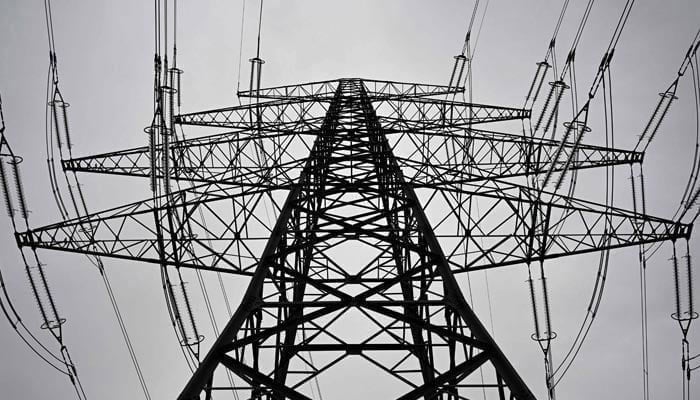
Electricity consumers are expected to shoulder Rs2.95 trillion burden in capacity payments and energy purchase costs during the calendar year 2026, highlighting the deepening financial strain on the country's power sector on end users, The News reported on Tuesday.
The National Electric Power Regulatory Authority (Nepra) came up with the decision on a motion filed by the federal government under section 7 and 31(&) of Nepra law with respect to the recommendation of the consumer end tariff for CY26.
The regulator forecast that consumers will pay Rs1,923 billion in capacity payments and Rs1,023 billion under the Energy Purchase Price (EPP) next year. Combined, these charges alone translate into Rs22.76 per unit, even before other tariff components are added.
The revenue requirement of power distribution companies (Discos) for CY26 has been worked out at Rs3,379 billion, resulting in a base electricity tariff of Rs33.38 per unit.
This includes a generation cost of Rs28.88 per unit, comprising capacity charges of Rs17.56, energy charges of Rs9.12, and use-of-system charges (UoSC) of Rs2.19 per unit. Consumers will also bear a distribution margin of Rs4.09 per unit, prior-year adjustments of Rs0.71 per unit, and working capital costs of Rs29 billion, adding Rs0.29 per unit to the base tariff.
Despite rising tariffs, the government will provide Rs629 billion in electricity subsidies during 2026, including Rs614 billion for domestic consumers and Rs15 billion for agriculture consumers. If K-Electric's capacity payments are included, the total capacity payment burden will surge to Rs2.1 trillion nationwide, further intensifying pressure on electricity consumers.
Pakistan's total installed generation capacity has reached 58,013MW. Net metered solar contributes 6,320 MW and off-grid solar 12,629MW, pushing clean energy share to 55% of the mix (fossil fuels 45%). Local fuels plus renewables now supply 74%of electricity, with only 26% from imported fuels. Must run plants dominate, accounting for 55 per cent of generation and inflating capacity payments.
Government-owned hydel plants total 9,590 MW, while IPP hydel adds 2,007 MW. Thermal capacity is split 6,828 MW (govt) vs 11,547MW (IPPs), and nuclear stands at 3,530MW. On renewables, the public sector provides 100 MW and IPPs 2,795MW. K Electric’s generation capacity is 2,647 MW.
By 2035, the country aims to boost total installed capacity to 87,207MW, with 90% from clean sources. Government plants will add 19,284MW and IPPs 2,074MW, while fossil fuel capacity drops to 10%.
Nuclear is set to reach 4,730MW, renewables 7,560MW, and K Electric 3,847MW. Net metering is projected at 12,296 MW and off-grid solar at 18,944MW.
Consequently, 88% of generation will come from must-run plants, raising concerns about cost rigidity.
Officials said industrial cross-subsidies have been reduced from Rs225 billion to Rs102 billion, lowering the tariff impact on industry by Rs5.13 per unit. Even so, industrial electricity tariffs remain at 12.90 cents per unit, more than double China's 5 cents per unit, weakening export competitiveness.
Meanwhile, the number of protected domestic consumers has surged from 9.5 million to 20.71 million, accounting for 61% of all domestic consumers, largely due to rooftop solar adoption. This segment now receives the largest share of power subsidies — Rs474 billion annually, significantly increasing the burden on remaining paying consumers.
APTMA submitted that the inclusion of cross-subsidy in the off-peak tariff for B3 and B4 industrial consumers renders the tariff uncompetitive in international markets. It was contended that electricity tariffs in competing regional and global markets range between five to nine US cents per kWh, whereas the prevailing industrial tariff in Pakistan stands at approximately 12.90 US cents per kWh, as submitted by the Ministry of Energy.
APTMA further submitted that protected residential consumers are being heavily subsidised, the burden of which is being cross-subsidised by industrial consumers. Aamir Sheikh, Rehan Javed, Asim Riaz, and Arif Bilwani, while representing the Industrial sector, opposed the continuation of cross-subsidy being borne by industrial consumers.
They submitted that a rationalised and lower industrial tariff would enable industries to expand operations, enhance export competitiveness, and generate employment.
It was further argued that industrial growth would indirectly uplift low-consumption residential consumers through increased economic activity, while simultaneously reducing the fiscal burden of subsidies borne by the federal government. Arif Bilwani also requested that the peak and off-peak rates should be abolished across the extent of industry.