India, UAE sign $3bn LNG deal, agree to boost trade and defence ties
Two sides sign letter of intent to work towards forming strategic defence partnership, says Indian official
Published January 20, 2026
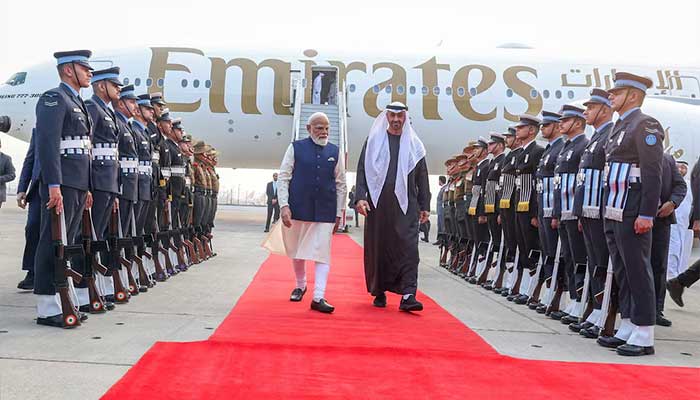
- ADNOC Gas signs 10-year LNG deal with India's HPCL.
- UAE, India agree to double two-way trade to $200bn.
- Both sign letter of intent for defence partnership.
India signed a $3 billion deal on Monday to buy liquefied natural gas from the United Arab Emirates, making it the UAE's top customer, as the leaders of both countries held talks to strengthen trade and defence ties.
The agreement was signed during a very brief two-hour visit to India by UAE President Sheikh Mohammed bin Zayed Al Nahyan for talks with Indian Prime Minister Narendra Modi. They pledged to double bilateral trade to $200 billion in six years and form a strategic defence partnership.
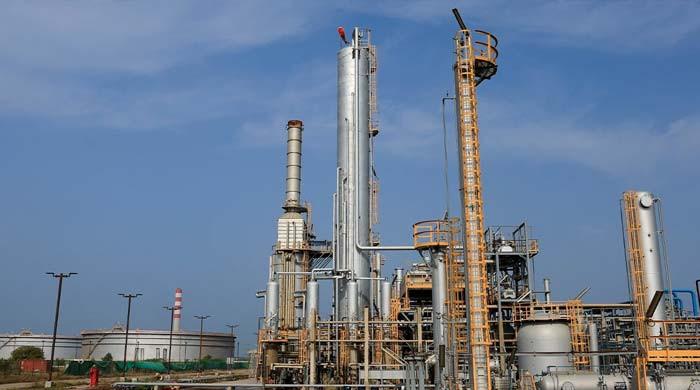
Abu Dhabi state firm ADNOC Gas will supply 0.5 million metric tonnes of LNG a year to India's Hindustan Petroleum Corp for 10 years, the companies said.
ADNOC Gas said the agreement brings the total value of its contracts with India to over $20 billion.
"India is now the UAE's largest customer and a very important part of ADNOC Gas' LNG strategy," the company said.
The UAE is India's third largest trading partner and Sheikh Mohammed was accompanied by a government delegation that included his defence and foreign ministers.
The two sides signed a letter of intent to work towards forming a strategic defence partnership, India's Foreign Secretary Vikram Misri told reporters.
India's arch-rival neighbour Pakistan signed a mutual defence agreement with Saudi Arabia last year, and last week a Pakistani minister announced the preparation of a three-way draft defence agreement between Pakistan, Turkey and Saudi Arabia.
Misri, however, said that the signing of the letter of intent with the UAE does not mean that India will get involved in regional conflicts.
"Our involvement on the defence and security front with a country from the region does not necessarily lead to the conclusion that we will get involved in particular ways in the conflicts of the region," he said.
UAE, India discuss Yemen, Iran and Gaza as defence ties deepen
The United Arab Emirates (UAE) and India discussed regional conflicts, including Yemen, Iran and Gaza, during high-level talks on Wednesday, even as New Delhi sought to distance its expanding defence partnership with Abu Dhabi from any direct involvement in Middle East hostilities, India’s Foreign Secretary said.
The discussions took place against the backdrop of continuing instability across West Asia, where the war in Gaza, the prolonged conflict in Yemen and concerns over Iran’s regional role continue to shape diplomatic and security calculations.
Questions were raised over whether the UAE’s position on Yemen featured in the talks and whether there was any alignment between India and Gulf states on the issue.
The Foreign Secretary confirmed that Yemen was discussed but declined to provide details or indicate whether the two sides shared common positions, saying only that leaders had exchanged views on regional developments.
At the same time, India was pressed on how it views its deepening strategic defence partnership with Gulf powers in a region long marked by conflict — from the Iran–Iraq war to more recent rivalries involving Saudi Arabia, the UAE and other regional actors.
Responding to these concerns, the Foreign Secretary avoided giving a clear distinction between defence cooperation and involvement in regional conflicts.
“Our air assets have been regularly participating in the Dubai Air Show. Last year alone, if I recall correctly, three service chiefs from the UAE visited India. Our own Army Chief was in the UAE not too long ago, earlier this month,” the Foreign Secretary said.
A new letter of intent signed during the visit aims to formalise a strategic defence partnership covering areas such as defence manufacturing, advanced technology, cyber security, counter-terrorism and specialised training.
The Foreign Secretary said the move was not driven by any specific crisis in the region but was a continuation of existing cooperation.
Despite confirming that Yemen, Iran and Gaza were all discussed, Indian officials avoided outlining any new policy directions or strategic commitments related to Middle East conflicts.
Queries were also made about whether the possibility of wider involvement in Iran-related tensions had been discussed.
The Foreign Secretary again confirmed that Iran was part of the agenda but avoided commenting on any outcomes or strategic implications.
No details were provided on discussions related to Iran or Gaza, and officials did not indicate whether the talks led to any policy changes or new commitments.
— With additional input from Sibt-e-Arif