Pakistan to seek flexibility on IMF loans ahead of next budget
"Islamabad requires a breathing space for the next budget for 2026-27,” say sources
Published January 20, 2026
- Pakistan seeks IMF "lenient attitude" on fiscal framework.
- PM Shehbaz to meet IMF managing director in Davos.
- Govt wants renegotiation of EFF and RSF till 2027.
ISLAMABAD: Pakistan is preparing to ask the International Monetary Fund (IMF) for a "lenient attitude" and to seek renegotiation of the remaining period of its Fund-backed programme amid mounting economic challenges, The News reported on Tuesday.
Prime Minister Shehbaz Sharif has left for Davos to attend the World Economic Forum (WEF), where he is scheduled to meet the IMF’s Managing Director on January 21.
“Pakistan wants to renegotiate the IMF deal for the remaining period for completion of the $7 billion Extended Fund Facility (EFF) and the Resilience Sustainability Facility (RSF) of $1.4 billion by September 2027. Islamabad requires a breathing space for the next budget for 2026-27,” top official sources told The News.
According to the sources, Pakistan intends to press the IMF’s top leadership to adopt a “lenient attitude” in finalising the budgetary and fiscal framework for the next financial year.
Prime Minister Shehbaz Sharif had constituted a high-powered committee led by Deputy Prime Minister Ishaq Dar to finalise strategy to exit from the IMF after completion of the EFF programme by 2027-28. It requires building up of the economic growth and speeding up the sluggish economic activities from the next financial year.
The latest figure of foreign direct investment, showing a decline by 43% and a surge in the current account deficit, turning from surplus into deficit of $1.2 billion in the first half (July-Dec) period, indicates that the economy is not heading in the right direction.
There are chances that the investment to GDP ratio might plunge to its lowest ebb in the country’s history by the end of the ongoing fiscal year and will come to the surface in the Economic Survey for 2025-26.
However, Ministry of Finance high-ups argued that the economy was heading towards the right direction with the projection that the GDP growth might pick up and move towards close to 4% of the GDP against the earlier revised projection of the IMF in the range of 3.25 to 3.5% in the aftermath of the 2025 floods.
The current account deficit is projected to remain in the range of $2.2 to $2.3 billion in the context of a rising trade deficit, whereby the exports might hover around $32 billion and imports in the range of $72 to $76 billion till the end of June 2026.
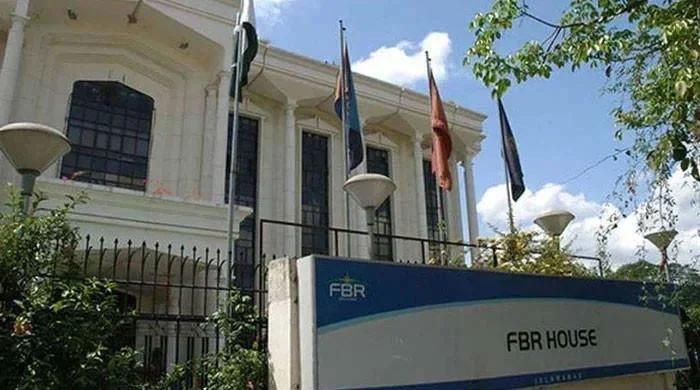
The remittances are projected to touch $42 billion. On the fiscal side, the FBR is struggling to achieve its revised tax collection target; however, the government finds its solution in raising the petroleum levy to bridge the gap on the FBR front. All these efforts are aimed at achieving the primary balance and fiscal deficit target agreed with the IMF.
The IMF’s review mission is expected to visit Pakistan by the end of February or early March 2026 for undertaking the third review under $7 billion EFF programme and release of the fourth tranche. This upcoming review would finalise the budgetary framework for the budget 2026-27.
Four key proposals have been discussed, with the government’s foremost priority being export-led growth. The prime minister has also expressed concern over the trade deficit recorded during the July to December period of the current fiscal year.
The second major proposal focuses on boosting investment by exploring all possible opportunities. The Special Investment Facilitation Council has been tasked with taking concrete measures to increase investment, as higher investment is seen as essential for economic expansion, job creation, and the reduction in unemployment and poverty.
Another proposal under consideration is a further reduction in power tariffs to provide industry with a competitive edge in international markets. The government is also seeking fiscal space to offer tax incentives. According to the draft of the industrial policy, a decision has been made to reduce super tax for the manufacturing sector, but it will be implemented subject to the approval of the IMF.
Under the new industrial policy, the government has decided to lower super tax rate for manufacturing. Under the proposed reforms, the super tax rate for the manufacturing sector will be gradually reduced to 5% over four years, while the tax will be abolished in the fifth year if a primary surplus is achieved. Approval of the industrial policy from the IMF is still pending.
It has also been proposed to increase the minimum income threshold for the manufacturing sector, subject to a super tax from Rs200 million to Rs500 million. Similarly, the threshold for imposing a 10% super tax is proposed to be raised from Rs500 million to Rs1.5 billion, while the super tax rate will be halved over the next four years.
Another proposal under consideration is to leverage the decline in inflation to cut the policy rate, making credit more accessible for the private sector. The government also wants banks to be given specific lending targets to improve private sector credit flows, especially to the SME sector.