Texas orders immediate halt to new H-1B petitions at state agencies, public universities
Freeze to remain in effect through May 31, 2027, coinciding with conclusion of Texas Legislature’s 90th Regular Session
Published January 28, 2026
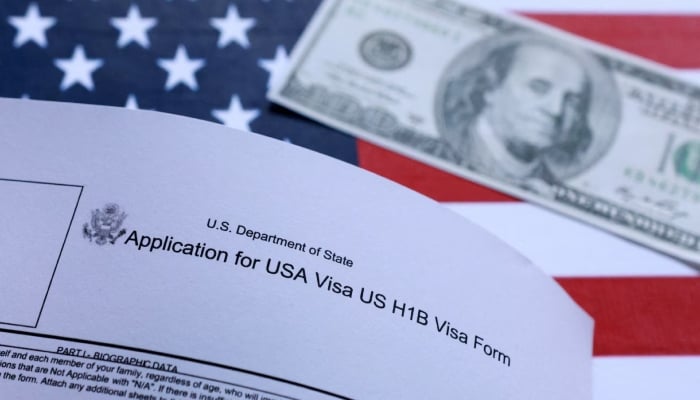
Texas Governor Greg Abbott on Tuesday issued an extraordinary executive directive with far-reaching implications, ordering an immediate halt to the filing of new H-1B visa petitions by all Texas state agencies and public universities.
The order, formally released on the governor’s official website, gov.texas.gov, makes clear that no state agency or public institution of higher education may initiate or submit a new H-1B petition for a foreign worker without prior written authorisation from the Texas Workforce Commission.
The freeze will remain in effect through May 31, 2027, coinciding with the conclusion of the Texas Legislature’s 90th Regular Session.
In his letter to agency heads, Governor Abbott argued that Texas has invested billions of dollars in recent years in education, workforce training, and high-demand skills development to prepare Texans for both local and global job markets.
He said the federal H-1B visa program was originally intended to supplement the US workforce where domestic labor was unavailable, but cited reports and evidence suggesting the program has often been misused.
According to the governor, some employers bypassed qualified American workers in favor of foreign labor at lower wages, and in extreme cases, replaced US employees with H-1B visa holders. Jobs funded by Texas taxpayers, Abbott wrote, should first and foremost go to Texans, and the state government must lead by example.
Under the directive, all affected state agencies and public universities are required to submit a comprehensive report to the Texas Workforce Commission by March 27, 2026.
The report must detail the number of new and renewal H-1B petitions filed in 2025, the total number of H-1B visa holders currently employed by the entity, the countries of origin of those workers, their job classifications and descriptions, the anticipated expiration dates of their visas, and documentation demonstrating that qualified Texas candidates were given a reasonable opportunity to apply for each position before an H-1B petition was submitted.
The Texas Workforce Commission has also been instructed to issue any guidance necessary to implement and enforce the governor’s order.
The move comes amid renewed national debate over the future of the H-1B visa program and growing signals from the Trump administration favoring stricter immigration controls. Political analysts note that while the order is administrative in form, its implications are deeply political and economic, reinforcing a broader state-level narrative centered on protecting local jobs and prioritising domestic labor.
The sectors most immediately affected are expected to be public universities, government-run research institutions, and fields that have traditionally relied on global talent, including science, engineering, medicine, and advanced research.
University administrators and policy experts warn that the freeze could delay new faculty hires, disrupt research projects, and place additional strain on academic programs already facing staffing challenges.
Foreign professionals currently working in or seeking employment with Texas public institutions are also likely to feel the impact, including large numbers of Pakistani, Indian, Chinese, and other Asian specialists who have long been part of the state’s public higher-education and research workforce.
At the same time, the order does not apply to private companies, private universities, startups, conferences, events, or private partnerships, which remain governed by federal H-1B rules. Those sectors will not be directly affected by the governor’s action.
Taken together, Governor Abbott’s directive represents a significant effort to recalibrate immigration and employment practices at the state level. While the freeze is technically temporary, the message it sends is unmistakable: access to state-funded jobs in Texas will now be subject to heightened scrutiny, tighter controls, and a clear preference for local workers, a shift whose consequences are likely to shape the state’s education, research, and employment landscape for years to come.