'New Start' nuclear treaty expires, removing key constraints on Russia and US
"Relations between nuclear weapon states are likely to be more crisis prone," says expert
Published February 05, 2026
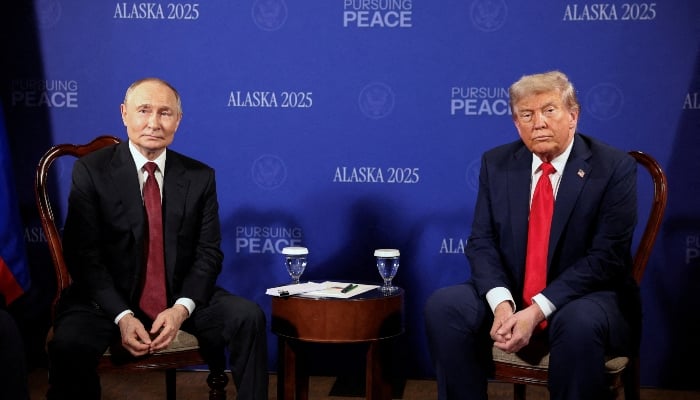
- Lapse of New Start treaty ends half-century of nuclear restraint.
- Russia criticises US for not agreeing to extend warhead limits.
- Moscow says neither side is bound any more by treaty provisions.
MOSCOW: Russia and the United States are no longer bound by any limits on the size of their strategic nuclear arsenals after their last arms control treaty expired on Thursday with no agreement between them on what should come next.
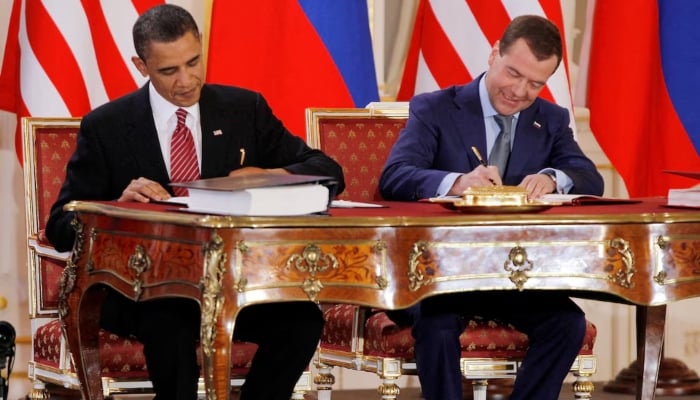
The New Start treaty, which set limits on each side's missiles, launchers and strategic warheads, was the last in a series of nuclear agreements stretching back more than half a century to the depths of the Cold War.
Security experts say its expiry risks ushering in a new arms race that will also be fuelled by China's rapid nuclear build-up.
Russian President Vladimir Putin had proposed that Moscow and Washington agree to adhere to the treaty's key provisions for one more year, but US President Donald Trump did not make any formal response.
Trump says he wants a better deal that will also bring in China. But Beijing refuses to negotiate with the other two countries because it has only a fraction of their warhead numbers - an estimated 600, compared to around 4,000 each for Russia and the US
In a statement late on Wednesday, hours before New Start lapsed, Russia criticised what it called the "mistaken and regrettable" US approach.
It said Moscow's assumption now was that the treaty no longer applied, and both sides were free to choose their next steps.
Russia "remains prepared to take decisive military-technical countermeasures to mitigate potential additional threats to national security".
But it will act responsibly and is open to diplomacy to seek a "comprehensive stabilisation of the strategic situation," the statement said, striking a balance between assertiveness and restraint.
Trump made no statement as the treaty expired. The White House said this week that Trump would decide the way forward on nuclear arms control, which he would "clarify on his own timeline".
UN chief says nuclear risk is highest in decades
Strategic nuclear weapons are the long-range systems that each side would use to strike the other's capital, military and industrial centres in the event of a nuclear war.
They differ from so-called tactical nuclear weapons that have a lower yield and are designed for limited strikes or battlefield use.
In the absence of a treaty framework that provides stability and predictability, analysts say each side will find it harder to read the other's intentions. That could lead to a spiral in which each feels the need to keep on adding weapons, based on worst-case assumptions about what the other is planning.
Within a couple of years, each could deploy hundreds more warheads beyond the New Start limit of 1,550, experts say.
"Transparency and predictability are among the more intangible benefits of arms control and underpin deterrence and strategic stability," said Karim Haggag, director of the Stockholm International Peace Research Institute.
"Without them, relations between nuclear weapon states are likely to be more crisis prone - especially with artificial intelligence and other new technologies adding complexity and unpredictability to escalation dynamics and a worrying lack of diplomatic and military communication channels between the USA and both China and Russia."
UN Secretary-General Antonio Guterres said the dissolution of decades of achievement in arms control "could not come at a worse time – the risk of a nuclear weapon being used is the highest in decades."
He urged Russia and the US to resume negotiations without delay to agree "a successor framework that restores verifiable limits, reduces risks, and strengthens our common security".