Reko Diq emerges as strategic asset amid Washington's push for critical minerals
Mine vital for electric vehicles, batteries, AI, and advanced manufacturing needs
Published February 07, 2026
- US hosts critical minerals ministerial with 54 countries.
- US signs 11 new critical minerals cooperation agreements.
- Forge forum launched to boost mineral supply collaboration.
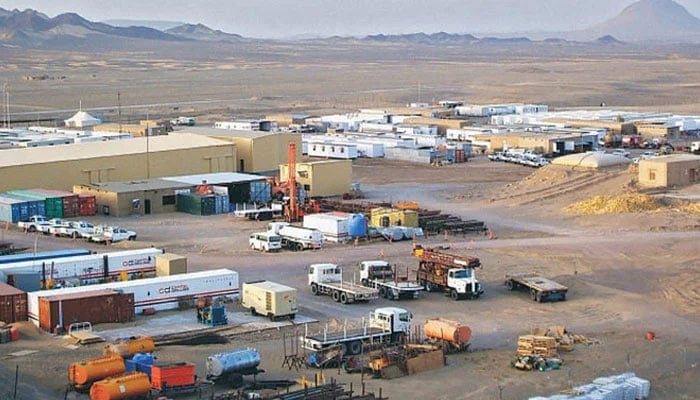
KARACHI: Pakistan's Reko Diq copper and gold project in Balochistan has become a key plank in Washington's efforts to secure global critical mineral supply chains, following the US Export-Import Bank's approval of up to $1.3 billion in financing, underscoring its strategic importance to American industrial and security interests, The News reported on Saturday.
The financing places Reko Diq among a small group of overseas projects that the US considers vital to diversifying supplies of minerals needed for electric vehicles, batteries, artificial intelligence, and advanced manufacturing.
The spotlight on Reko Diq comes as the US steps up a sweeping diplomatic and financial campaign to reshape the global market for critical minerals and rare earths. On Wednesday (February 4), Secretary of State Marco Rubio, alongside Vice President JD Vance and senior members of President Donald Trump’s economic team, hosted representatives from 54 countries — including Pakistan — at the 2026 Critical Minerals Ministerial in Washington, the State Department said.
The meeting brought together 43 foreign ministers and the European Commission as part of a coordinated effort to reduce reliance on highly concentrated mineral supply chains that Washington says are vulnerable to political coercion and disruption.
At the ministerial, the US signed 11 new bilateral critical minerals frameworks or memorandums of understanding with countries including Argentina, Ecuador, Guinea, Morocco, Peru, and the UAE, and said it had concluded or negotiated similar agreements with dozens more over the past five months.
Rubio also launched the Forum on Resource Geostrategic Engagement, or Forge, as the successor to the Minerals Security Partnership. Initially chaired by South Korea, Forge is intended to coordinate policy and project-level collaboration on mining, processing, and recycling to build more diversified and resilient supply chains.
The US government said it has mobilised more than $30 billion in letters of interest, loans,s and other support for critical minerals projects over the past six months, a push it argues is crowding in far larger amounts of private capital.
Besides Reko Diq, EXIM has issued nearly $15 billion in letters of interest for critical minerals projects over the past year, including funding for rare earth processing in the US, lithium extraction in Arkansas, cobalt and nickel production in Australia, and tin mining in the UK and Australia. It has also approved a $10 billion loan for Project Vault, a planned US strategic minerals reserve.
The Department of Energy has separately backed billions of dollars in loans and conditional commitments for lithium, graphite, potash, and battery recycling projects. At the same time, the US International Development Finance Corporation has ramped up investments in mineral projects in Ukraine, Brazil, and through the Orion Critical Minerals Consortium.