No more net metering as govt shifts to net billing
Power supplied to grid will now be purchased at national average energy purchase price of around Rs11 per unit

Published February 10, 2026
- Electricity drawn from grid to be charged at consumer tariffs.
- Agreement term cut to five years from earlier seven years.
- Govt ends one-to-one offset model for neutralising bills.
ISLAMABAD: Pakistan has effectively ended its net metering regime, as the country’s power regulator introduced sweeping new rules shifting rooftop solar and other small generators to a "net billing" system, The News reported on Tuesday.
The move has fundamentally changed how electricity is priced and is reshaping the economics of distributed generation.
Under the Nepra (Prosumer) Regulations, 2026, notified on Monday, the National Electric Power Regulatory Authority will now require power utilities to purchase surplus electricity from prosumers, including households, businesses and industries generating up to one megawatt at the national average energy purchase price, while selling electricity back to them at the applicable consumer tariff.
This ends the one-to-one offset model that previously allowed solar users to neutralise their electricity bills.
The shift also shortens the contract horizon, with the standard agreement term cut to five years from the earlier seven years, renewable by mutual consent. Existing prosumers will remain under their current contracts until expiry, but all future renewals and new connections will fall under the five-year net billing framework, significantly altering long-term investment returns.
If the value of electricity supplied by the prosumer is higher than the electricity taken from the utility, the extra amount will either be adjusted in the next bill or paid to the prosumer every three months.
The new regulations, which take effect immediately, repeal the Nepra Alternative & Renewable Energy Distributed Generation and Net Metering Regulations, 2015, and apply to solar, wind and biogas systems.
Nepra has capped the maximum size of a distributed generation facility at one MW and limited capacity to the sanctioned load of the consumer. A major technical restriction bars new connections if generation on a distribution transformer reaches 80% of its rated capacity, while systems of 250 kW or above must undergo a mandatory load flow study.
Utilities are bound to strict timelines, including acknowledging applications within five working days, completing technical reviews within 15 days, and installing interconnection facilities within 15 days after payment. Prosumers must also obtain formal concurrence from Nepra, which is to be issued within seven working days.
Financial responsibility has shifted to consumers, with all interconnection costs, including meters and grid upgrades, to be borne by the prosumer. Nepra has also imposed a non-refundable concurrence fee of Rs1,000 per kilowatt, while mandating two-way metering through either a single bidirectional meter or dual meters.
Utilities retain powers to disconnect systems in case of faults, non-compliance or maintenance, and prosumers are barred from selling electricity to third parties using the utility’s network. Nepra has also reserved the right to revise purchase rates, issue binding directions, demand operational data and impose penalties.
The decision aims to curb rising financial losses, tariff distortions and grid instability triggered by the rapid expansion of distributed solar generation. Under net billing, electricity supplied to the grid will be purchased at the national average energy purchase price — currently around Rs11 per unit — while electricity drawn from the grid will continue to be charged at prevailing consumer tariffs, which for many households exceed Rs50 per unit, according to Power Division officials.
The policy shift follows an unprecedented surge in rooftop solar installations, driven by soaring electricity prices, unreliable supply, and falling solar equipment costs. Total rooftop solar capacity is now estimated at around 6,000 megawatts nationwide, largely concentrated among urban residential, commercial and industrial consumers.
While rooftop solar has reduced daytime grid demand, official data shows it has also sharply eroded utility revenues. In FY2024 alone, grid electricity sales declined by 3.2 billion units, translating into revenue losses of nearly Rs101 billion for power distribution companies (Discos).
These losses did not disappear. Power sector officials say they were absorbed into the tariff structure, contributing to an average increase of Rs0.9 per kilowatt-hour for remaining grid consumers.
Regulators argue that the net metering regime increasingly produced a regressive outcome. Rooftop solar adoption has been concentrated among higher-income households and businesses, while fixed system costs — such as capacity payments to power producers, transmission infrastructure and grid maintenance — remained unchanged.
As solar users reduced their billed consumption, these fixed costs were redistributed across a shrinking consumer base, shifting the burden onto non-solar users, many of whom lack the financial capacity to invest in rooftop systems.
According to Power Division projections, if net metering had continued unchanged, lost grid sales could reach 18.8 billion units by FY2034, with a cumulative financial impact of Rs545 billion. Officials warn this could drive electricity tariffs higher by Rs5-6 per unit, further suppressing demand and deepening the sector’s financial crisis.
At the heart of the reform lies a widening price distortion. While new utility-scale solar projects are being contracted at below Rs10 per unit, rooftop solar exports under net metering were credited at Rs22-27 per unit, excluding taxes and surcharges.
"This meant the grid was being forced to buy expensive rooftop electricity while cheaper generation was available," a senior energy official said. "The grid effectively became a free battery for solar consumers, without recovering system costs."
Operational challenges have also intensified. During winter months, national electricity demand often drops to 8,000-9,000 megawatts, while solar generation peaks during daylight hours. Energy planners warn that excess solar injection during low-demand periods increases the risk of over-generation, frequency instability and forced curtailment.
Officials have cited Sri Lanka's 2022 nationwide blackout, partially attributed to unmanaged rooftop solar expansion, as a cautionary example of the risks posed by uncontrolled distributed generation.
Regulators have also identified widespread misuse of the net metering system. In multiple cases, consumers with sanctioned loads of 10 kilowatts were exporting up to 20 kilowatts to the grid, effectively converting residential connections into unregulated power plants.
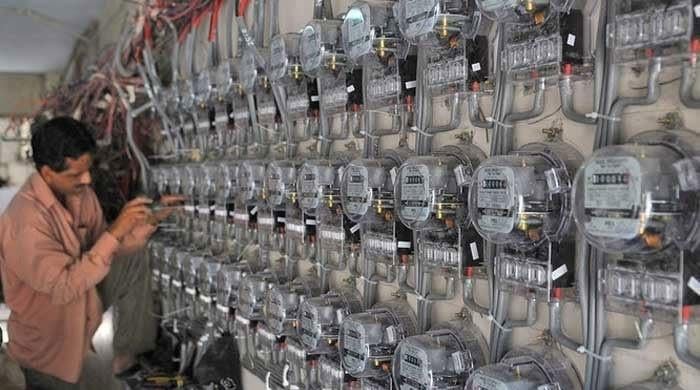
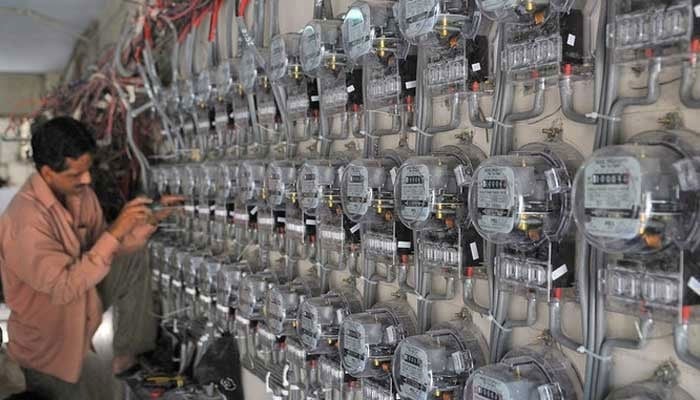
To address this, DISCOS have begun deploying smart meters capable of real-time monitoring, export limiting, and enforcement of sanctioned load caps. Under the new regulations, utilities are also empowered to refuse new connections where transformers or feeders are nearing capacity.
Energy analysts expect the shift to extend payback periods for new rooftop solar systems, particularly for households exporting a large share of their generation. However, systems designed primarily for self-consumption, such as offices, shops, factories and daytime-heavy users, are expected to remain financially attractive.
"The incentive structure has changed," said a renewable energy consultant. "The message now is clear: generate for your own use. Selling surplus power to the grid is no longer the main business case."
In a meeting on October 22, Prime Minister Shehbaz Sharif directed the Power Division and Nepra to review and verify the buyback tariff and assess its broader system-wide implications before finalising reforms.
Net metering played a pivotal role in accelerating rooftop solar adoption over the past decade, helping consumers hedge against high tariffs and unreliable supply. Net billing marks a strategic pivot — from rapid, incentive-driven expansion to a more controlled phase focused on financial sustainability, grid stability and cost equity.
Critics warn the policy could slow rooftop solar growth at a time when Pakistan faces fuel import constraints and climate obligations. Officials counter that the reform preserves self-generation incentives while eliminating arbitrage that threatened the viability of the power system.