SOEs witness 300% surge in FY25 net losses; 25 post Rs832bn in aggregate losses
NHA reports highest loss at Rs294.9bn, followed by Qesco with Rs112.7bn
Published February 14, 2026
- Net losses climb to Rs123bn in FY25 compared to Rs30.6bn in FY24.
- NHA incurs highest loss of Rs294.9bn followed by Qesco's Rs112bn.
- Pakistan Railways report loss of Rs60.3bn; PPO faces 19.3bn loss.
ISLAMABAD: While witnessing a 300% surge in net losses of State Owned Enterprises (SOEs) in FY25, the finance ministry reported on Friday, adding that 25 SOEs posted an aggregate loss of Rs832 billion, The News reported on Saturday.
The net losses climbed to Rs123 billion in FY25, compared to Rs30.6 billion in FY24, witnessing an increase of 300%.
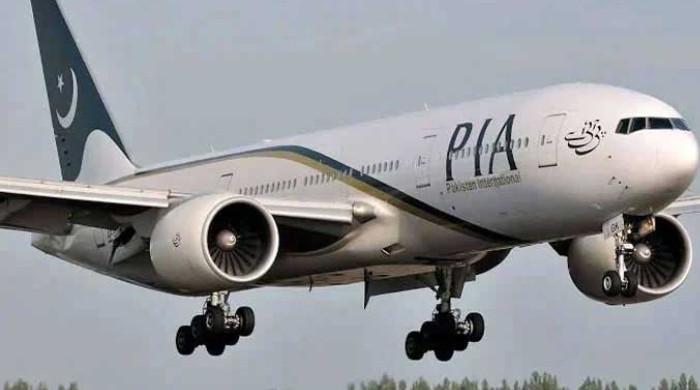
The National Highway Authority (NHA) incurred the highest loss at Rs294.9 billion, followed by Quetta Electric Supply Company (Qesco) Rs112.7 billion, Peshawar Electric Supply Company (Pesco) Rs92.7 billion, Pakistan Railways Rs60.3 billion, and PIA Holding Company Limited Rs48.9 billion in the Financial Year 2025.
According to the SOEs report, released by the finance ministry, other major loss-making entities included National Power Parks Management Company (Rs46.1 billion), Neelum-Jhelum Hydropower Company (Rs29.4 billion), Pakistan Steel Mills (Rs26 billion), and Sukkur Electric Power Company (Rs25.3 billion).
Further losses were reported by Pakistan Post Office (Rs19.3 billion), Pakistan Agricultural Storage & Services Corporation (Rs19 billion), Hyderabad Electric Supply Company (Rs12.9 billion), Lahore Electric Supply Company (Rs12.7 billion), and GENCO-II (Rs10.3 billion).
Smaller losses were recorded by National Insurance Company (Rs2.9 billion), CPPA-G (Rs2.0 billion), Islamabad Electric Supply Company (Rs1.4 billion), Pakistan Television Corporation (Rs0.6 billion), Private Power & Infrastructure Board (Rs0.47 billion), Pakistan Expo Centres (Rs0.22 billion), Hazara Electric Supply Company (Rs0.04 billion), National Construction Limited (Rs0.03 billion), and Pakistan Broadcasting Corporation (Rs0.03 billion).
In FY2025 (July 2024 to June 2025), profit-making SOEs posted an aggregate profit of Rs709 billion, with earnings heavily concentrated among a small group of entities. The top contributors were Oil and Gas Development Company Limited at Rs169.9 billion, followed by Pakistan Petroleum Limited (Rs89.9 billion), National Bank of Pakistan (Rs56.7 billion), Water and Power Development Authority (Rs52.3 billion), and Government Holdings (Private) Limited (Rs48.5 billion).
Other major profit generators included Karachi Port Trust (Rs35.3 billion), Port Qasim Authority (Rs35.1 billion), Pak Arab Refinery Company (Rs22.2 billion), Pakistan National Shipping Corporation (Rs20.4 billion), State Life Insurance Corporation (Rs14.8 billion), SNGPL (Rs14.6 billion), Pakistan State Oil (Rs14.2 billion), Gujranwala Electric Power Company (Rs13.7 billion), Zarai Taraqiati Bank Limited (Rs9.7 billion), Saindak Metals (Rs8.4 billion), NTDC (Rs7.6 billion), SSGPL (Rs7.4 billion for nine months), and PIACL (Rs6.8 billion for six months).
Overall, a handful of prominent SOEs account for nearly 90% of total profits, underscoring a high degree of earnings concentration within the portfolio. These entities effectively form the profitability backbone of the SOE sector, generating the surplus that partially offsets persistent losses across the remaining SOEs — and, in classic portfolio terms, carrying far more weight than their headcount would suggest.
In FY2025, the balance sheet of State-Owned Enterprises (SOEs) presented a combination of positive and negative trends. Total equity saw an increase of 7%, rising from Rs5,865.2 billion in FY2024 to Rs6,245.7 billion in FY2025.
This growth was primarily driven by recapitalisation efforts and significant equity injections, particularly in the power sector to clear circular debt stock. On the liabilities side, there was a moderate improvement, as total liabilities decreased by 3%. The figure declined from Rs32,570.5 billion to Rs31,742.4 billion over the course of the year.
Total assets remained largely unchanged, exhibiting only a marginal decrease of 1%. The value of assets moved from Rs38,435.7 billion to Rs37,988.1 billion, indicating relative stability in the overall asset base of the SOE sector during FY2025.
In FY2025, government fiscal support to the SOEs saw an increase, rising to Rs2,078.5 billion. This represents a 37% growth compared to the previous year’s support of Rs1,512.9 billion. The expansion of fiscal support was driven by significant changes across various components:
Equity Injections: The most notable increase was observed in equity injections, which amounted to Rs728.9 billion in FY2025. These are related to one off power sector circular debt clearing, payment to IPPs which are reflected in the form of equity injections aimed at strengthening the financial positions of key SOEs.
Loans to SOEs: Government loans provided to SOEs also grew, climbing by 34% from Rs263.3 billion to Rs354.1 billion. This underscores the government’s ongoing commitment to providing direct financial resources to support SOE operations and restructuring.
Grants and Subsidies: In contrast to the increases in guarantees, loans, and equity, both grants and subsidies experienced declines. Grants fell by 27% to Rs269.2 billion, while subsidies dropped by 7%, reaching Rs726.3 billion. These reductions may reflect shifting government priorities or improved operational efficiencies in certain areas.
Sovereign Guarantees: These increased markedly, from Rs1,419.0 billion in FY2024 to Rs2,164.0 billion in FY2025, reflecting a 52% rise. This change is not due to the addition of new guarantees, but rather accounting for self-liquidating guarantees on stock.
In FY2025, the federal government collected Rs12,970 billion in tax revenue, of which approximately Rs2,078 billion (about 16%) was channelled back to SOEs through subsidies, equity injections, grants, and loans. In practical terms, every Rs6 collected in taxes results.