Ramadan moon sighted in Saudi Arabia, other Gulf countries
UAE, Qatar, and Kuwait officially confirm crescent sighting, setting February 18 as first day of fasting
Published February 17, 2026
- Turkiye, Malaysia, Azerbaijan report no crescent sighting.
- Pakistan, Iran moon sighting committees to meet on Feb 18.
- Muslims globally prepare to observe Ramadan with devotion.
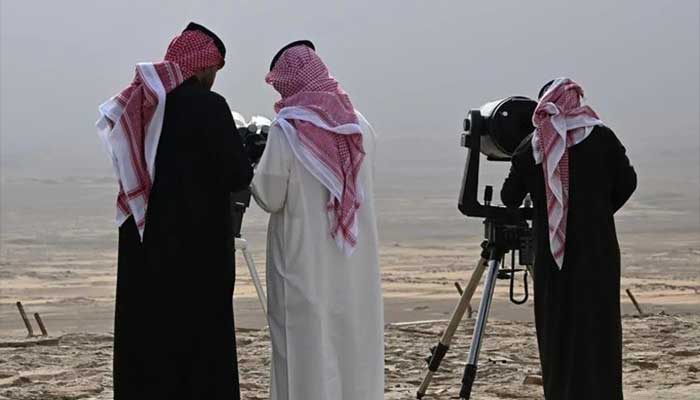
The Ramadan crescent was sighted in Saudi Arabia and other Gulf states on Tuesday evening, confirming that the holy month will begin with the first day of fasting on February 18.
The Supreme Court of Saudi Arabia made the official confirmation regarding the beginning of the holy month for the year 1447 AH.
Meanwhile, the United Arab Emirates (UAE), Qatar and Kuwait also announced that Ramadan will begin on Wednesday, February 18, following confirmed sightings of the crescent moon.
The UAE’s Presidential Court stated that February 18 marks the first day of fasting, after verification by the official moon-sighting committee, Gulf News reported.
However, several countries that looked for the Ramadan crescent today reported that it was not sighted.
The countries reporting no sighting include Azerbaijan, Kazakhstan, Uzbekistan, Philippines, Japan, Turkiye, Malaysia, Indonesia, Singapore, and Brunei.
As a result, the month of Shaban will complete 30 days on February 18, with the first day of fasting observed on February 19.
Meanwhile, the moon sighting committees of Pakistan, Iran, India, and Bangladesh are scheduled to meet on Wednesday, February 18, as Tuesday marks the 28th of Shaban.
The Muslim world welcomes Ramadan with deep religious devotion, as over a billion believers fast to practice patience, self-discipline, and generosity.
Islamic months last 29 or 30 days, with their start and end determined by the sighting of the crescent moon, so Ramadan does not fall on the same Gregorian date each year.
As the ninth month of the 12-month Islamic calendar — which is about 10 days shorter than the Gregorian year due to its lunar basis — Ramadan shifts annually across the Gregorian calendar.