PM Shehbaz hints at reducing direct taxes in upcoming budget to support businesses
Indirect taxes taken from consumers, are not being deposited with the govt, laments premier
Published February 25, 2026
- PM Shehbaz Sharif underlines need to enhance tax net.
- Highlightes importance of growth, production, and exports.
- Says certain reforms introduced by govt were homegrown.
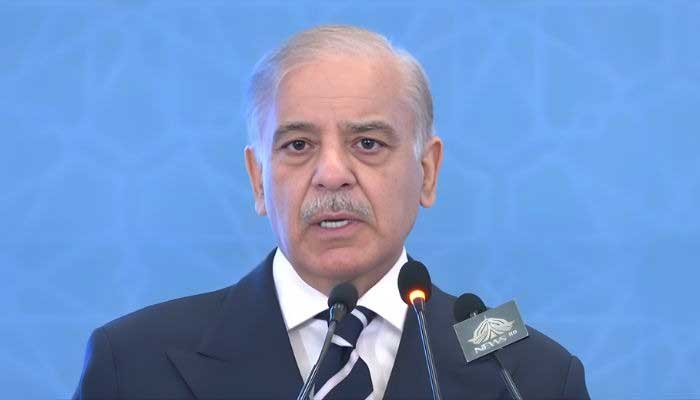
Prime Minister Shehbaz Sharif on Wednesday stressed the need to reduce direct taxes in the forthcoming federal budget, acknowledging that sustainable economic growth cannot be achieved by increasing the tax burden.
"How long can we keep stretching this?" the prime minister said. "[…] Unless there is growth and unless production and exports increase, and unless you invest and attract foreign direct investment, how much more tax can you continue to impose?"
The premier stated this while addressing the inaugural session of the Pakistan Governance Forum 2026 in Islamabad today.
PM Shehbaz emphasised that in the upcoming budget, expected in the coming months, the government would need to cut direct taxes across the board. The objective, he noted, was to facilitate the business community and provide confidence to investors.
He added that entrepreneurs and investors should feel assured that their capital would not be eroded by excessive taxation.
The prime minister also underlined the need to enhance tax net and said currently due to different initiatives, the country's tax to GDP had reached to 10.5%.
He also highlighted the importance of growth and production, exports and investment, foreign direct investment (FDI) and across the board reduction in indirect taxes in the upcoming fiscal budget.
The prime minister regretted that indirect taxes taken from the consumers and end users were not being deposited with the government which was a huge injustice with the nation.
He underlined the significance of the whole of the government's approach to tackling pending economic challenges, and urged all stakeholders to move ahead on the path of economic growth with collective endeavours.
The prime minister said in June 2023, Pakistan was at the verge of default, but with the grace of Allah Almighty and with collective efforts, the government pulled the country back, and within two years, macro economic situation was stabilised due to the great teamwork of the federal, provincial governments and the military hierarchy.
The galloping inflation, which was hovering around 35% at that time, had been capped under 7%, the policy rate was brought to 10.5%, he said, adding that they had to further increase their exports in a gradual manner, as it had immense capacity to excel.
The prime minister said that certain reforms introduced by the government were home grown and the IMF had no role in it as it was their requirement and need of the time to avert the boom and bust cycle.
He further said in the power sector, the price of power per unit had been slashed by Rs9 while the solar investment was protected and commended the minister for power and his team for making efforts in this regard.
The prime minister regretted that the country was enduring Rs200 billion power theft and only the whole of the government approach could tackle this issue.
He also highlighted the necessity of closure of Utility Stores, which according to him, was "a den of corruption and theft".
The prime minister also cited the Pakistan Works Department (PWD) and said it was a department tainted with corruption, and the closure of these entities saved billions of the nation.
With PM’s Ramazan Package, an amount of Rs38 billion was being distributed to the deserving people through digital wallets in a dignified and transparent manner, he added.
The ceremony was attended by chief ministers, ministers, provincial ministers, experts, diplomats, investors, businessmen, traders and officials.
Emphasising the need for collective efforts in the economic sector, the prime minister said: “Though the journey can be a long, arduous and thorny one, but we have accepted the challenge. Pakistan will carve its due place soon.”
The prime minister further reiterated that it was not the job of the government to do businesses rather it had to facilitate the private sectors, exporters and investors and support their efforts in the productivity and growth.
The government was encouraging the exporters, investors and businessmen with diverse incentives, he added.