Sometimes you have to use force, says Trump after US-Iran talks end with no deal
Trump's claim that Tehran will soon have missile that can hit US not backed by intelligence reports, say sources
Published February 28, 2026
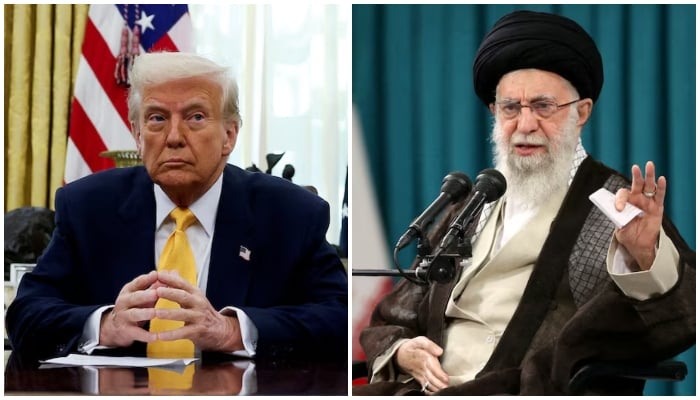
- Trump increases diplomatic and military pressure on Tehran.
- Iran denies it is seeking to develop nuclear weapons.
- We are not developing long range missiles, says FM Araghchi.
WASHINGTON: US President Donald Trump expressed disappointment about US negotiations with Iran over its nuclear programme and warned that "sometimes you have to use force," amid a massive military presence in the region that could presage strikes on Tehran.
Trump has increased diplomatic and military pressure on Iran in the weeks since an Iranian crackdown on protesters, attempting to force the country's rulers to forswear nuclear weapons and other activities Washington sees as destabilising.
After the latest round of talks on Thursday in Geneva ended without a deal, Trump's patience appeared to be wearing thin, although he said he had not made a final decision on the use of force.
"They don't want to say the key words, 'We're not going to have a nuclear weapon'," Trump said on Friday before an event in Corpus Christi, Texas. "So I'm not happy with the negotiation'.
Iran denies it is seeking to develop nuclear weapons and wants any accord to include the lifting of US sanctions against it.
'Deal within reach'
Trump spoke a day after negotiations between US envoys Steve Witkoff and Jared Kushner and Iranian officials in Geneva ended without news of a deal, although Omani Foreign Minister Sayyid Badr Albusaidi, who was a mediator, said the talks made significant progress.
Albusaidi told CBS earlier on Friday, before Trump's latest remarks, that a "peace deal is within our reach [...] if we just allow diplomacy the space it needs to get there."
Iran has agreed in principle that it would never have nuclear material that could be used to create a weapon, Albusaidi said, adding that "if we can capture that and build on it, I think a deal is within our reach."
A big US military force, including two aircraft carrier groups, is in the region waiting on Trump's order.
While Trump's timing for a final decision is unclear, the State Department said Secretary of State Marco Rubio is to hold talks in Israel with Israeli Prime Minister Benjamin Netanyahu on Sunday and Monday.
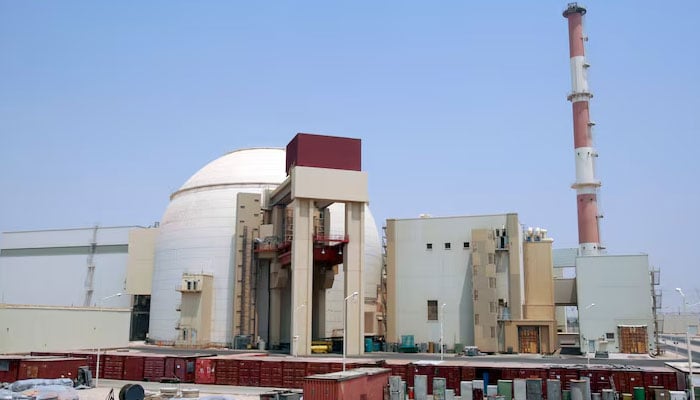
The US joined Israel's bombing campaign against Iran in June, striking major nuclear facilities.
Asked about the potential for use of force, Trump said the United States has the greatest military in the world.
"I'd love not to use it, but sometimes you have to," he said.
More talks
Trump said more discussions on Iran would take place later in the day.
He did not specify with whom, but Oman, which has been acting as a mediator between the two countries, sent its foreign minister to Washington on Friday for discussions on the issue with US Vice President JD Vance, according to a source familiar with the matter.
Top US defence officials were at the White House on Thursday for talks.
US Secretary of State Marco Rubio said in a statement on Friday that the State Department had designated Iran as a "State Sponsor of Wrongful Detention".
Rubio said for decades Iran has wrongfully detained Americans and citizens of other nations "to use as political leverage against other states," adding that the US could consider additional measures, including a potential "geographic travel restriction on the use of US passports to, through, or from Iran."
Trump planned events in Corpus Christi later on Friday and then was to fly to Palm Beach, Florida, for the weekend at his Mar-a-Lago club.
A source briefed on the internal White House deliberations told Reuters that Trump is “very clear-eyed on all the options before him.”
There is a recognition internally that taking on Iran would be more difficult than the US capture of Venezuelan leader Nicolas Maduro, and there was also internal pessimism as to whether negotiations would bear fruit, the source said.
"Nobody is super optimistic about the negotiations," the source said.
'Missile claim unsupported by US intelligence'
Meanwhile, President Trump's claim that Iran will soon have a missile that can hit the US is not backed by US intelligence reports, and appears to be exaggerated, according to three sources familiar with the reports, casting doubt on part of his case for a possible attack on Tehran.
In his State of the Union address to Congress on Tuesday, Trump began making his case to the American public for why the US could launch strikes against Iran, saying Tehran was “working on missiles that will soon reach” the US.
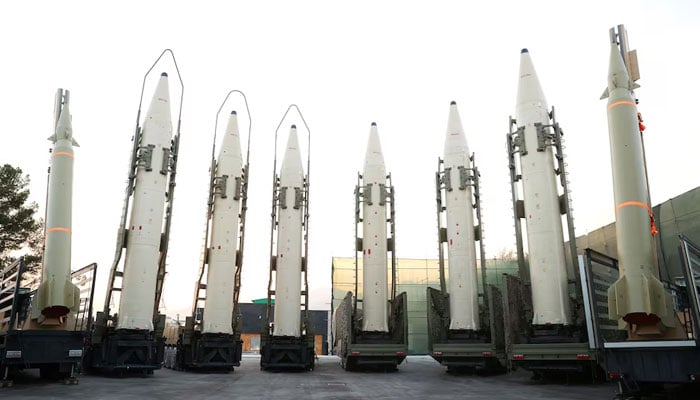
But there have been no changes, two sources said, to an unclassified 2025 US Defence Intelligence Agency assessment that Iran could take until 2035 to develop a "militarily viable intercontinental ballistic missile" (ICBM) from its existing satellite-lofting space-launch vehicles (SLV).
"President Trump is absolutely right to highlight the grave concern posed by Iran, a country that chants 'death to America,' possessing intercontinental ballistic missiles," said White House spokesperson Anna Kelly.
Sources, who spoke on condition of anonymity in order to discuss sensitive intelligence, said they were unaware of any US intelligence assessments that Iran was developing a missile that could soon range the US homeland but did not rule out the possibility of a new intelligence report they were unaware of.
The New York Times first reported that US intelligence agencies believe Iran is probably years away from having missiles that can hit the US.
The US president has done little to explain publicly why he might be leading the US into its most aggressive action against the Islamic Republic since its 1979 revolution.
In his address on Tuesday, Trump, without providing evidence, said that Tehran was beginning to rebuild the nuclear programme that he claimed had been "obliterated" by US airstrikes last June on three major sites involved with uranium enrichment.
US Secretary of State Marco Rubio on Wednesday referred to Iran’s ballistic missile programme in less definitive terms than Trump, saying that Tehran is "on a pathway to one day being able to develop weapons that could reach the continental US".
Iran denies seeking a nuclear arsenal, saying its enrichment of uranium — a process that produces fuel for power plants and nuclear warheads depending on its duration — is strictly for civilian uses.
In an interview with India Today TV released on Wednesday, Iranian Foreign Minister Abbas Araghchi denied that Iran was expanding its missile capabilities.
"We are not developing long-range missiles. We have limited range to below 2,000 kilometres intentionally," he said. "We don’t want it to be a global threat. We only have [them] to defend ourselves. Our missiles build deterrence."